
Macron's Palestinian Statehood Recognition Plan Pressures UK Amidst Gaza Crisis
In This Article
HIGHLIGHTS
- French President Emmanuel Macron plans to recognize Palestinian statehood at the UN General Assembly, aiming to generate diplomatic momentum.
- Over 220 UK MPs have urged Prime Minister Keir Starmer to recognize Palestine, emphasizing it as a step towards a two-state solution.
- Starmer insists recognition should be part of a broader peace plan, despite pressure from France and other European allies.
- The UK, France, and Germany have called for an immediate ceasefire and criticized Israel's blockade on Gaza.
- The international community remains divided, with some viewing recognition as symbolic without immediate impact on the ground.
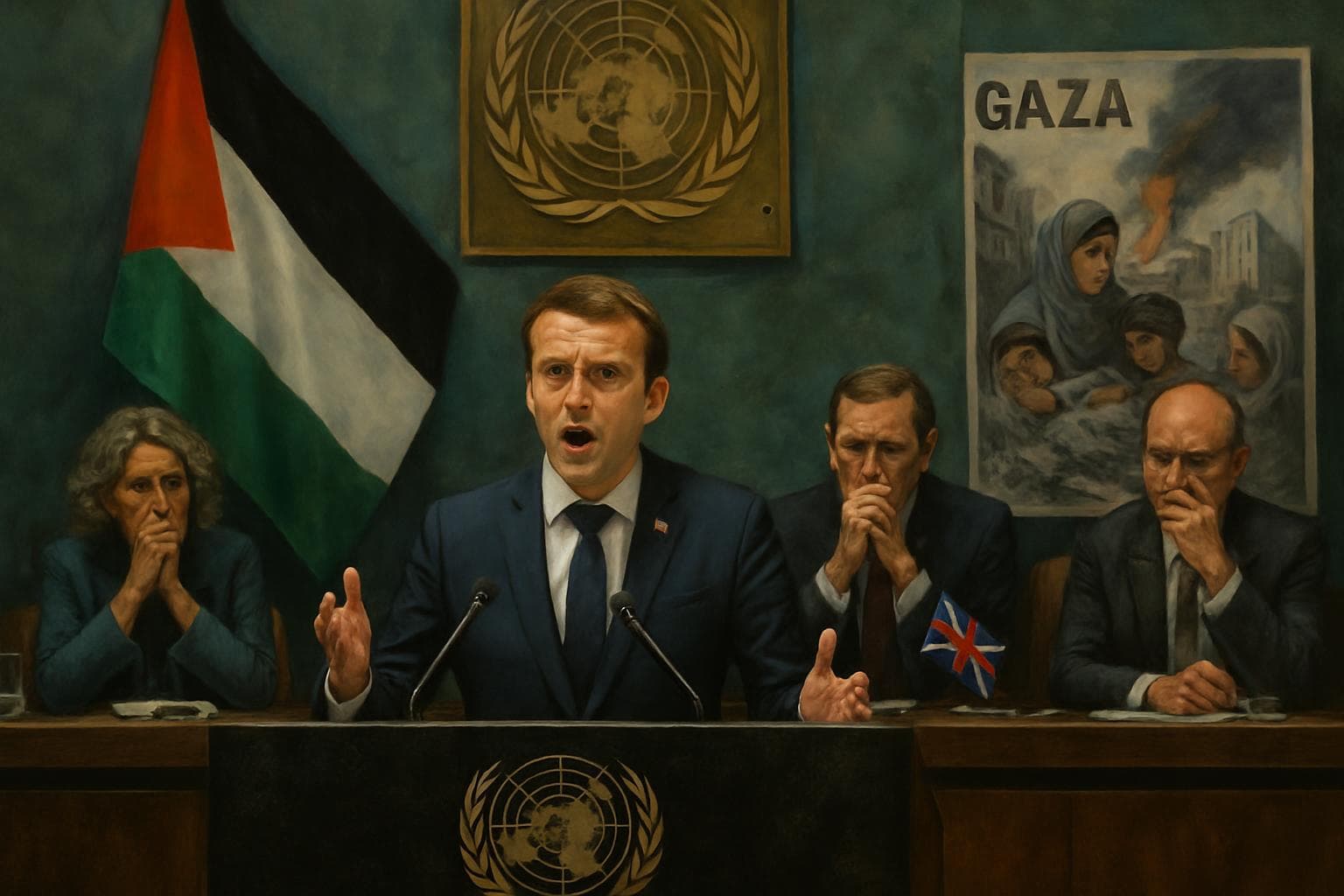
French President Emmanuel Macron's announcement to recognize Palestinian statehood at the upcoming United Nations General Assembly has intensified diplomatic pressure on the United Kingdom. This move, intended to galvanize international support, comes amidst ongoing humanitarian crises in Gaza and a backdrop of complex geopolitical tensions.
France's Bold Diplomatic Move
Macron's decision, revealed in a dramatic social media post, seeks to break the inertia of Western powers regarding the Israel-Palestine conflict. By recognizing Palestine, France aims to encourage other nations to follow suit, leveraging its position as a permanent member of the UN Security Council. The French President has emphasized that this recognition is a necessary catalyst for peace, urging the UK to join in this diplomatic initiative.
UK MPs Call for Action
In the UK, more than 220 Members of Parliament from nine political parties have signed a letter urging Prime Minister Keir Starmer to recognize Palestinian statehood. The MPs argue that such a move would send a powerful message and serve as a crucial step towards achieving a two-state solution. Despite this pressure, Starmer maintains that recognition must be part of a comprehensive peace plan, which includes ensuring lasting security for both Palestinians and Israelis.
Joint Efforts and Divergent Views
Following an emergency call with Macron and German Chancellor Friedrich Merz, the UK, France, and Germany issued a joint statement demanding an immediate ceasefire and the lifting of Israel's blockade on Gaza. However, the statement did not explicitly mention Palestinian statehood, reflecting the cautious stance of some European leaders. While France pushes for immediate recognition, Germany and the UK remain hesitant, preferring a more gradual approach.
Humanitarian Concerns in Gaza
The humanitarian situation in Gaza continues to deteriorate, with international calls for increased aid and an end to the blockade. The UK has committed to working with Jordan to deliver aid to Palestinians, highlighting the urgency of addressing the humanitarian catastrophe. However, critics argue that symbolic gestures like state recognition do little to alleviate the immediate suffering on the ground.
WHAT THIS MIGHT MEAN
The coming months could see increased diplomatic activity as nations weigh the implications of recognizing Palestinian statehood. If the UK aligns with France, it may prompt other countries to reconsider their positions, potentially reshaping the dynamics of the Middle East peace process. However, without a coordinated international effort, recognition alone may not lead to tangible changes in the region. Experts warn that while symbolic, such gestures must be accompanied by concrete actions to address the humanitarian crisis and pave the way for a sustainable two-state solution.
Related Articles

UK Faces Dilemmas Amid Iran Conflict and China Spying Allegations

Labour MP's Husband Arrested in UK-China Espionage Probe
UK-Iran Tensions: Starmer Defends Cautious Approach Amid Trump Criticism
Diplomatic Tensions Rise as Trump Criticizes Starmer's Iran Policy
Trump Raises Import Tariffs to 15% After Supreme Court Setback

Breakthrough Drug Offers Hope for Children with Severe Epilepsy
Macron's Palestinian Statehood Recognition Plan Pressures UK Amidst Gaza Crisis
In This Article
 Ethan Brooks| Published
 HIGHLIGHTS
- French President Emmanuel Macron plans to recognize Palestinian statehood at the UN General Assembly, aiming to generate diplomatic momentum.
- Over 220 UK MPs have urged Prime Minister Keir Starmer to recognize Palestine, emphasizing it as a step towards a two-state solution.
- Starmer insists recognition should be part of a broader peace plan, despite pressure from France and other European allies.
- The UK, France, and Germany have called for an immediate ceasefire and criticized Israel's blockade on Gaza.
- The international community remains divided, with some viewing recognition as symbolic without immediate impact on the ground.
French President Emmanuel Macron's announcement to recognize Palestinian statehood at the upcoming United Nations General Assembly has intensified diplomatic pressure on the United Kingdom. This move, intended to galvanize international support, comes amidst ongoing humanitarian crises in Gaza and a backdrop of complex geopolitical tensions.
France's Bold Diplomatic Move
Macron's decision, revealed in a dramatic social media post, seeks to break the inertia of Western powers regarding the Israel-Palestine conflict. By recognizing Palestine, France aims to encourage other nations to follow suit, leveraging its position as a permanent member of the UN Security Council. The French President has emphasized that this recognition is a necessary catalyst for peace, urging the UK to join in this diplomatic initiative.
UK MPs Call for Action
In the UK, more than 220 Members of Parliament from nine political parties have signed a letter urging Prime Minister Keir Starmer to recognize Palestinian statehood. The MPs argue that such a move would send a powerful message and serve as a crucial step towards achieving a two-state solution. Despite this pressure, Starmer maintains that recognition must be part of a comprehensive peace plan, which includes ensuring lasting security for both Palestinians and Israelis.
Joint Efforts and Divergent Views
Following an emergency call with Macron and German Chancellor Friedrich Merz, the UK, France, and Germany issued a joint statement demanding an immediate ceasefire and the lifting of Israel's blockade on Gaza. However, the statement did not explicitly mention Palestinian statehood, reflecting the cautious stance of some European leaders. While France pushes for immediate recognition, Germany and the UK remain hesitant, preferring a more gradual approach.
Humanitarian Concerns in Gaza
The humanitarian situation in Gaza continues to deteriorate, with international calls for increased aid and an end to the blockade. The UK has committed to working with Jordan to deliver aid to Palestinians, highlighting the urgency of addressing the humanitarian catastrophe. However, critics argue that symbolic gestures like state recognition do little to alleviate the immediate suffering on the ground.
WHAT THIS MIGHT MEAN
The coming months could see increased diplomatic activity as nations weigh the implications of recognizing Palestinian statehood. If the UK aligns with France, it may prompt other countries to reconsider their positions, potentially reshaping the dynamics of the Middle East peace process. However, without a coordinated international effort, recognition alone may not lead to tangible changes in the region. Experts warn that while symbolic, such gestures must be accompanied by concrete actions to address the humanitarian crisis and pave the way for a sustainable two-state solution.
Related Articles
UK Faces Dilemmas Amid Iran Conflict and China Spying Allegations
Labour MP's Husband Arrested in UK-China Espionage Probe
UK-Iran Tensions: Starmer Defends Cautious Approach Amid Trump Criticism
Diplomatic Tensions Rise as Trump Criticizes Starmer's Iran Policy
Trump Raises Import Tariffs to 15% After Supreme Court Setback
Breakthrough Drug Offers Hope for Children with Severe Epilepsy