
Massive Protests in Israel Demand End to Gaza Conflict and Hostage Release
In This Article
HIGHLIGHTS
- Hundreds of thousands protested in Israel, demanding an end to the Gaza war and the release of hostages held by Hamas.
- The largest demonstration took place in Tel Aviv's "Hostages Square," with organizers claiming up to 500,000 participants.
- Israeli Prime Minister Netanyahu criticized the protests, arguing they could prolong hostage negotiations with Hamas.
- The protests coincided with a national strike, leading to road closures and over 30 arrests.
- The Israeli military plans to displace a million people from Gaza City, amid ongoing humanitarian concerns.
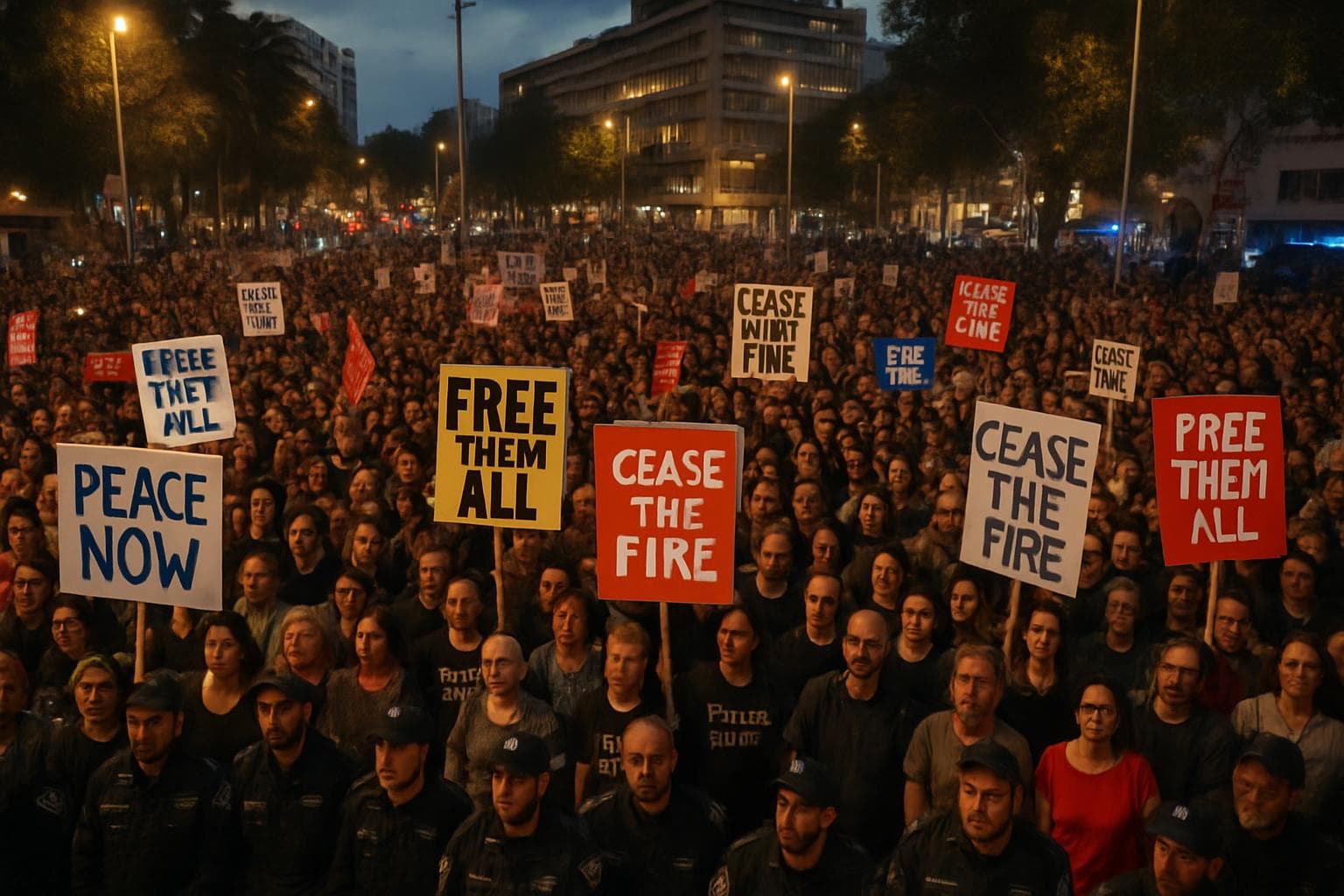
In a powerful display of public dissent, hundreds of thousands of Israelis gathered across the nation, with the epicenter in Tel Aviv, to demand an end to the ongoing Gaza conflict and the release of hostages held by Hamas. The protests, which took place on Sunday, marked one of the largest demonstrations in Israel since the conflict reignited in October 2023.
Tel Aviv's Hostages Square: A Focal Point
The heart of the protest was in Tel Aviv's "Hostages Square," where organizers estimated a turnout of around 500,000 people, although this figure was not confirmed by police. Demonstrators chanted calls for peace and the safe return of hostages, echoing the sentiments of the Hostage and Missing Families Forum, which spearheaded the day's events. "We demand a comprehensive and achievable agreement and an end to the war," declared Einav Zangauker, whose son Matan is among the hostages.
National Strike Amplifies Calls for Peace
The protests were part of a broader national strike that saw roads blocked, offices closed, and universities shuttered. The strike was a strategic move to pressure the government into halting military operations in Gaza. However, the demonstrations were not without conflict; over 30 people were arrested, and riot police clashed with protesters outside the Likud party headquarters.
Government and Opposition Reactions
Israeli Prime Minister Benjamin Netanyahu criticized the protests, suggesting they could harden Hamas's stance and delay hostage negotiations. Far-right minister Bezalel Smotrich echoed this sentiment, labeling the protests as a harmful campaign. In contrast, opposition leader Benny Gantz condemned the government for its handling of the hostage situation, accusing it of failing the families involved.
Humanitarian Concerns in Gaza
The protests come amid Israel's plans to forcibly displace up to a million people from Gaza City to southern camps, a move that has drawn international criticism. The Israeli military announced it would allow aid agencies to bring tents into Gaza to support displaced populations. Meanwhile, the humanitarian situation in Gaza remains dire, with ongoing Israeli bombardments and significant casualties reported.
WHAT THIS MIGHT MEAN
The protests in Israel highlight a growing domestic pressure on the government to reconsider its military strategy in Gaza. If the demonstrations continue, they could influence political discourse and potentially lead to renewed peace talks. International mediators, including Egypt, are reportedly pushing for a 60-day truce that could facilitate hostage releases. However, the Israeli government's current stance suggests that any shift in policy may be slow to materialize. As the humanitarian crisis in Gaza deepens, the international community may increase its calls for a resolution, potentially impacting Israel's diplomatic relations.
Related Articles
Hamas Leadership Vote Amidst Critical Crossroads for the Movement

Trump's Board of Peace Pledges $7 Billion for Gaza Amidst International Skepticism

US Ambassador's Biblical Land Remarks Spark Outcry from Arab Nations
Israeli Airstrikes in Lebanon's Bekaa Valley Leave 10 Dead Amid Rising Tensions
Middle East Conflict Drives UK Energy Prices to New Highs

US and Israel Intensify Military Campaign as Iran's Capabilities Dwindle
Massive Protests in Israel Demand End to Gaza Conflict and Hostage Release
In This Article
 James Okoro| Published
 HIGHLIGHTS
- Hundreds of thousands protested in Israel, demanding an end to the Gaza war and the release of hostages held by Hamas.
- The largest demonstration took place in Tel Aviv's "Hostages Square," with organizers claiming up to 500,000 participants.
- Israeli Prime Minister Netanyahu criticized the protests, arguing they could prolong hostage negotiations with Hamas.
- The protests coincided with a national strike, leading to road closures and over 30 arrests.
- The Israeli military plans to displace a million people from Gaza City, amid ongoing humanitarian concerns.
In a powerful display of public dissent, hundreds of thousands of Israelis gathered across the nation, with the epicenter in Tel Aviv, to demand an end to the ongoing Gaza conflict and the release of hostages held by Hamas. The protests, which took place on Sunday, marked one of the largest demonstrations in Israel since the conflict reignited in October 2023.
Tel Aviv's Hostages Square: A Focal Point
The heart of the protest was in Tel Aviv's "Hostages Square," where organizers estimated a turnout of around 500,000 people, although this figure was not confirmed by police. Demonstrators chanted calls for peace and the safe return of hostages, echoing the sentiments of the Hostage and Missing Families Forum, which spearheaded the day's events. "We demand a comprehensive and achievable agreement and an end to the war," declared Einav Zangauker, whose son Matan is among the hostages.
National Strike Amplifies Calls for Peace
The protests were part of a broader national strike that saw roads blocked, offices closed, and universities shuttered. The strike was a strategic move to pressure the government into halting military operations in Gaza. However, the demonstrations were not without conflict; over 30 people were arrested, and riot police clashed with protesters outside the Likud party headquarters.
Government and Opposition Reactions
Israeli Prime Minister Benjamin Netanyahu criticized the protests, suggesting they could harden Hamas's stance and delay hostage negotiations. Far-right minister Bezalel Smotrich echoed this sentiment, labeling the protests as a harmful campaign. In contrast, opposition leader Benny Gantz condemned the government for its handling of the hostage situation, accusing it of failing the families involved.
Humanitarian Concerns in Gaza
The protests come amid Israel's plans to forcibly displace up to a million people from Gaza City to southern camps, a move that has drawn international criticism. The Israeli military announced it would allow aid agencies to bring tents into Gaza to support displaced populations. Meanwhile, the humanitarian situation in Gaza remains dire, with ongoing Israeli bombardments and significant casualties reported.
WHAT THIS MIGHT MEAN
The protests in Israel highlight a growing domestic pressure on the government to reconsider its military strategy in Gaza. If the demonstrations continue, they could influence political discourse and potentially lead to renewed peace talks. International mediators, including Egypt, are reportedly pushing for a 60-day truce that could facilitate hostage releases. However, the Israeli government's current stance suggests that any shift in policy may be slow to materialize. As the humanitarian crisis in Gaza deepens, the international community may increase its calls for a resolution, potentially impacting Israel's diplomatic relations.
Related Articles
Hamas Leadership Vote Amidst Critical Crossroads for the Movement
Trump's Board of Peace Pledges $7 Billion for Gaza Amidst International Skepticism
US Ambassador's Biblical Land Remarks Spark Outcry from Arab Nations
Israeli Airstrikes in Lebanon's Bekaa Valley Leave 10 Dead Amid Rising Tensions
Middle East Conflict Drives UK Energy Prices to New Highs
US and Israel Intensify Military Campaign as Iran's Capabilities Dwindle