
Meta's Bold AI Investment Strategy Sparks Wall Street Optimism Amidst Industry Concerns
In This Article
HIGHLIGHTS
- Meta plans to nearly double its AI spending to $135 billion in 2025, focusing on infrastructure and AI tools.
- The company reported $59.89 billion in revenue for Q4 2025, surpassing Wall Street expectations.
- Meta's stock rose nearly 10% in after-hours trading following the announcement of its financial results.
- CEO Mark Zuckerberg anticipates AI will significantly transform work by 2026, despite concerns over a potential AI bubble.
- Meta is shifting focus from virtual reality to AI, resulting in layoffs in its Reality Labs division.
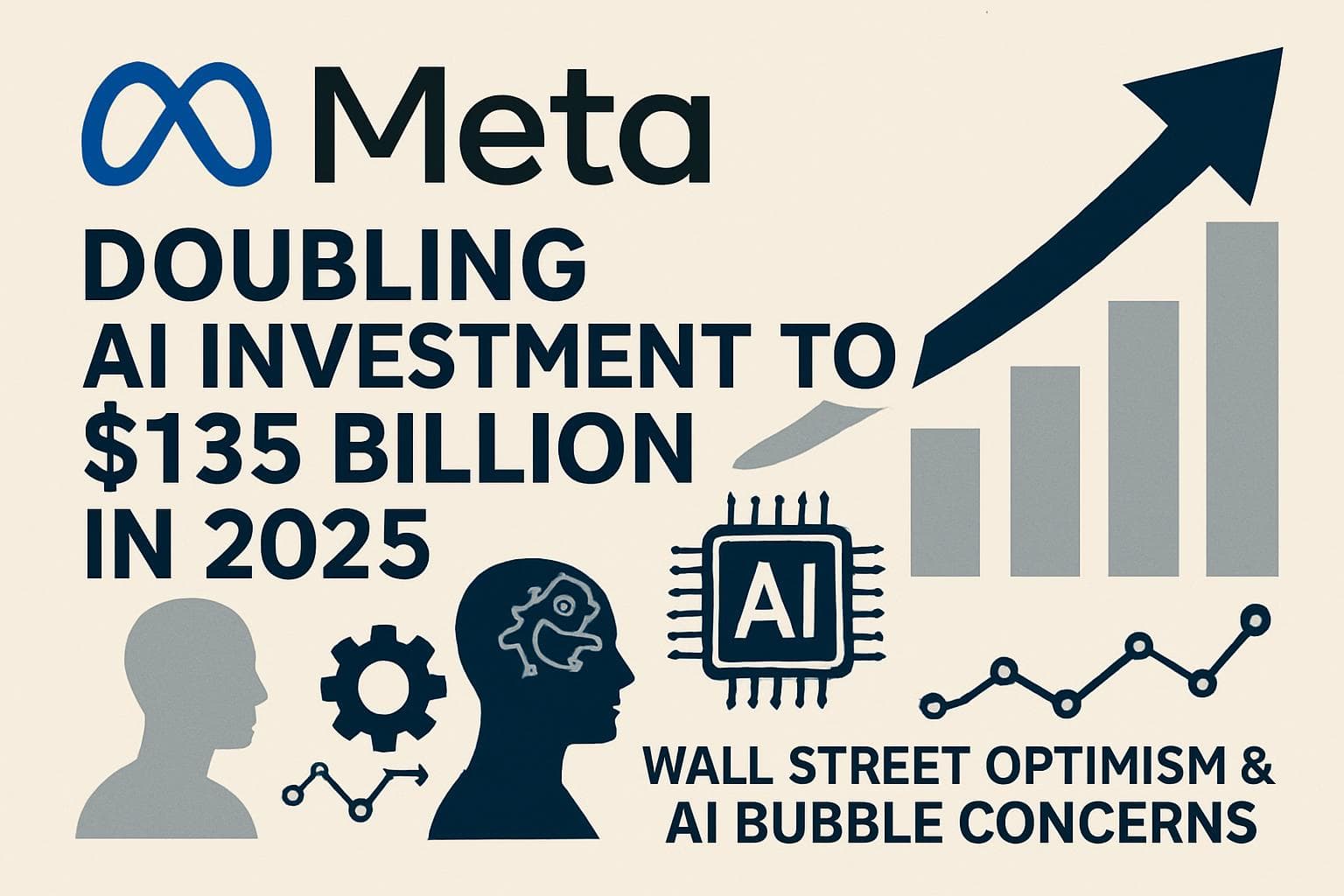
Meta, the parent company of Facebook, has announced plans to nearly double its investment in artificial intelligence (AI) to $135 billion in 2025, a move that has sparked both optimism and caution across the tech industry. CEO Mark Zuckerberg revealed the ambitious spending plan during a call with financial analysts, emphasizing the company's commitment to AI infrastructure and tools that enhance productivity.
Financial Performance Surpasses Expectations
Meta reported a robust financial performance for the fourth quarter of 2025, with revenues reaching $59.89 billion, exceeding Wall Street's expectations of $58.59 billion. The company's earnings per share also surpassed forecasts, coming in at $8.88. Following these announcements, Meta's stock surged nearly 10% in after-hours trading, reflecting investor confidence in the tech giant's strategic direction.
AI: The Future of Work
Zuckerberg expressed his belief that 2026 will be a pivotal year for AI, predicting it will dramatically change workplace dynamics. "We're starting to see agents really work," he stated, highlighting the potential for AI to unlock new products and transform existing processes. This vision includes integrating large language models with Meta's recommendation systems to create more personalized user experiences across its platforms.
Shifting Focus from Virtual Reality
As Meta intensifies its AI focus, the company is scaling back its virtual reality ambitions, resulting in significant layoffs within its Reality Labs division. Reports indicate that over 1,000 employees, or 10% of the division, have been affected. Despite these cuts, Zuckerberg noted continued investment in Reality Labs, particularly in glasses and wearables, with sales of Meta's glasses tripling last year.
Industry Concerns Over AI Bubble
Despite Meta's optimistic outlook, industry leaders like Cisco's Chuck Robbins and JPMorgan Chase's Jamie Dimon have expressed concerns about a potential AI bubble, drawing parallels to the dotcom boom of the early 2000s. OpenAI's Sam Altman echoed these sentiments, suggesting that investor enthusiasm may be overblown. Nevertheless, Zuckerberg remains confident that Meta's AI investments will yield long-term profitability.
WHAT THIS MIGHT MEAN
As Meta continues to expand its AI capabilities, the tech industry will be closely watching for signs of an AI bubble. Should the market correct, companies heavily invested in AI infrastructure may face financial challenges. However, if Meta's AI strategy proves successful, it could set a precedent for other tech giants to follow, potentially reshaping the industry's landscape. Additionally, the ongoing social media addiction trial could influence regulatory scrutiny and impact Meta's operations, adding another layer of complexity to its future endeavors.
Related Articles
Amazon's $200 Billion AI Investment Sparks Investor Concerns

Trump Nominates Kevin Warsh as Federal Reserve Chair Amid Independence Concerns

India's AI Impact Summit Faces Logistical Hurdles Amid Global AI Discussions

Goldman Sachs Top Lawyer Resigns Amid Epstein Ties
Pinterest Dismisses Engineers for Breaching Privacy Amidst Major Layoffs

Mandelson Resigns Amid Revelations of Epstein Ties and Financial Policy Influence
Meta's Bold AI Investment Strategy Sparks Wall Street Optimism Amidst Industry Concerns
In This Article
 Daniel Rivera| Published
 HIGHLIGHTS
- Meta plans to nearly double its AI spending to $135 billion in 2025, focusing on infrastructure and AI tools.
- The company reported $59.89 billion in revenue for Q4 2025, surpassing Wall Street expectations.
- Meta's stock rose nearly 10% in after-hours trading following the announcement of its financial results.
- CEO Mark Zuckerberg anticipates AI will significantly transform work by 2026, despite concerns over a potential AI bubble.
- Meta is shifting focus from virtual reality to AI, resulting in layoffs in its Reality Labs division.
Meta, the parent company of Facebook, has announced plans to nearly double its investment in artificial intelligence (AI) to $135 billion in 2025, a move that has sparked both optimism and caution across the tech industry. CEO Mark Zuckerberg revealed the ambitious spending plan during a call with financial analysts, emphasizing the company's commitment to AI infrastructure and tools that enhance productivity.
Financial Performance Surpasses Expectations
Meta reported a robust financial performance for the fourth quarter of 2025, with revenues reaching $59.89 billion, exceeding Wall Street's expectations of $58.59 billion. The company's earnings per share also surpassed forecasts, coming in at $8.88. Following these announcements, Meta's stock surged nearly 10% in after-hours trading, reflecting investor confidence in the tech giant's strategic direction.
AI: The Future of Work
Zuckerberg expressed his belief that 2026 will be a pivotal year for AI, predicting it will dramatically change workplace dynamics. "We're starting to see agents really work," he stated, highlighting the potential for AI to unlock new products and transform existing processes. This vision includes integrating large language models with Meta's recommendation systems to create more personalized user experiences across its platforms.
Shifting Focus from Virtual Reality
As Meta intensifies its AI focus, the company is scaling back its virtual reality ambitions, resulting in significant layoffs within its Reality Labs division. Reports indicate that over 1,000 employees, or 10% of the division, have been affected. Despite these cuts, Zuckerberg noted continued investment in Reality Labs, particularly in glasses and wearables, with sales of Meta's glasses tripling last year.
Industry Concerns Over AI Bubble
Despite Meta's optimistic outlook, industry leaders like Cisco's Chuck Robbins and JPMorgan Chase's Jamie Dimon have expressed concerns about a potential AI bubble, drawing parallels to the dotcom boom of the early 2000s. OpenAI's Sam Altman echoed these sentiments, suggesting that investor enthusiasm may be overblown. Nevertheless, Zuckerberg remains confident that Meta's AI investments will yield long-term profitability.
WHAT THIS MIGHT MEAN
As Meta continues to expand its AI capabilities, the tech industry will be closely watching for signs of an AI bubble. Should the market correct, companies heavily invested in AI infrastructure may face financial challenges. However, if Meta's AI strategy proves successful, it could set a precedent for other tech giants to follow, potentially reshaping the industry's landscape. Additionally, the ongoing social media addiction trial could influence regulatory scrutiny and impact Meta's operations, adding another layer of complexity to its future endeavors.
Related Articles
Amazon's $200 Billion AI Investment Sparks Investor Concerns
Trump Nominates Kevin Warsh as Federal Reserve Chair Amid Independence Concerns
India's AI Impact Summit Faces Logistical Hurdles Amid Global AI Discussions
Goldman Sachs Top Lawyer Resigns Amid Epstein Ties
Pinterest Dismisses Engineers for Breaching Privacy Amidst Major Layoffs
Mandelson Resigns Amid Revelations of Epstein Ties and Financial Policy Influence