
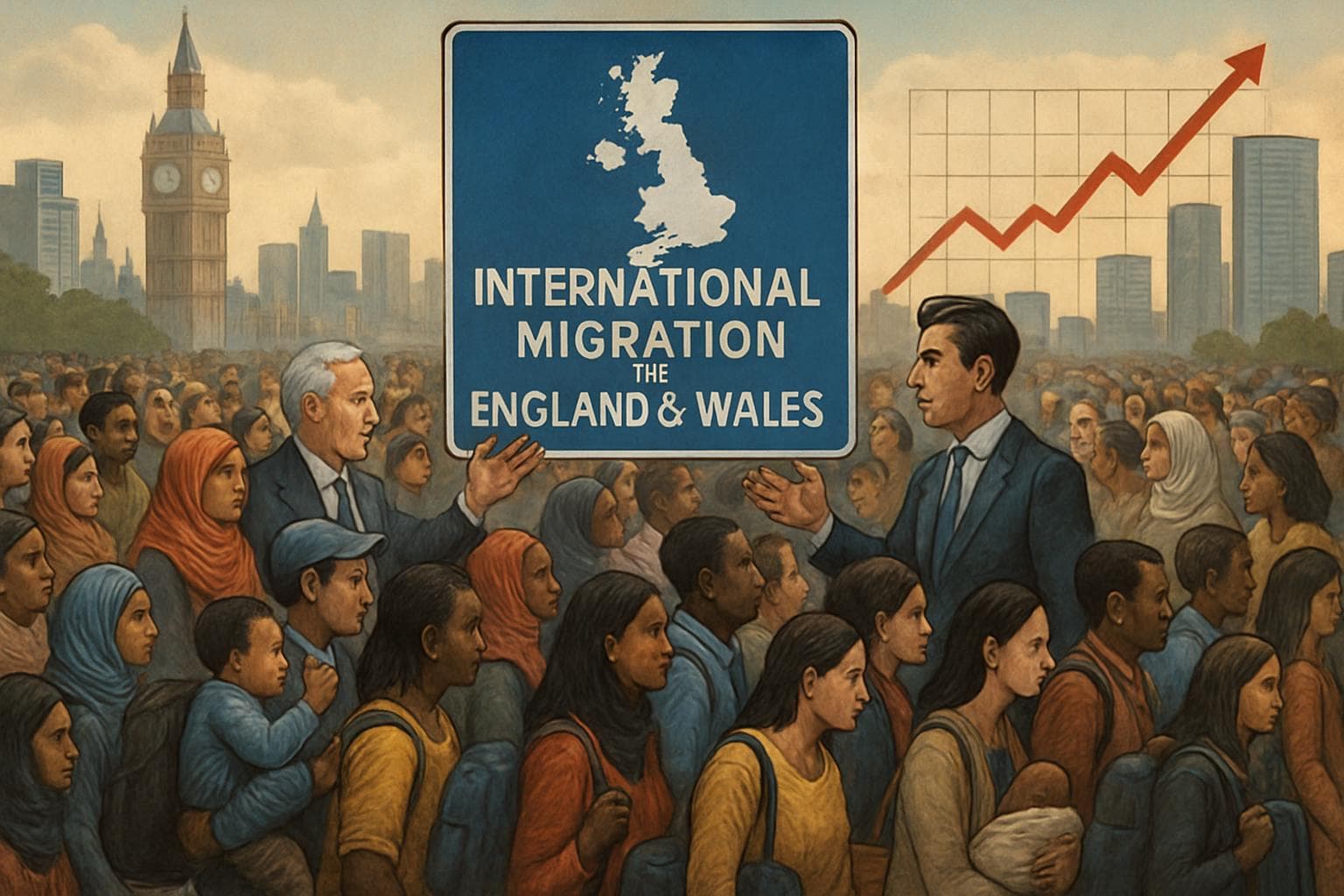
International Migration Drives Significant Population Growth in England and Wales
In This Article
HIGHLIGHTS
- The population of England and Wales increased by over 700,000 in the year to June 2024, largely due to international migration.
- Net migration accounted for 690,147 of the population increase, with 1,142,303 people immigrating and 452,156 emigrating.
- Natural population change contributed minimally, with slightly more births (596,012) than deaths (566,030).
- The UK government has introduced stricter immigration policies, aiming to reduce net migration numbers.
- Political leaders express concerns over the impact of migration on public services and social cohesion.
The population of England and Wales experienced a substantial increase of over 700,000 people in the year leading up to June 2024, marking the second-largest annual rise in more than 75 years, according to the Office for National Statistics (ONS). This growth, primarily driven by international migration, underscores ongoing challenges and debates surrounding UK immigration policy.
Population Surge and Migration Trends
The ONS data reveals that net migration was the primary factor behind the population surge, with 1,142,303 individuals immigrating to England and Wales, while 452,156 people emigrated. This resulted in a net migration figure of 690,147, accounting for 98% of the total population increase of 706,881. In contrast, natural population change, the difference between births and deaths, contributed only marginally, with 29,982 more births than deaths recorded.
Political Reactions and Policy Changes
The rise in population has sparked political debate, with Labour and Conservative leaders addressing the implications of such growth. Home Secretary Yvette Cooper criticized the previous Conservative government's immigration policies, highlighting the increase in overseas recruitment and the decline in UK-based training. Meanwhile, Shadow Home Secretary Chris Philp acknowledged the high migration numbers, emphasizing the need for effective policies to manage immigration and its impact on housing and social cohesion.
Future Projections and Challenges
The ONS projects that the UK population will reach 73.7 million by mid-2036, with net migration expected to stabilize at 315,000 annually from 2028. However, the government faces additional challenges, including a declining birth rate, currently at 1.44 children per woman, the lowest since records began in 1938. Education Secretary Bridget Phillipson has expressed a desire for more young people to start families, citing economic factors as deterrents.
WHAT THIS MIGHT MEAN
The significant population growth driven by international migration presents both opportunities and challenges for the UK. On one hand, a larger population can contribute to economic growth and cultural diversity. On the other, it raises concerns about the strain on public services, housing, and social cohesion. The government's recent policy changes, aimed at reducing net migration, will be crucial in addressing these issues.
As the UK navigates these demographic shifts, political leaders must balance the benefits of migration with the need to maintain social harmony and economic stability. The ongoing debate over immigration policy is likely to remain a central issue in UK politics, influencing future legislative and electoral outcomes.
Related Articles

UK Government to Reform Asylum Seeker Support and Employment Policies
US Supreme Court Ruling Sparks Trade Uncertainty in Asia and Beyond

Canada and Australia Forge Strategic Partnership Amid Global Uncertainty

Reform UK Aims to Reshape Welsh Politics with New Manifesto
Middle East Conflict Drives UK Energy Prices to New Highs

UK Faces Dilemmas Amid Iran Conflict and China Spying Allegations
International Migration Drives Significant Population Growth in England and Wales
In This Article
 Leila Hassan| Published
 HIGHLIGHTS
- The population of England and Wales increased by over 700,000 in the year to June 2024, largely due to international migration.
- Net migration accounted for 690,147 of the population increase, with 1,142,303 people immigrating and 452,156 emigrating.
- Natural population change contributed minimally, with slightly more births (596,012) than deaths (566,030).
- The UK government has introduced stricter immigration policies, aiming to reduce net migration numbers.
- Political leaders express concerns over the impact of migration on public services and social cohesion.
The population of England and Wales experienced a substantial increase of over 700,000 people in the year leading up to June 2024, marking the second-largest annual rise in more than 75 years, according to the Office for National Statistics (ONS). This growth, primarily driven by international migration, underscores ongoing challenges and debates surrounding UK immigration policy.
Population Surge and Migration Trends
The ONS data reveals that net migration was the primary factor behind the population surge, with 1,142,303 individuals immigrating to England and Wales, while 452,156 people emigrated. This resulted in a net migration figure of 690,147, accounting for 98% of the total population increase of 706,881. In contrast, natural population change, the difference between births and deaths, contributed only marginally, with 29,982 more births than deaths recorded.
Political Reactions and Policy Changes
The rise in population has sparked political debate, with Labour and Conservative leaders addressing the implications of such growth. Home Secretary Yvette Cooper criticized the previous Conservative government's immigration policies, highlighting the increase in overseas recruitment and the decline in UK-based training. Meanwhile, Shadow Home Secretary Chris Philp acknowledged the high migration numbers, emphasizing the need for effective policies to manage immigration and its impact on housing and social cohesion.
Future Projections and Challenges
The ONS projects that the UK population will reach 73.7 million by mid-2036, with net migration expected to stabilize at 315,000 annually from 2028. However, the government faces additional challenges, including a declining birth rate, currently at 1.44 children per woman, the lowest since records began in 1938. Education Secretary Bridget Phillipson has expressed a desire for more young people to start families, citing economic factors as deterrents.
WHAT THIS MIGHT MEAN
The significant population growth driven by international migration presents both opportunities and challenges for the UK. On one hand, a larger population can contribute to economic growth and cultural diversity. On the other, it raises concerns about the strain on public services, housing, and social cohesion. The government's recent policy changes, aimed at reducing net migration, will be crucial in addressing these issues.
As the UK navigates these demographic shifts, political leaders must balance the benefits of migration with the need to maintain social harmony and economic stability. The ongoing debate over immigration policy is likely to remain a central issue in UK politics, influencing future legislative and electoral outcomes.
Related Articles
UK Government to Reform Asylum Seeker Support and Employment Policies
US Supreme Court Ruling Sparks Trade Uncertainty in Asia and Beyond
Canada and Australia Forge Strategic Partnership Amid Global Uncertainty
Reform UK Aims to Reshape Welsh Politics with New Manifesto
Middle East Conflict Drives UK Energy Prices to New Highs
UK Faces Dilemmas Amid Iran Conflict and China Spying Allegations