
Myanmar's Controversial Election: Military-Backed Party Set for Victory Amidst Criticism
In This Article
HIGHLIGHTS
- Myanmar's military-backed Union Solidarity and Development Party (USDP) is poised for a landslide victory in elections widely criticized as a sham.
- The election process has been marred by bans on popular parties, ongoing conflict, and allegations of voter intimidation.
- International bodies, including the UN, have condemned the election as illegitimate, while ASEAN has refrained from endorsing it.
- The military junta, led by Min Aung Hlaing, claims the election is a step towards democracy, despite widespread skepticism.
- Aung San Suu Kyi remains detained, and her party is banned, highlighting the ongoing suppression of political opposition.
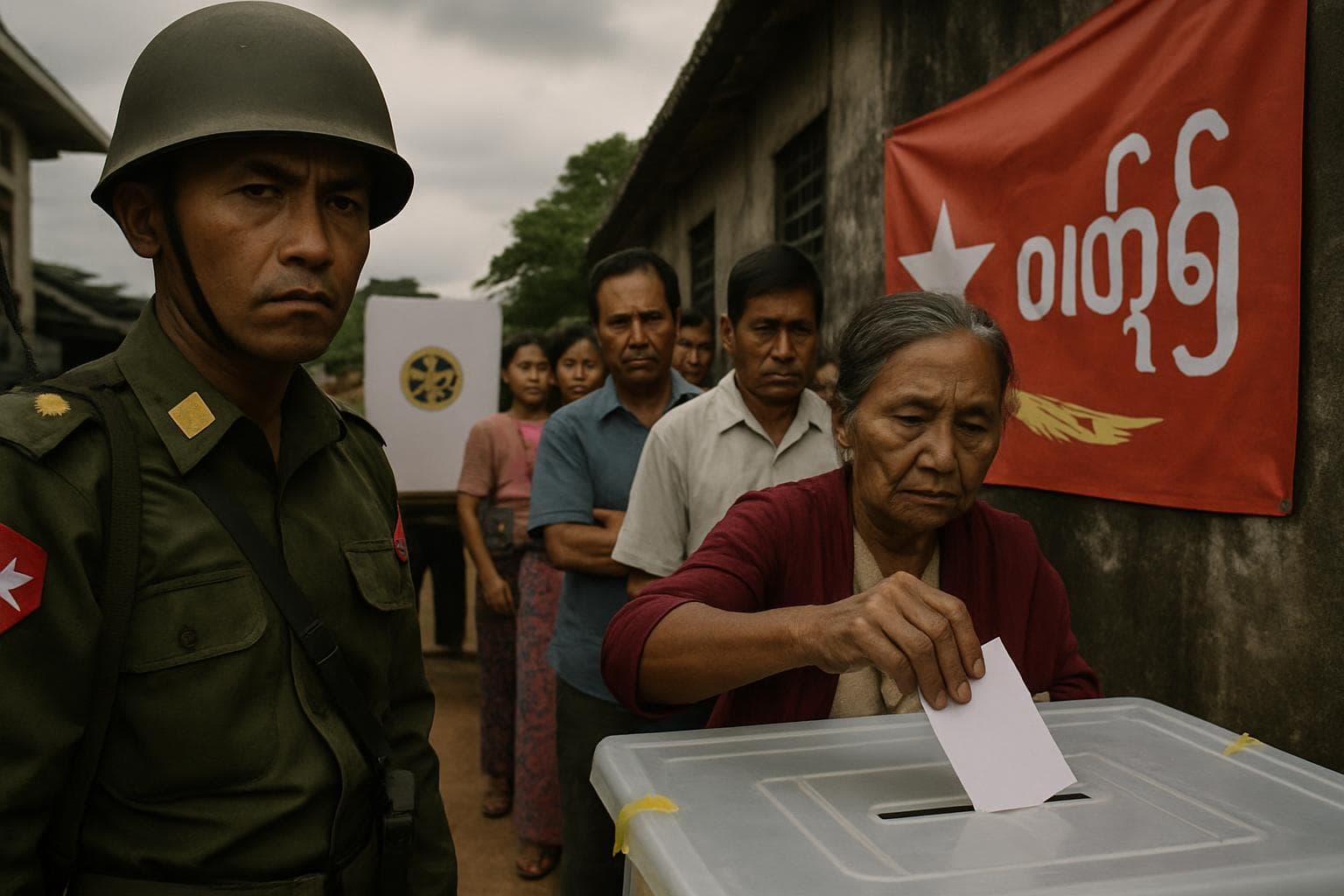
Myanmar's recent election, marked by widespread criticism and allegations of being a "sham," has concluded with the military-backed Union Solidarity and Development Party (USDP) expected to secure a decisive victory. The election, conducted in three phases, has been overshadowed by the exclusion of popular parties, ongoing civil conflict, and accusations of voter intimidation.
Election Process and Criticism
The election process has been fraught with controversy, as many popular political parties were banned from participating. The military junta, which seized power in a 2021 coup, has faced international condemnation for orchestrating what many see as a facade of democracy. The United Nations and various human rights organizations have dismissed the election as illegitimate, while ASEAN has chosen not to endorse the process.
Military's Defense and International Response
Despite the criticism, junta leader Min Aung Hlaing has defended the election as a "free and fair" step towards democracy. However, the international community remains skeptical, with Tom Andrews, the UN special rapporteur on Myanmar, warning against accepting military rule disguised in civilian clothing. The election has also been marred by violence, with reports of military airstrikes in conflict zones, further complicating the voting process.
Impact on Myanmar's Political Landscape
The election's outcome is unlikely to alter Myanmar's political landscape significantly. Aung San Suu Kyi, the ousted civilian leader, remains in detention, and her party is banned, leaving little room for genuine political opposition. The military's grip on power appears unyielding, with the USDP running the largest number of candidates nationwide.
Local Sentiments and Challenges
On the ground, many voters participated out of fear of repercussions rather than genuine political engagement. In cities like Mandalay, voters expressed concerns about the lack of freedom and the ongoing conflict. The economic impact of the military's rule has been severe, with rising prices and increased displacement due to conflict.
WHAT THIS MIGHT MEAN
The immediate future of Myanmar remains uncertain as the military junta consolidates its power through the election. The international community's response, particularly from ASEAN and Western governments, will be crucial in shaping Myanmar's political trajectory. Increased diplomatic pressure and potential sanctions could influence the junta's actions, though China's support may bolster the military's position.
Domestically, the continuation of the civil war poses a significant challenge. The military's attempts to regain control over lost territories could escalate violence, further destabilizing the region. The possibility of a broader political dialogue remains distant, but increased internal dissent within the military could eventually lead to shifts in Myanmar's governance.
Related Articles
Peru's Political Turmoil: President José Jerí Ousted Amid Scandal
China Sets Lowest GDP Growth Target in Decades Amid Economic Challenges

UK Faces Dilemmas Amid Iran Conflict and China Spying Allegations
Intensified US-Israel Strikes on Iran Spark Global Outcry

Labour MP's Husband Arrested in UK-China Espionage Probe
Canada Calls for De-escalation Amid US-Israel Strikes on Iran
Myanmar's Controversial Election: Military-Backed Party Set for Victory Amidst Criticism
In This Article
 Alex Carter| Published
 HIGHLIGHTS
- Myanmar's military-backed Union Solidarity and Development Party (USDP) is poised for a landslide victory in elections widely criticized as a sham.
- The election process has been marred by bans on popular parties, ongoing conflict, and allegations of voter intimidation.
- International bodies, including the UN, have condemned the election as illegitimate, while ASEAN has refrained from endorsing it.
- The military junta, led by Min Aung Hlaing, claims the election is a step towards democracy, despite widespread skepticism.
- Aung San Suu Kyi remains detained, and her party is banned, highlighting the ongoing suppression of political opposition.
Myanmar's recent election, marked by widespread criticism and allegations of being a "sham," has concluded with the military-backed Union Solidarity and Development Party (USDP) expected to secure a decisive victory. The election, conducted in three phases, has been overshadowed by the exclusion of popular parties, ongoing civil conflict, and accusations of voter intimidation.
Election Process and Criticism
The election process has been fraught with controversy, as many popular political parties were banned from participating. The military junta, which seized power in a 2021 coup, has faced international condemnation for orchestrating what many see as a facade of democracy. The United Nations and various human rights organizations have dismissed the election as illegitimate, while ASEAN has chosen not to endorse the process.
Military's Defense and International Response
Despite the criticism, junta leader Min Aung Hlaing has defended the election as a "free and fair" step towards democracy. However, the international community remains skeptical, with Tom Andrews, the UN special rapporteur on Myanmar, warning against accepting military rule disguised in civilian clothing. The election has also been marred by violence, with reports of military airstrikes in conflict zones, further complicating the voting process.
Impact on Myanmar's Political Landscape
The election's outcome is unlikely to alter Myanmar's political landscape significantly. Aung San Suu Kyi, the ousted civilian leader, remains in detention, and her party is banned, leaving little room for genuine political opposition. The military's grip on power appears unyielding, with the USDP running the largest number of candidates nationwide.
Local Sentiments and Challenges
On the ground, many voters participated out of fear of repercussions rather than genuine political engagement. In cities like Mandalay, voters expressed concerns about the lack of freedom and the ongoing conflict. The economic impact of the military's rule has been severe, with rising prices and increased displacement due to conflict.
WHAT THIS MIGHT MEAN
The immediate future of Myanmar remains uncertain as the military junta consolidates its power through the election. The international community's response, particularly from ASEAN and Western governments, will be crucial in shaping Myanmar's political trajectory. Increased diplomatic pressure and potential sanctions could influence the junta's actions, though China's support may bolster the military's position.
Domestically, the continuation of the civil war poses a significant challenge. The military's attempts to regain control over lost territories could escalate violence, further destabilizing the region. The possibility of a broader political dialogue remains distant, but increased internal dissent within the military could eventually lead to shifts in Myanmar's governance.
Related Articles
Peru's Political Turmoil: President José Jerí Ousted Amid Scandal
China Sets Lowest GDP Growth Target in Decades Amid Economic Challenges
UK Faces Dilemmas Amid Iran Conflict and China Spying Allegations
Intensified US-Israel Strikes on Iran Spark Global Outcry
Labour MP's Husband Arrested in UK-China Espionage Probe
Canada Calls for De-escalation Amid US-Israel Strikes on Iran