
Netanyahu Seeks Presidential Pardon Amidst Ongoing Corruption Trials
In This Article
HIGHLIGHTS
- Israeli Prime Minister Benjamin Netanyahu has formally requested a pardon from President Isaac Herzog amid ongoing corruption trials.
- Netanyahu faces charges of bribery, fraud, and breach of trust, which he denies, labeling the trial a "witch hunt."
- President Herzog's office is considering the pardon request, which is unprecedented without a conviction or admission of guilt.
- Opposition leaders demand Netanyahu admit guilt and retire from politics before any pardon is granted.
- The request has sparked debate over its potential to create a political and constitutional crisis in Israel.
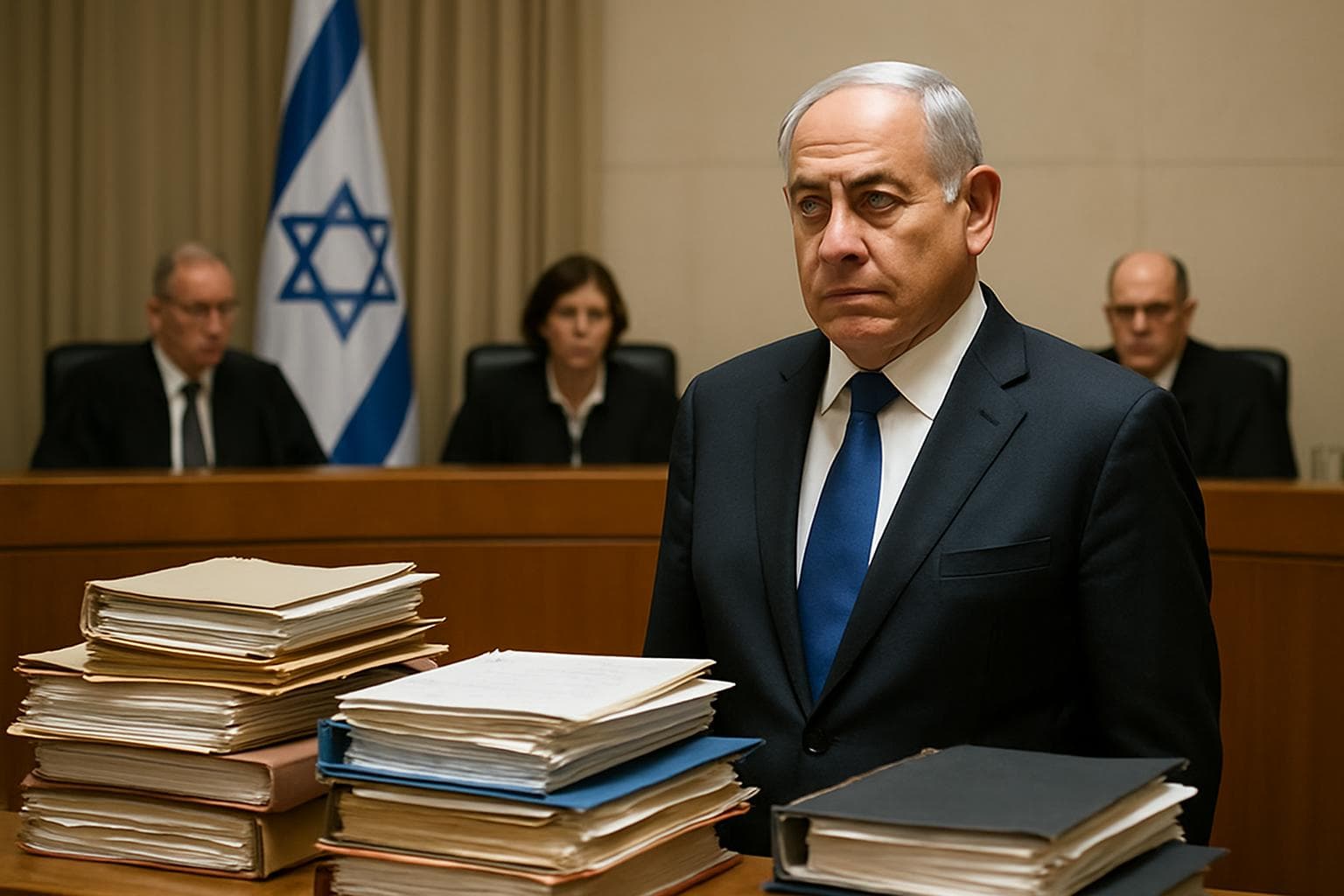
Israeli Prime Minister Benjamin Netanyahu has formally requested a pardon from President Isaac Herzog, seeking to end a five-year-long corruption trial that has captivated the nation. The request, submitted by Netanyahu's legal team, argues that halting the trial would serve the national interest by fostering unity and reducing internal divisions.
Background of the Charges
Netanyahu, who has been on trial since 2020, faces charges of bribery, fraud, and breach of trust across three separate cases. The allegations include receiving gifts from businessmen in exchange for political favors, manipulating media coverage, and promoting regulatory benefits for a telecom company. Despite these charges, Netanyahu maintains his innocence, describing the legal proceedings as a politically motivated "witch hunt."
Presidential Consideration and Legal Precedents
President Herzog's office has acknowledged receipt of the 111-page pardon request, which has been forwarded to the Ministry of Justice for review. The president's legal adviser will also provide an opinion before any decision is made. Historically, presidential pardons in Israel are rare before a conviction, with a notable exception in 1986 involving the Shin Bet security service. Granting a pardon without a conviction or admission of guilt would set a controversial precedent.
Political Reactions and Implications
The pardon request has ignited a political firestorm, with opposition leaders insisting that Netanyahu must admit guilt and retire from politics before any pardon is considered. Yair Lapid, a prominent opposition figure, emphasized that a pardon should not be granted without an expression of remorse. The situation has the potential to escalate into a constitutional crisis, with Israel's Supreme Court possibly intervening if the pardon is granted.
Netanyahu's Defense and Public Statements
In a televised statement, Netanyahu expressed his desire to clear his name in court but argued that the ongoing trial is causing national discord. He claimed that the trial's conclusion would help lower tensions and promote reconciliation. The prime minister also highlighted the burden of testifying multiple times a week, describing it as an "impossible demand."
WHAT THIS MIGHT MEAN
The outcome of Netanyahu's pardon request could have significant legal and political ramifications for Israel. If granted, it may set a new precedent for presidential pardons, potentially altering the balance of power between the judiciary and executive branches. Conversely, a denial could prolong the trial, further polarizing the Israeli public and impacting upcoming elections. Legal experts suggest that the Supreme Court may ultimately need to address the constitutional questions raised by this unprecedented request. As the nation awaits President Herzog's decision, the case continues to underscore the complex interplay between politics and the legal system in Israel.
Related Articles

Trump's Board of Peace Pledges $7 Billion for Gaza Amidst International Skepticism

Middle East Conflict Drives UK Energy Prices to New Highs

UK Faces Dilemmas Amid Iran Conflict and China Spying Allegations

US and Israel Intensify Military Campaign as Iran's Capabilities Dwindle
Intensified US-Israel Strikes on Iran Spark Global Outcry
Senate Blocks Resolution to Limit Trump's Military Actions in Iran
Netanyahu Seeks Presidential Pardon Amidst Ongoing Corruption Trials
In This Article
 Sofia Romano| Published
 HIGHLIGHTS
- Israeli Prime Minister Benjamin Netanyahu has formally requested a pardon from President Isaac Herzog amid ongoing corruption trials.
- Netanyahu faces charges of bribery, fraud, and breach of trust, which he denies, labeling the trial a "witch hunt."
- President Herzog's office is considering the pardon request, which is unprecedented without a conviction or admission of guilt.
- Opposition leaders demand Netanyahu admit guilt and retire from politics before any pardon is granted.
- The request has sparked debate over its potential to create a political and constitutional crisis in Israel.
Israeli Prime Minister Benjamin Netanyahu has formally requested a pardon from President Isaac Herzog, seeking to end a five-year-long corruption trial that has captivated the nation. The request, submitted by Netanyahu's legal team, argues that halting the trial would serve the national interest by fostering unity and reducing internal divisions.
Background of the Charges
Netanyahu, who has been on trial since 2020, faces charges of bribery, fraud, and breach of trust across three separate cases. The allegations include receiving gifts from businessmen in exchange for political favors, manipulating media coverage, and promoting regulatory benefits for a telecom company. Despite these charges, Netanyahu maintains his innocence, describing the legal proceedings as a politically motivated "witch hunt."
Presidential Consideration and Legal Precedents
President Herzog's office has acknowledged receipt of the 111-page pardon request, which has been forwarded to the Ministry of Justice for review. The president's legal adviser will also provide an opinion before any decision is made. Historically, presidential pardons in Israel are rare before a conviction, with a notable exception in 1986 involving the Shin Bet security service. Granting a pardon without a conviction or admission of guilt would set a controversial precedent.
Political Reactions and Implications
The pardon request has ignited a political firestorm, with opposition leaders insisting that Netanyahu must admit guilt and retire from politics before any pardon is considered. Yair Lapid, a prominent opposition figure, emphasized that a pardon should not be granted without an expression of remorse. The situation has the potential to escalate into a constitutional crisis, with Israel's Supreme Court possibly intervening if the pardon is granted.
Netanyahu's Defense and Public Statements
In a televised statement, Netanyahu expressed his desire to clear his name in court but argued that the ongoing trial is causing national discord. He claimed that the trial's conclusion would help lower tensions and promote reconciliation. The prime minister also highlighted the burden of testifying multiple times a week, describing it as an "impossible demand."
WHAT THIS MIGHT MEAN
The outcome of Netanyahu's pardon request could have significant legal and political ramifications for Israel. If granted, it may set a new precedent for presidential pardons, potentially altering the balance of power between the judiciary and executive branches. Conversely, a denial could prolong the trial, further polarizing the Israeli public and impacting upcoming elections. Legal experts suggest that the Supreme Court may ultimately need to address the constitutional questions raised by this unprecedented request. As the nation awaits President Herzog's decision, the case continues to underscore the complex interplay between politics and the legal system in Israel.
Related Articles
Trump's Board of Peace Pledges $7 Billion for Gaza Amidst International Skepticism
Middle East Conflict Drives UK Energy Prices to New Highs
UK Faces Dilemmas Amid Iran Conflict and China Spying Allegations
US and Israel Intensify Military Campaign as Iran's Capabilities Dwindle
Intensified US-Israel Strikes on Iran Spark Global Outcry
Senate Blocks Resolution to Limit Trump's Military Actions in Iran