
NHS and BMA Clash Over Patient Safety Amid Resident Doctors' Strike
In This Article
HIGHLIGHTS
- NHS England and the British Medical Association (BMA) are in conflict over derogation requests during a five-day resident doctors' strike.
- The BMA has rejected 18 out of 47 derogation requests, with NHS England accusing the union of endangering patient safety.
- The strike is part of a broader pay dispute, with resident doctors demanding a 29% pay increase.
- The Royal College of Nursing has also rejected a 3.6% pay rise, potentially leading to further industrial action.
- The BMA insists derogations should only be for emergencies, while NHS England criticizes the union's decision-making process.
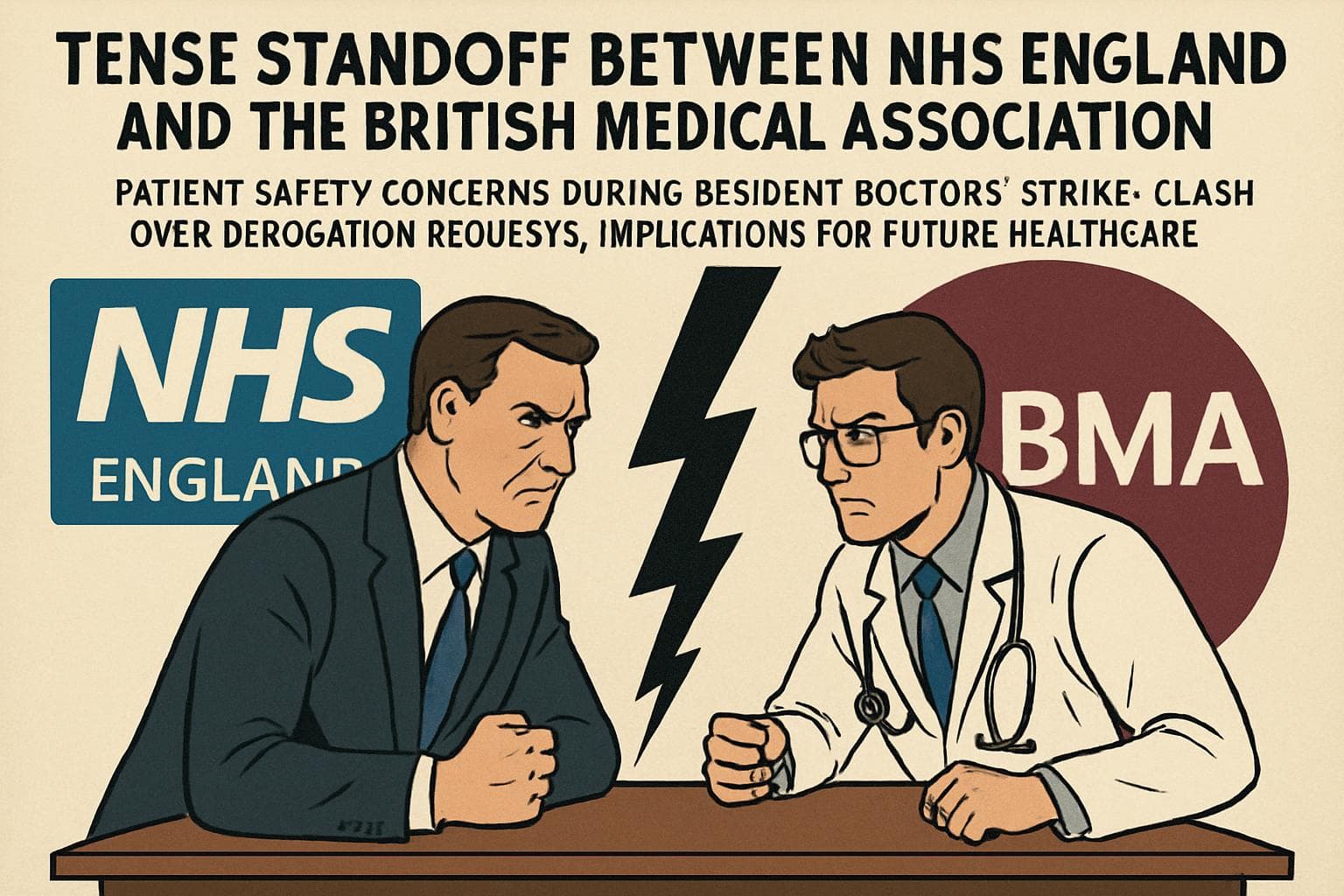
The ongoing resident doctors' strike in England has intensified tensions between NHS England and the British Medical Association (BMA), with both parties accusing each other of compromising patient safety. The dispute centers on derogation requests, which allow striking doctors to return to work in critical situations.
As the five-day strike nears its conclusion, the BMA has rejected 18 out of 47 derogation requests, leading NHS England to criticize the union's "increasingly hardline" stance. The BMA, however, maintains that derogations should be reserved for emergencies, accusing NHS management of poor planning and attempting to use derogations to cover non-urgent care.
The strike, the twelfth since 2023, is part of a broader campaign by resident doctors, formerly known as junior doctors, for a 29% pay increase. The BMA's central committee evaluates each derogation request, with NHS England expressing particular concern over rejected requests related to cancer care.
In a parallel development, the Royal College of Nursing has overwhelmingly rejected a 3.6% pay rise, describing it as "grotesque." This decision raises the possibility of further industrial action across the NHS, as various staff groups express dissatisfaction with their pay awards.
Despite the ongoing conflict, the BMA has agreed to some derogations, allowing doctors to return to work in critical units such as the neonatal intensive care unit at Nottingham City Hospital and the emergency department at Northern General Hospital in Sheffield.
WHAT THIS MIGHT MEAN
The current impasse between NHS England and the BMA over derogation requests could lead to heightened tensions and further industrial action if unresolved. The BMA's firm stance on limiting derogations to emergencies underscores the union's commitment to its members' demands for better pay and working conditions. Meanwhile, NHS England's concerns about patient safety highlight the potential risks of prolonged strikes on healthcare delivery.
As the Royal College of Nursing also signals discontent with its pay award, the NHS may face a wave of industrial actions from various staff groups, potentially disrupting services further. The outcome of these disputes could set a precedent for future negotiations between healthcare workers and the government, influencing the landscape of NHS staffing and pay structures.
Related Articles

Great Ormond Street Hospital Faces Scrutiny Over Harmful Surgeries

NHS England Expands Access to Life-Saving Prostate Cancer Drug
Persistent Safety Concerns in Nottingham Maternity Services Amidst Calls for Systemic Reform
NHS Staff Pay Rise Sparks Union Outrage Amid Inflation Concerns
Resident Doctors in England Vote to Extend Strike Action Amid Ongoing Pay Dispute
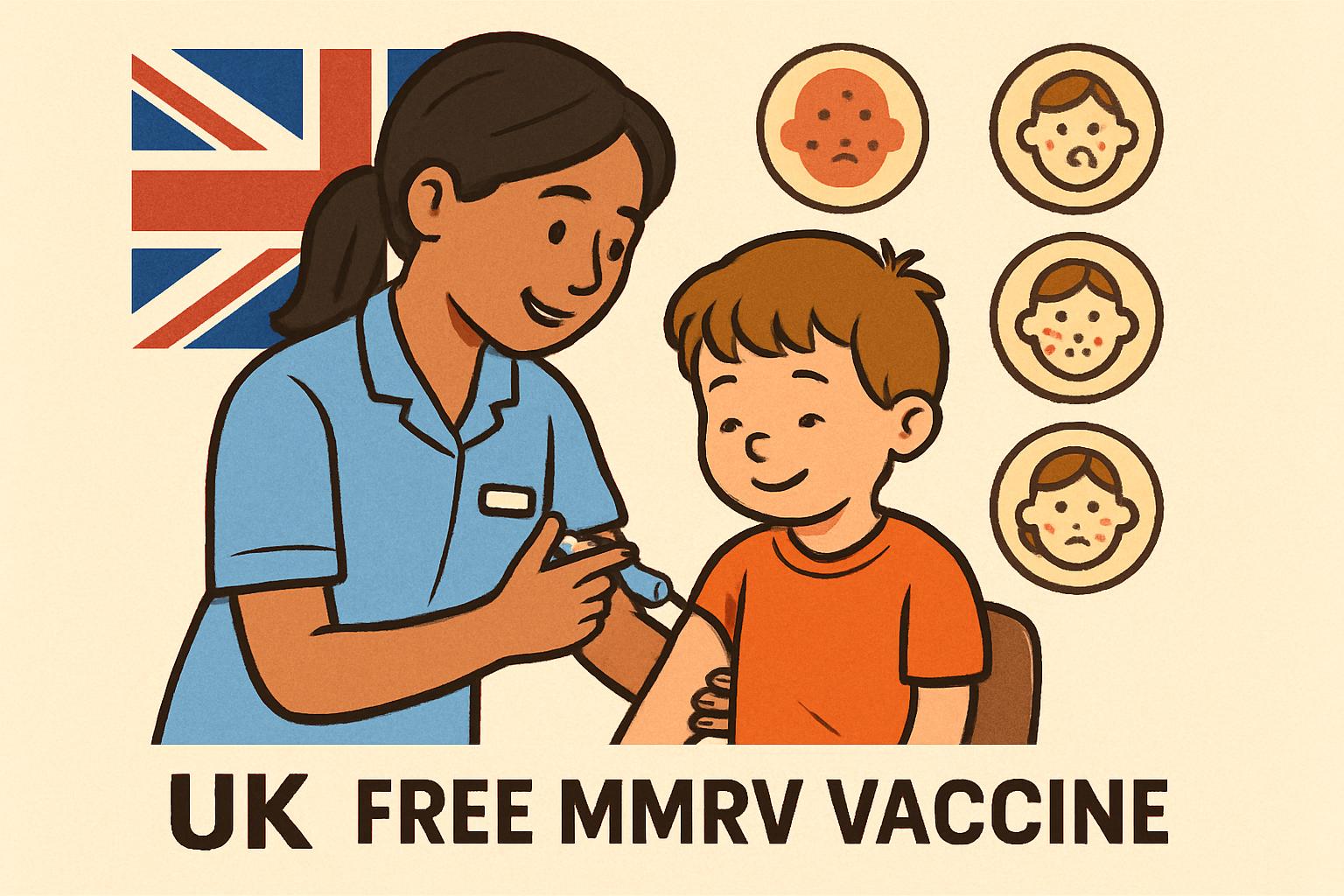
UK Launches Combined Vaccine to Protect Children Against Chickenpox and Other Diseases
NHS and BMA Clash Over Patient Safety Amid Resident Doctors' Strike
In This Article
 Maya Singh| Published
 HIGHLIGHTS
- NHS England and the British Medical Association (BMA) are in conflict over derogation requests during a five-day resident doctors' strike.
- The BMA has rejected 18 out of 47 derogation requests, with NHS England accusing the union of endangering patient safety.
- The strike is part of a broader pay dispute, with resident doctors demanding a 29% pay increase.
- The Royal College of Nursing has also rejected a 3.6% pay rise, potentially leading to further industrial action.
- The BMA insists derogations should only be for emergencies, while NHS England criticizes the union's decision-making process.
The ongoing resident doctors' strike in England has intensified tensions between NHS England and the British Medical Association (BMA), with both parties accusing each other of compromising patient safety. The dispute centers on derogation requests, which allow striking doctors to return to work in critical situations.
As the five-day strike nears its conclusion, the BMA has rejected 18 out of 47 derogation requests, leading NHS England to criticize the union's "increasingly hardline" stance. The BMA, however, maintains that derogations should be reserved for emergencies, accusing NHS management of poor planning and attempting to use derogations to cover non-urgent care.
The strike, the twelfth since 2023, is part of a broader campaign by resident doctors, formerly known as junior doctors, for a 29% pay increase. The BMA's central committee evaluates each derogation request, with NHS England expressing particular concern over rejected requests related to cancer care.
In a parallel development, the Royal College of Nursing has overwhelmingly rejected a 3.6% pay rise, describing it as "grotesque." This decision raises the possibility of further industrial action across the NHS, as various staff groups express dissatisfaction with their pay awards.
Despite the ongoing conflict, the BMA has agreed to some derogations, allowing doctors to return to work in critical units such as the neonatal intensive care unit at Nottingham City Hospital and the emergency department at Northern General Hospital in Sheffield.
WHAT THIS MIGHT MEAN
The current impasse between NHS England and the BMA over derogation requests could lead to heightened tensions and further industrial action if unresolved. The BMA's firm stance on limiting derogations to emergencies underscores the union's commitment to its members' demands for better pay and working conditions. Meanwhile, NHS England's concerns about patient safety highlight the potential risks of prolonged strikes on healthcare delivery.
As the Royal College of Nursing also signals discontent with its pay award, the NHS may face a wave of industrial actions from various staff groups, potentially disrupting services further. The outcome of these disputes could set a precedent for future negotiations between healthcare workers and the government, influencing the landscape of NHS staffing and pay structures.
Related Articles
Great Ormond Street Hospital Faces Scrutiny Over Harmful Surgeries
NHS England Expands Access to Life-Saving Prostate Cancer Drug
Persistent Safety Concerns in Nottingham Maternity Services Amidst Calls for Systemic Reform
NHS Staff Pay Rise Sparks Union Outrage Amid Inflation Concerns
Resident Doctors in England Vote to Extend Strike Action Amid Ongoing Pay Dispute
UK Launches Combined Vaccine to Protect Children Against Chickenpox and Other Diseases