
NHS Trusts Declare Critical Incidents Amid Surge in A&E Admissions
In This Article
HIGHLIGHTS
- Four NHS hospital trusts in Surrey and Kent have declared critical incidents due to a surge in A&E admissions.
- Rising cases of flu, norovirus, and respiratory viruses, along with staff sickness, have exacerbated the situation.
- The critical incidents allow trusts to reschedule non-urgent operations to prioritize urgent care.
- Hospitals are operating at full capacity, with limited ability to admit new patients needing acute care.
- Patients are advised to use alternative services for non-life-threatening conditions to avoid long waits.
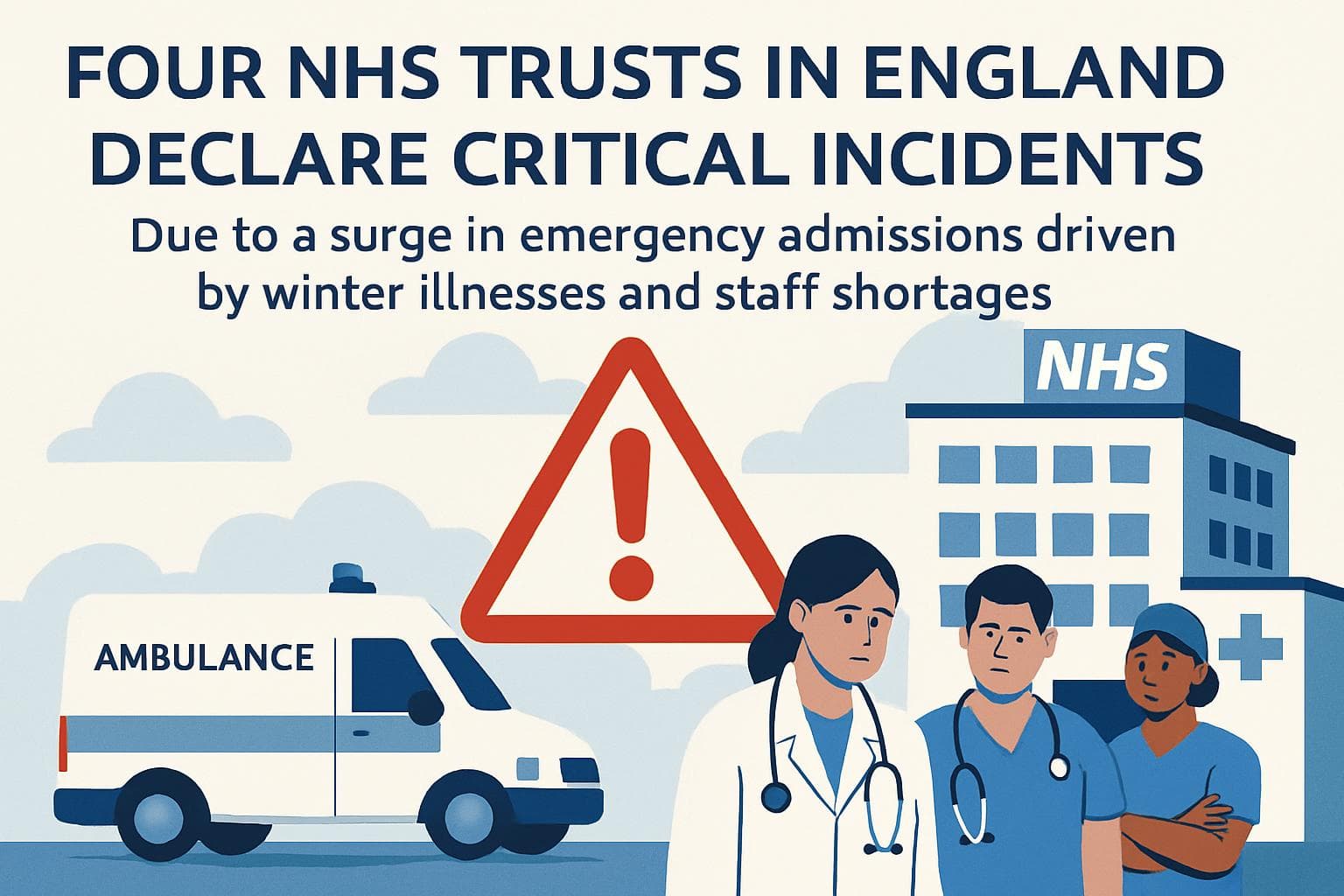
Four NHS hospital trusts in England have declared critical incidents as they grapple with an overwhelming surge in A&E admissions. The trusts, located in Surrey and Kent, are facing significant pressure due to a rise in flu, norovirus, and respiratory virus cases, compounded by increased staff sickness.
Surge in Hospital Admissions
NHS Surrey Heartlands, which oversees three of the affected trusts—Royal Surrey NHS Foundation Trust, Epsom and St Helier University Hospitals NHS Trust, and Surrey and Sussex Healthcare NHS Trust—reported that the recent cold weather has further strained their services. The cold snap has led to more frail patients requiring hospital admission, intensifying the demand on emergency healthcare services.
In Kent, the East Kent Hospitals University NHS Foundation Trust declared a critical incident at the Queen Elizabeth the Queen Mother Hospital in Margate. The trust cited "significant and rising demand for hospital care" as the primary reason for the alert, with beds across its hospitals at full capacity.
Impact on Services and Patient Care
Declaring a critical incident is the highest alert level within the NHS, enabling hospital management to take immediate steps to create capacity. This includes rescheduling non-urgent operations and outpatient appointments to focus on patients with the most urgent clinical needs. Dr. Charlotte Canniff, joint chief medical officer of NHS Surrey Heartlands, emphasized that essential services remain open and urged patients needing urgent care to continue seeking help.
Sarah Hayes from East Kent Hospitals highlighted the immense pressure on staff, who are working tirelessly to provide safe and compassionate care. She encouraged the public to use NHS 111 for urgent care advice and to reserve emergency services for life-threatening situations.
Navigating the Healthcare Crisis
As hospitals operate at full capacity, patients are advised to consider alternative services for non-life-threatening conditions to avoid long waits. The trusts are urging the public to support healthcare workers by understanding the challenges faced and utilizing available resources wisely.
WHAT THIS MIGHT MEAN
The declaration of critical incidents by these NHS trusts underscores the ongoing challenges faced by the healthcare system during peak winter months. If the surge in A&E admissions continues, further strain could lead to extended delays in non-urgent care and increased pressure on healthcare staff. Experts suggest that a coordinated response, including public health campaigns to reduce the spread of winter illnesses, could alleviate some of the burden. Additionally, the situation may prompt a reevaluation of resource allocation and staffing strategies to better prepare for future healthcare demands.
Related Articles

UK Government to Reform Asylum Seeker Support and Employment Policies
Persistent Safety Concerns in Nottingham Maternity Services Amidst Calls for Systemic Reform

Nottingham Attacks Inquiry: Families Demand Accountability and Truth

Birmingham's Proactive Approach to Measles Outbreak Offers Lessons for North London

Crackdown on Waste Crime: £1.2 Million Fine and New Drone Unit to Combat Illegal Dumping

NHS Faces Joint Surgery Delays Amid Bone Cement Shortage
NHS Trusts Declare Critical Incidents Amid Surge in A&E Admissions
In This Article
 Ethan Brooks| Published
 HIGHLIGHTS
- Four NHS hospital trusts in Surrey and Kent have declared critical incidents due to a surge in A&E admissions.
- Rising cases of flu, norovirus, and respiratory viruses, along with staff sickness, have exacerbated the situation.
- The critical incidents allow trusts to reschedule non-urgent operations to prioritize urgent care.
- Hospitals are operating at full capacity, with limited ability to admit new patients needing acute care.
- Patients are advised to use alternative services for non-life-threatening conditions to avoid long waits.
Four NHS hospital trusts in England have declared critical incidents as they grapple with an overwhelming surge in A&E admissions. The trusts, located in Surrey and Kent, are facing significant pressure due to a rise in flu, norovirus, and respiratory virus cases, compounded by increased staff sickness.
Surge in Hospital Admissions
NHS Surrey Heartlands, which oversees three of the affected trusts—Royal Surrey NHS Foundation Trust, Epsom and St Helier University Hospitals NHS Trust, and Surrey and Sussex Healthcare NHS Trust—reported that the recent cold weather has further strained their services. The cold snap has led to more frail patients requiring hospital admission, intensifying the demand on emergency healthcare services.
In Kent, the East Kent Hospitals University NHS Foundation Trust declared a critical incident at the Queen Elizabeth the Queen Mother Hospital in Margate. The trust cited "significant and rising demand for hospital care" as the primary reason for the alert, with beds across its hospitals at full capacity.
Impact on Services and Patient Care
Declaring a critical incident is the highest alert level within the NHS, enabling hospital management to take immediate steps to create capacity. This includes rescheduling non-urgent operations and outpatient appointments to focus on patients with the most urgent clinical needs. Dr. Charlotte Canniff, joint chief medical officer of NHS Surrey Heartlands, emphasized that essential services remain open and urged patients needing urgent care to continue seeking help.
Sarah Hayes from East Kent Hospitals highlighted the immense pressure on staff, who are working tirelessly to provide safe and compassionate care. She encouraged the public to use NHS 111 for urgent care advice and to reserve emergency services for life-threatening situations.
Navigating the Healthcare Crisis
As hospitals operate at full capacity, patients are advised to consider alternative services for non-life-threatening conditions to avoid long waits. The trusts are urging the public to support healthcare workers by understanding the challenges faced and utilizing available resources wisely.
WHAT THIS MIGHT MEAN
The declaration of critical incidents by these NHS trusts underscores the ongoing challenges faced by the healthcare system during peak winter months. If the surge in A&E admissions continues, further strain could lead to extended delays in non-urgent care and increased pressure on healthcare staff. Experts suggest that a coordinated response, including public health campaigns to reduce the spread of winter illnesses, could alleviate some of the burden. Additionally, the situation may prompt a reevaluation of resource allocation and staffing strategies to better prepare for future healthcare demands.
Related Articles
UK Government to Reform Asylum Seeker Support and Employment Policies
Persistent Safety Concerns in Nottingham Maternity Services Amidst Calls for Systemic Reform
Nottingham Attacks Inquiry: Families Demand Accountability and Truth
Birmingham's Proactive Approach to Measles Outbreak Offers Lessons for North London
Crackdown on Waste Crime: £1.2 Million Fine and New Drone Unit to Combat Illegal Dumping
NHS Faces Joint Surgery Delays Amid Bone Cement Shortage