
Nigerian Court Sentences Biafra Leader Nnamdi Kanu to Life for Terrorism
In This Article
HIGHLIGHTS
- Nnamdi Kanu, leader of the Indigenous People of Biafra (Ipob), has been sentenced to life imprisonment by a Nigerian court on terrorism charges.
- The court found Kanu guilty of inciting violence and terrorism through broadcasts advocating for a separate Biafran state.
- Kanu, who holds British citizenship, was convicted on all seven charges, including treason and involvement with a banned movement.
- The trial was marked by Kanu's dismissal of his legal team and unruly behavior, leading to his removal from the courtroom.
- The verdict has sparked muted reactions in south-eastern Nigeria, the heartland of the Biafra separatist movement.
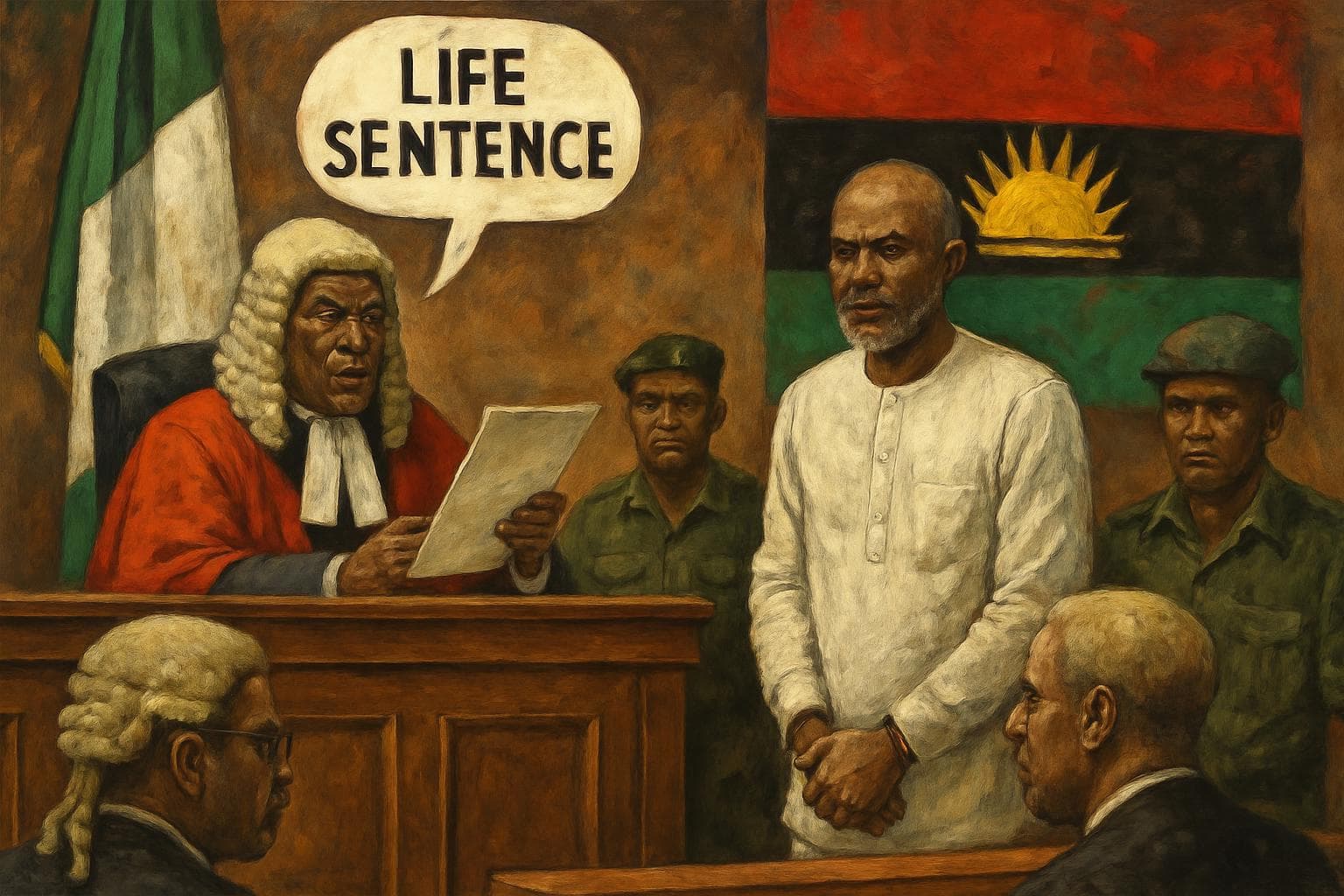
In a landmark ruling, a Nigerian court has sentenced Nnamdi Kanu, the leader of the Indigenous People of Biafra (Ipob), to life imprisonment on charges of terrorism. The verdict, delivered by Judge James Omotosho in Abuja, concludes a decade-long legal saga that has captivated the nation and drawn international attention.
Conviction and Charges
Kanu, who also holds British citizenship, was found guilty on all seven charges he faced, including terrorism, treason, and involvement with a proscribed organization. The prosecution had sought the death penalty, but Judge Omotosho opted for life sentences, citing a shift away from capital punishment. The court concluded that Kanu had used his platform to incite violence and unrest in pursuit of an independent Biafran state, a cause that has historical roots dating back to Nigeria's civil war in the late 1960s.
Courtroom Drama and Legal Proceedings
The trial was not without its share of drama. Kanu dismissed his legal team and chose to represent himself, leading to a contentious courtroom atmosphere. His behavior resulted in his removal from the court during the verdict's delivery. Despite his absence, the court proceeded, citing incontrovertible evidence of his intent to incite violence. Kanu's legal journey has been fraught with controversy, including a 2021 extradition from Kenya that his supporters labeled as extraordinary rendition.
Historical Context and Regional Impact
The Biafra conflict, which saw the secession of the Eastern Region in 1967, remains a sensitive topic in Nigeria. Kanu's movement, Ipob, has been at the forefront of renewed calls for independence, often clashing with Nigerian authorities. The group was banned as a terrorist organization in 2017, and its activities have been linked to numerous violent incidents in the region. Despite the heavy sentence, reactions in south-eastern Nigeria, where Kanu enjoys significant support, have been subdued.
International Repercussions and Future Prospects
The case has drawn international scrutiny, particularly from the UK, given Kanu's dual citizenship. The British government has faced criticism for its perceived inaction, with Kanu's family accusing it of abandoning him. Meanwhile, the Biafra separatist movement continues to evolve, with splinter groups like the Biafran Government in Exile emerging. The region remains tense, with ongoing reports of violence and human rights abuses.
WHAT THIS MIGHT MEAN
The sentencing of Nnamdi Kanu is likely to have significant implications for Nigeria's political landscape and its relationship with the international community. Domestically, the verdict may either quell or inflame separatist sentiments in the south-east, depending on the government's approach to addressing the region's grievances. Internationally, the case could strain Nigeria-UK relations, especially if calls for Kanu's release gain traction.
Legal experts suggest that Kanu's legal team may pursue further appeals, potentially prolonging the legal battle. Meanwhile, the Nigerian government faces the challenge of balancing national security concerns with the need for dialogue and reconciliation in the Biafra region. As the situation unfolds, the global community will be watching closely, given the broader implications for regional stability and human rights.
Related Articles

Police Federation Chief Arrested Amid Fraud Investigation
Canada and Australia Forge Strategic Partnership Amid Global Uncertainty
UK Government to Reform Asylum Seeker Support and Employment Policies

Middle East Conflict Drives UK Energy Prices to New Highs

UK Faces Dilemmas Amid Iran Conflict and China Spying Allegations

UK Reinforces Military Presence in Cyprus Amid Middle East Tensions
Nigerian Court Sentences Biafra Leader Nnamdi Kanu to Life for Terrorism
In This Article
 Sofia Romano| Published
 HIGHLIGHTS
- Nnamdi Kanu, leader of the Indigenous People of Biafra (Ipob), has been sentenced to life imprisonment by a Nigerian court on terrorism charges.
- The court found Kanu guilty of inciting violence and terrorism through broadcasts advocating for a separate Biafran state.
- Kanu, who holds British citizenship, was convicted on all seven charges, including treason and involvement with a banned movement.
- The trial was marked by Kanu's dismissal of his legal team and unruly behavior, leading to his removal from the courtroom.
- The verdict has sparked muted reactions in south-eastern Nigeria, the heartland of the Biafra separatist movement.
In a landmark ruling, a Nigerian court has sentenced Nnamdi Kanu, the leader of the Indigenous People of Biafra (Ipob), to life imprisonment on charges of terrorism. The verdict, delivered by Judge James Omotosho in Abuja, concludes a decade-long legal saga that has captivated the nation and drawn international attention.
Conviction and Charges
Kanu, who also holds British citizenship, was found guilty on all seven charges he faced, including terrorism, treason, and involvement with a proscribed organization. The prosecution had sought the death penalty, but Judge Omotosho opted for life sentences, citing a shift away from capital punishment. The court concluded that Kanu had used his platform to incite violence and unrest in pursuit of an independent Biafran state, a cause that has historical roots dating back to Nigeria's civil war in the late 1960s.
Courtroom Drama and Legal Proceedings
The trial was not without its share of drama. Kanu dismissed his legal team and chose to represent himself, leading to a contentious courtroom atmosphere. His behavior resulted in his removal from the court during the verdict's delivery. Despite his absence, the court proceeded, citing incontrovertible evidence of his intent to incite violence. Kanu's legal journey has been fraught with controversy, including a 2021 extradition from Kenya that his supporters labeled as extraordinary rendition.
Historical Context and Regional Impact
The Biafra conflict, which saw the secession of the Eastern Region in 1967, remains a sensitive topic in Nigeria. Kanu's movement, Ipob, has been at the forefront of renewed calls for independence, often clashing with Nigerian authorities. The group was banned as a terrorist organization in 2017, and its activities have been linked to numerous violent incidents in the region. Despite the heavy sentence, reactions in south-eastern Nigeria, where Kanu enjoys significant support, have been subdued.
International Repercussions and Future Prospects
The case has drawn international scrutiny, particularly from the UK, given Kanu's dual citizenship. The British government has faced criticism for its perceived inaction, with Kanu's family accusing it of abandoning him. Meanwhile, the Biafra separatist movement continues to evolve, with splinter groups like the Biafran Government in Exile emerging. The region remains tense, with ongoing reports of violence and human rights abuses.
WHAT THIS MIGHT MEAN
The sentencing of Nnamdi Kanu is likely to have significant implications for Nigeria's political landscape and its relationship with the international community. Domestically, the verdict may either quell or inflame separatist sentiments in the south-east, depending on the government's approach to addressing the region's grievances. Internationally, the case could strain Nigeria-UK relations, especially if calls for Kanu's release gain traction.
Legal experts suggest that Kanu's legal team may pursue further appeals, potentially prolonging the legal battle. Meanwhile, the Nigerian government faces the challenge of balancing national security concerns with the need for dialogue and reconciliation in the Biafra region. As the situation unfolds, the global community will be watching closely, given the broader implications for regional stability and human rights.
Related Articles
Police Federation Chief Arrested Amid Fraud Investigation
Canada and Australia Forge Strategic Partnership Amid Global Uncertainty
UK Government to Reform Asylum Seeker Support and Employment Policies
Middle East Conflict Drives UK Energy Prices to New Highs
UK Faces Dilemmas Amid Iran Conflict and China Spying Allegations
UK Reinforces Military Presence in Cyprus Amid Middle East Tensions