
Contentious Bonfires in Northern Ireland Spark Safety and Hate Crime Concerns
In This Article
HIGHLIGHTS
- A bonfire in County Tyrone featuring an effigy of refugees is under investigation as a hate crime, drawing widespread condemnation.
- Police in Belfast have declared a "major incident" over a bonfire near hospitals, citing public health and safety risks due to asbestos.
- The Police Service of Northern Ireland (PSNI) decided not to assist in dismantling the Belfast bonfire, citing lower risks in allowing it to proceed.
- Sinn Féin criticized the decision, warning it could set a precedent for "mob rule" in Northern Ireland.
- The bonfires are part of annual celebrations commemorating the 1690 Battle of the Boyne, highlighting ongoing cultural tensions.
In Northern Ireland, the annual bonfire celebrations marking the Battle of the Boyne have ignited significant controversy this year, with two separate incidents drawing attention to public safety and hate crime concerns.
Hate Crime Investigation in County Tyrone
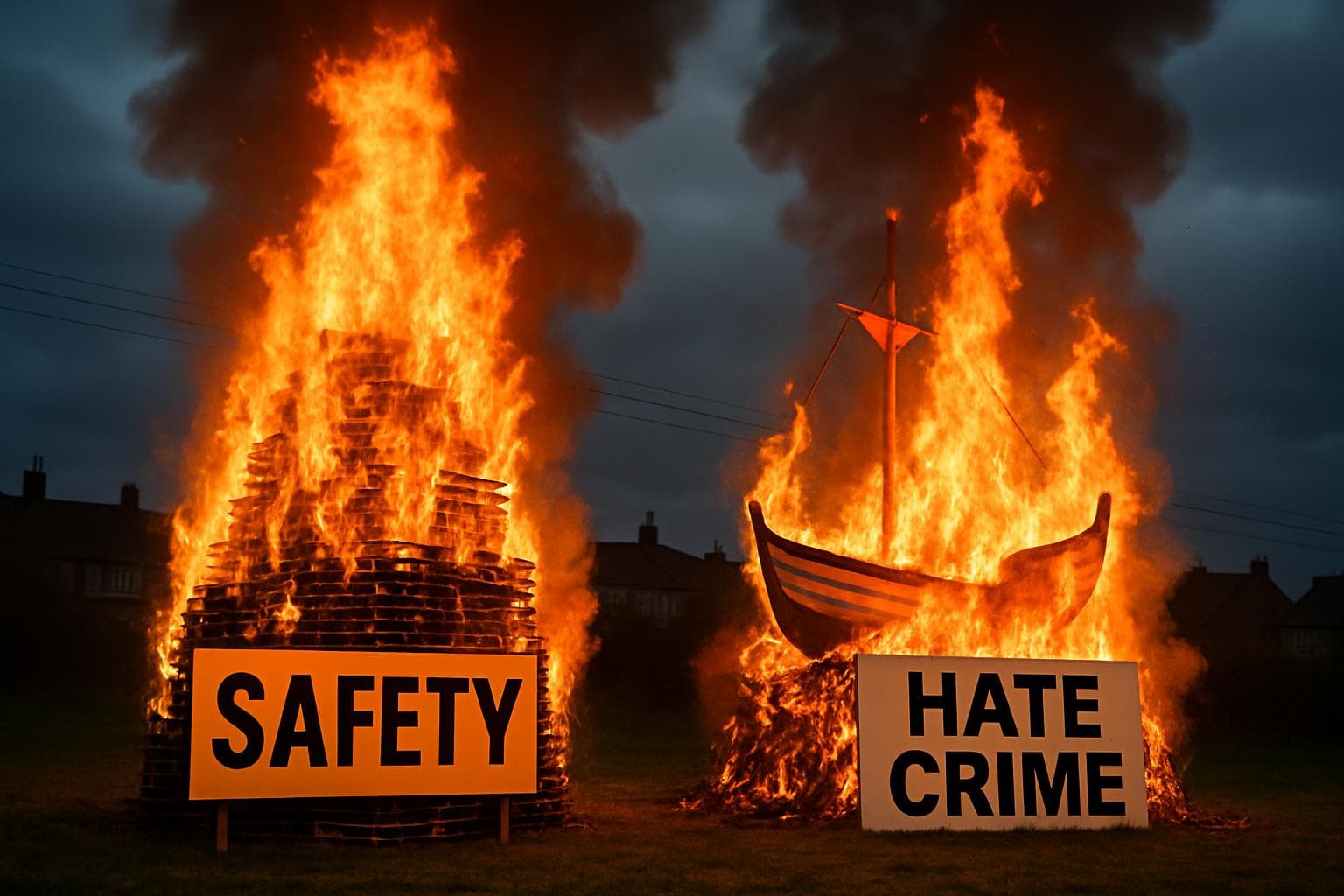
A bonfire in Moygashel, County Tyrone, featuring an effigy of refugees in a boat, has been lit despite being under investigation as a potential hate crime. The Police Service of Northern Ireland (PSNI) received numerous reports about the bonfire, which has been condemned by politicians and church leaders alike. Church of Ireland Archbishop John McDowell described the effigy as "racist, threatening, and offensive," emphasizing that it does not reflect Christian or Protestant values. The Moygashel Bonfire Committee, however, defended the effigy as a protest against illegal immigration.
Public Safety Concerns in Belfast
Meanwhile, in Belfast, a bonfire near a major electricity substation and two hospitals has been declared a "major incident" due to potential risks to public health and energy supplies. The Belfast City Council had requested police assistance to dismantle the bonfire, citing concerns over asbestos at the site. However, the PSNI decided against intervention, determining that allowing the bonfire to proceed posed fewer risks than attempting to dismantle it. This decision followed consultations with various stakeholders, including the Northern Ireland Environment Agency and the Belfast Health Trust.
Cultural and Community Implications
The bonfires are part of the Eleventh night celebrations, a tradition in unionist areas commemorating the Protestant victory at the Battle of the Boyne in 1690. Chief Constable Jon Boutcher emphasized the importance of ensuring these events are safe and respectful, urging mutual respect among communities. However, Sinn Féin MLA Pat Sheehan criticized the police decision, warning it could lead to "mob rule."
WHAT THIS MIGHT MEAN
The ongoing tensions surrounding these bonfires highlight the complex interplay between cultural traditions and modern societal values in Northern Ireland. As investigations into the Moygashel bonfire continue, authorities may face increased pressure to address hate crime allegations more decisively. In Belfast, the decision not to dismantle the bonfire could set a precedent for handling similar situations in the future, potentially influencing public safety protocols and community relations. The events underscore the need for dialogue and cooperation among Northern Ireland's diverse communities to navigate cultural celebrations safely and inclusively.
Related Articles
Tragedy Strikes County Armagh: Three Dead in Multi-Vehicle Collision
Epstein Files Unveil Northern Ireland Links and Elite Network
NHS Staff Pay Rise Sparks Union Outrage Amid Inflation Concerns
Labour's Policing Reforms Spark Debate Over Centralisation and Devolution
Storm Chandra Brings Severe Weather Warnings and Disruptions Across the UK
Arctic Blast Brings Snow and Ice Warnings Across the UK
Contentious Bonfires in Northern Ireland Spark Safety and Hate Crime Concerns
In This Article
 Ethan Brooks| Published
 HIGHLIGHTS
- A bonfire in County Tyrone featuring an effigy of refugees is under investigation as a hate crime, drawing widespread condemnation.
- Police in Belfast have declared a "major incident" over a bonfire near hospitals, citing public health and safety risks due to asbestos.
- The Police Service of Northern Ireland (PSNI) decided not to assist in dismantling the Belfast bonfire, citing lower risks in allowing it to proceed.
- Sinn Féin criticized the decision, warning it could set a precedent for "mob rule" in Northern Ireland.
- The bonfires are part of annual celebrations commemorating the 1690 Battle of the Boyne, highlighting ongoing cultural tensions.
In Northern Ireland, the annual bonfire celebrations marking the Battle of the Boyne have ignited significant controversy this year, with two separate incidents drawing attention to public safety and hate crime concerns.
Hate Crime Investigation in County Tyrone
A bonfire in Moygashel, County Tyrone, featuring an effigy of refugees in a boat, has been lit despite being under investigation as a potential hate crime. The Police Service of Northern Ireland (PSNI) received numerous reports about the bonfire, which has been condemned by politicians and church leaders alike. Church of Ireland Archbishop John McDowell described the effigy as "racist, threatening, and offensive," emphasizing that it does not reflect Christian or Protestant values. The Moygashel Bonfire Committee, however, defended the effigy as a protest against illegal immigration.
Public Safety Concerns in Belfast
Meanwhile, in Belfast, a bonfire near a major electricity substation and two hospitals has been declared a "major incident" due to potential risks to public health and energy supplies. The Belfast City Council had requested police assistance to dismantle the bonfire, citing concerns over asbestos at the site. However, the PSNI decided against intervention, determining that allowing the bonfire to proceed posed fewer risks than attempting to dismantle it. This decision followed consultations with various stakeholders, including the Northern Ireland Environment Agency and the Belfast Health Trust.
Cultural and Community Implications
The bonfires are part of the Eleventh night celebrations, a tradition in unionist areas commemorating the Protestant victory at the Battle of the Boyne in 1690. Chief Constable Jon Boutcher emphasized the importance of ensuring these events are safe and respectful, urging mutual respect among communities. However, Sinn Féin MLA Pat Sheehan criticized the police decision, warning it could lead to "mob rule."
WHAT THIS MIGHT MEAN
The ongoing tensions surrounding these bonfires highlight the complex interplay between cultural traditions and modern societal values in Northern Ireland. As investigations into the Moygashel bonfire continue, authorities may face increased pressure to address hate crime allegations more decisively. In Belfast, the decision not to dismantle the bonfire could set a precedent for handling similar situations in the future, potentially influencing public safety protocols and community relations. The events underscore the need for dialogue and cooperation among Northern Ireland's diverse communities to navigate cultural celebrations safely and inclusively.
Related Articles
Tragedy Strikes County Armagh: Three Dead in Multi-Vehicle Collision
Epstein Files Unveil Northern Ireland Links and Elite Network
NHS Staff Pay Rise Sparks Union Outrage Amid Inflation Concerns
Labour's Policing Reforms Spark Debate Over Centralisation and Devolution
Storm Chandra Brings Severe Weather Warnings and Disruptions Across the UK
Arctic Blast Brings Snow and Ice Warnings Across the UK