
OpenAI to Introduce Ads in ChatGPT Amid Revenue Expansion Efforts
In This Article
HIGHLIGHTS
- OpenAI will introduce ads in ChatGPT for US users, targeting the free service and the new ChatGPT Go subscription tier.
- ChatGPT Go, a more affordable subscription option, will cost $8 per month and be available globally.
- Ads will be relevant to user prompts but will not influence ChatGPT's responses or share conversation data with advertisers.
- OpenAI's CEO, Sam Altman, has expressed a dislike for ads but acknowledges the need for diverse revenue streams.
- The AI sector faces skepticism over its valuation, with some analysts predicting a potential "bubble" burst.
OpenAI, the company behind the popular AI tool ChatGPT, has announced plans to introduce advertisements for some users in the United States. This move marks a significant shift in the company's revenue strategy as it seeks to diversify its income sources beyond subscription fees.
Ad Integration and Subscription Tiers
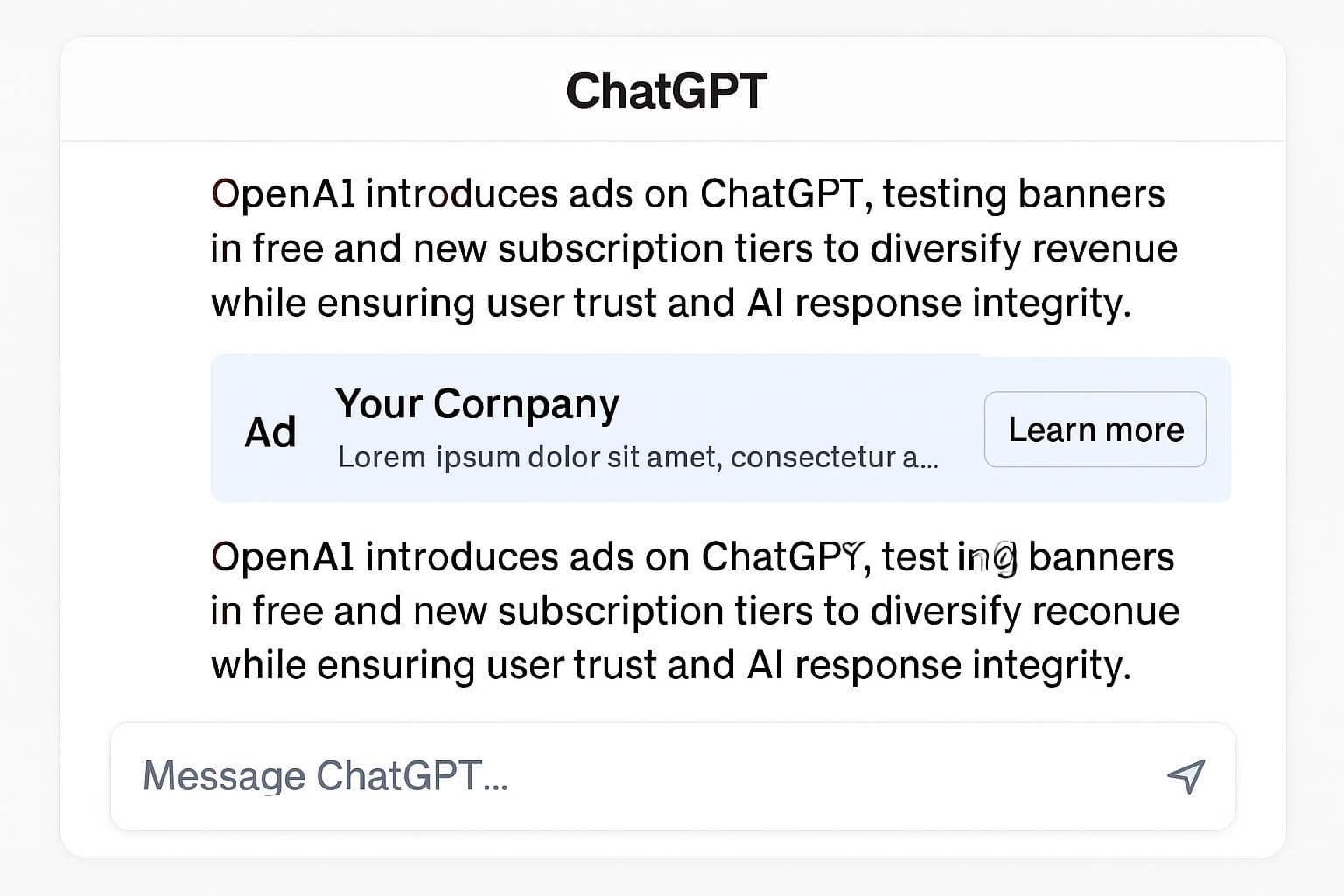
The advertisements will initially be tested on ChatGPT's free service and a newly introduced subscription tier called ChatGPT Go. Priced at $8 per month, ChatGPT Go offers a more affordable option for users worldwide. The ads will appear as banners above or below responses, ensuring they do not interfere with the AI's output. OpenAI has assured users that their conversation data will not be shared with advertisers, maintaining the integrity of the AI's responses.
Balancing Revenue and User Experience
Despite OpenAI's CEO, Sam Altman's previous reservations about incorporating ads, the company recognizes the necessity of exploring new revenue streams. Altman has described ads as a "last resort," but acknowledges their potential to make AI tools more accessible. "People have a very high degree of trust in ChatGPT," Altman noted, emphasizing the importance of maintaining user trust while integrating ads.
Industry Context and Challenges
The decision to introduce ads comes amid growing speculation about the sustainability of the AI sector's valuation. Analysts have raised concerns about a potential "bubble," as the industry has yet to demonstrate substantial profitability. OpenAI, originally a non-profit, has increasingly shifted towards a commercial model to address these challenges. The company reported operating at a significant loss in recent years, highlighting the urgency to explore reliable revenue sources like advertising.
WHAT THIS MIGHT MEAN
As OpenAI embarks on this new advertising venture, the company will need to carefully balance user experience with revenue generation. The introduction of ads could set a precedent for other AI firms considering similar monetization strategies. However, maintaining user trust will be crucial, especially given the high expectations surrounding AI tools like ChatGPT.
The broader AI industry may face increased scrutiny as investors and analysts assess the sector's long-term viability. Should the predicted "bubble" burst, companies like OpenAI will need to adapt quickly to sustain growth and profitability. As the landscape evolves, OpenAI's approach to integrating ads could serve as a case study for navigating the complex interplay between innovation and commercialization in the AI sector.
Related Articles

OpenAI's Missed Warning: Tumbler Ridge Shooting Raises Questions on AI's Role in Violence Prevention
China Sets Lowest GDP Growth Target in Decades Amid Economic Challenges

Cuba Faces Widespread Blackout Amid Deepening Fuel Crisis

UK Faces Dilemmas Amid Iran Conflict and China Spying Allegations

Google Faces Legal Battle Over AI Chatbot's Alleged Role in Tragic Death

Iran Postpones Khamenei Funeral Amid Escalating US-Israeli Strikes
OpenAI to Introduce Ads in ChatGPT Amid Revenue Expansion Efforts
In This Article
 Daniel Rivera| Published
 HIGHLIGHTS
- OpenAI will introduce ads in ChatGPT for US users, targeting the free service and the new ChatGPT Go subscription tier.
- ChatGPT Go, a more affordable subscription option, will cost $8 per month and be available globally.
- Ads will be relevant to user prompts but will not influence ChatGPT's responses or share conversation data with advertisers.
- OpenAI's CEO, Sam Altman, has expressed a dislike for ads but acknowledges the need for diverse revenue streams.
- The AI sector faces skepticism over its valuation, with some analysts predicting a potential "bubble" burst.
OpenAI, the company behind the popular AI tool ChatGPT, has announced plans to introduce advertisements for some users in the United States. This move marks a significant shift in the company's revenue strategy as it seeks to diversify its income sources beyond subscription fees.
Ad Integration and Subscription Tiers
The advertisements will initially be tested on ChatGPT's free service and a newly introduced subscription tier called ChatGPT Go. Priced at $8 per month, ChatGPT Go offers a more affordable option for users worldwide. The ads will appear as banners above or below responses, ensuring they do not interfere with the AI's output. OpenAI has assured users that their conversation data will not be shared with advertisers, maintaining the integrity of the AI's responses.
Balancing Revenue and User Experience
Despite OpenAI's CEO, Sam Altman's previous reservations about incorporating ads, the company recognizes the necessity of exploring new revenue streams. Altman has described ads as a "last resort," but acknowledges their potential to make AI tools more accessible. "People have a very high degree of trust in ChatGPT," Altman noted, emphasizing the importance of maintaining user trust while integrating ads.
Industry Context and Challenges
The decision to introduce ads comes amid growing speculation about the sustainability of the AI sector's valuation. Analysts have raised concerns about a potential "bubble," as the industry has yet to demonstrate substantial profitability. OpenAI, originally a non-profit, has increasingly shifted towards a commercial model to address these challenges. The company reported operating at a significant loss in recent years, highlighting the urgency to explore reliable revenue sources like advertising.
WHAT THIS MIGHT MEAN
As OpenAI embarks on this new advertising venture, the company will need to carefully balance user experience with revenue generation. The introduction of ads could set a precedent for other AI firms considering similar monetization strategies. However, maintaining user trust will be crucial, especially given the high expectations surrounding AI tools like ChatGPT.
The broader AI industry may face increased scrutiny as investors and analysts assess the sector's long-term viability. Should the predicted "bubble" burst, companies like OpenAI will need to adapt quickly to sustain growth and profitability. As the landscape evolves, OpenAI's approach to integrating ads could serve as a case study for navigating the complex interplay between innovation and commercialization in the AI sector.
Related Articles
OpenAI's Missed Warning: Tumbler Ridge Shooting Raises Questions on AI's Role in Violence Prevention
China Sets Lowest GDP Growth Target in Decades Amid Economic Challenges
Cuba Faces Widespread Blackout Amid Deepening Fuel Crisis
UK Faces Dilemmas Amid Iran Conflict and China Spying Allegations
Google Faces Legal Battle Over AI Chatbot's Alleged Role in Tragic Death
Iran Postpones Khamenei Funeral Amid Escalating US-Israeli Strikes