
Bayer Proposes $7.25 Billion Settlement to Resolve Roundup Cancer Claims
In This Article
HIGHLIGHTS
- Bayer proposes a $7.25 billion settlement to resolve US lawsuits over Roundup weedkiller's alleged cancer risks.
- The settlement aims to address both existing and future claims related to non-Hodgkin lymphoma.
- Bayer has previously paid $10 billion in related litigation and faces an additional 65,000 claims.
- The proposal requires court approval and is part of Bayer's strategy to mitigate legal uncertainties.
- A separate Supreme Court case could impact Bayer's liability regarding state laws and warning labels.
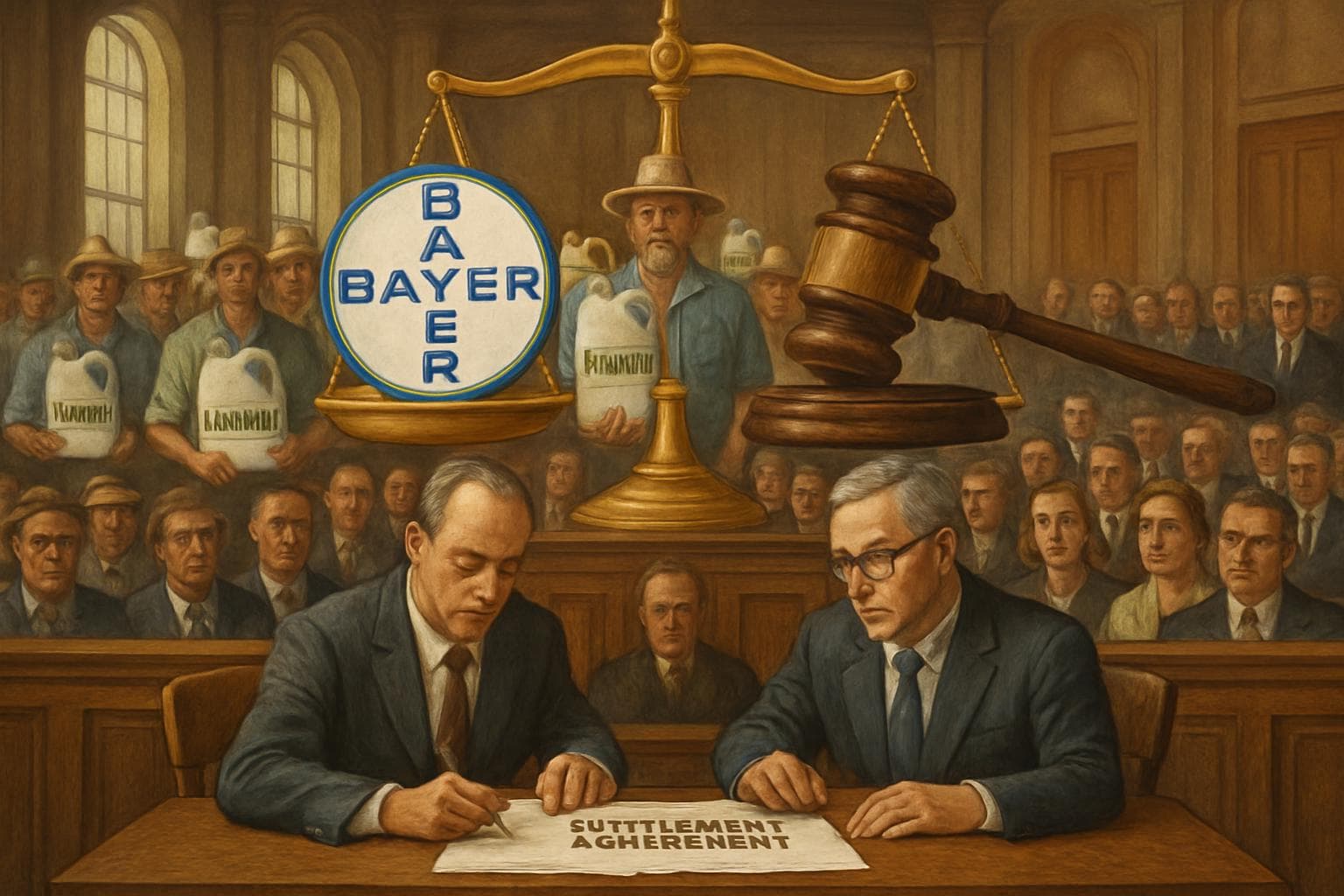
Bayer, the German agrochemical giant, has announced a proposed $7.25 billion settlement to resolve thousands of lawsuits in the United States alleging that its Roundup weedkiller causes cancer. This settlement is part of Bayer's ongoing efforts to address the legal challenges that have plagued the company since its acquisition of Monsanto, the original developer of Roundup, in 2018.
Legal Battle and Settlement Details
The proposed settlement, which requires court approval, aims to resolve claims from individuals diagnosed with non-Hodgkin lymphoma, a type of blood cancer, after exposure to Roundup. Bayer has already paid approximately $10 billion to settle related litigation and is currently facing an additional 65,000 claims. The settlement would cover both existing and future claims, with payments spread over 21 years, primarily in the first five years.
Bayer maintains that Roundup's active ingredient, glyphosate, is safe, despite the International Agency for Research on Cancer's classification of it as a probable human carcinogen in 2015. The US Environmental Protection Agency, along with Bayer, disputes these findings. However, the ongoing litigation has resulted in significant financial and reputational challenges for the company.
Supreme Court Case and Future Implications
The settlement announcement coincides with an upcoming US Supreme Court case that could have significant implications for Bayer. The case will address whether the Environmental Protection Agency's approval of Roundup without a cancer warning can shield Bayer from state-level legal claims. The outcome of this case could influence Bayer's liability and its ability to continue selling Roundup in the US market.
Bayer's CEO, Bill Anderson, emphasized the importance of achieving closure through the settlement, stating, "Litigation uncertainty has plagued the company for years, and this settlement gives the company a road to closure." The settlement was filed in St. Louis circuit court in Missouri, where many of the lawsuits have been initiated.
WHAT THIS MIGHT MEAN
The proposed settlement, if approved, could provide Bayer with a much-needed resolution to the ongoing legal challenges surrounding Roundup. However, the outcome of the Supreme Court case remains a critical factor in determining Bayer's future liability and market presence in the US. A favorable ruling for Bayer could limit its exposure to state-level claims, while an unfavorable decision might lead to further legal complications.
Experts suggest that the settlement could serve as a precedent for other companies facing similar litigation, highlighting the importance of addressing legal uncertainties proactively. As Bayer navigates these challenges, the company's ability to manage its legal and financial risks will be crucial in maintaining its position in the global agrochemical market.
Related Articles
China Sets Lowest GDP Growth Target in Decades Amid Economic Challenges
Cuba Faces Widespread Blackout Amid Deepening Fuel Crisis

UK Faces Dilemmas Amid Iran Conflict and China Spying Allegations

Google Faces Legal Battle Over AI Chatbot's Alleged Role in Tragic Death

Iran Postpones Khamenei Funeral Amid Escalating US-Israeli Strikes

Canada Calls for De-escalation Amid US-Israel Strikes on Iran
Bayer Proposes $7.25 Billion Settlement to Resolve Roundup Cancer Claims
In This Article
 Maya Singh| Published
 HIGHLIGHTS
- Bayer proposes a $7.25 billion settlement to resolve US lawsuits over Roundup weedkiller's alleged cancer risks.
- The settlement aims to address both existing and future claims related to non-Hodgkin lymphoma.
- Bayer has previously paid $10 billion in related litigation and faces an additional 65,000 claims.
- The proposal requires court approval and is part of Bayer's strategy to mitigate legal uncertainties.
- A separate Supreme Court case could impact Bayer's liability regarding state laws and warning labels.
Bayer, the German agrochemical giant, has announced a proposed $7.25 billion settlement to resolve thousands of lawsuits in the United States alleging that its Roundup weedkiller causes cancer. This settlement is part of Bayer's ongoing efforts to address the legal challenges that have plagued the company since its acquisition of Monsanto, the original developer of Roundup, in 2018.
Legal Battle and Settlement Details
The proposed settlement, which requires court approval, aims to resolve claims from individuals diagnosed with non-Hodgkin lymphoma, a type of blood cancer, after exposure to Roundup. Bayer has already paid approximately $10 billion to settle related litigation and is currently facing an additional 65,000 claims. The settlement would cover both existing and future claims, with payments spread over 21 years, primarily in the first five years.
Bayer maintains that Roundup's active ingredient, glyphosate, is safe, despite the International Agency for Research on Cancer's classification of it as a probable human carcinogen in 2015. The US Environmental Protection Agency, along with Bayer, disputes these findings. However, the ongoing litigation has resulted in significant financial and reputational challenges for the company.
Supreme Court Case and Future Implications
The settlement announcement coincides with an upcoming US Supreme Court case that could have significant implications for Bayer. The case will address whether the Environmental Protection Agency's approval of Roundup without a cancer warning can shield Bayer from state-level legal claims. The outcome of this case could influence Bayer's liability and its ability to continue selling Roundup in the US market.
Bayer's CEO, Bill Anderson, emphasized the importance of achieving closure through the settlement, stating, "Litigation uncertainty has plagued the company for years, and this settlement gives the company a road to closure." The settlement was filed in St. Louis circuit court in Missouri, where many of the lawsuits have been initiated.
WHAT THIS MIGHT MEAN
The proposed settlement, if approved, could provide Bayer with a much-needed resolution to the ongoing legal challenges surrounding Roundup. However, the outcome of the Supreme Court case remains a critical factor in determining Bayer's future liability and market presence in the US. A favorable ruling for Bayer could limit its exposure to state-level claims, while an unfavorable decision might lead to further legal complications.
Experts suggest that the settlement could serve as a precedent for other companies facing similar litigation, highlighting the importance of addressing legal uncertainties proactively. As Bayer navigates these challenges, the company's ability to manage its legal and financial risks will be crucial in maintaining its position in the global agrochemical market.
Related Articles
China Sets Lowest GDP Growth Target in Decades Amid Economic Challenges
Cuba Faces Widespread Blackout Amid Deepening Fuel Crisis
UK Faces Dilemmas Amid Iran Conflict and China Spying Allegations
Google Faces Legal Battle Over AI Chatbot's Alleged Role in Tragic Death
Iran Postpones Khamenei Funeral Amid Escalating US-Israeli Strikes
Canada Calls for De-escalation Amid US-Israel Strikes on Iran