
Legal and Human Rights Concerns Emerge as Palestine Action Supporters Face Charges
In This Article
HIGHLIGHTS
- Three individuals charged for supporting the proscribed group Palestine Action are set to appear in court on 16 September.
- The charges are the first under the Terrorism Act 2000 in England and Wales related to Palestine Action.
- Amnesty International has urged the Metropolitan Police to exercise restraint in arresting protesters supporting Palestine Action.
- A protest in support of Palestine Action is planned in London, with over 500 expected to attend.
- The High Court has allowed a review of the ban on Palestine Action, following a controversial protest at RAF Brize Norton.
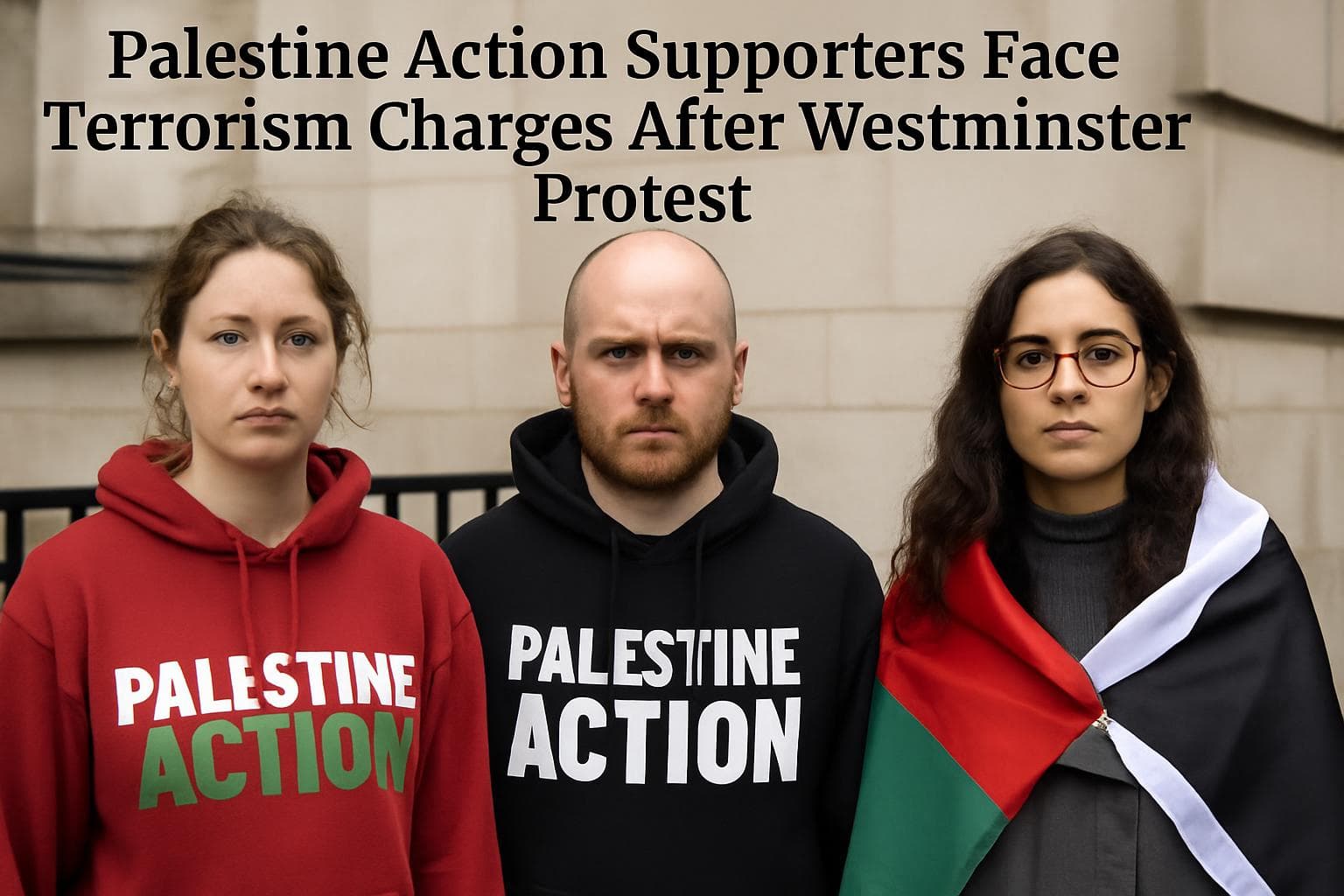
In a significant legal development, three individuals have been charged under the Terrorism Act 2000 for supporting the proscribed group Palestine Action. Jeremy Shippam, 71, Judit Murray, 71, and Fiona Maclean, 53, were arrested during a protest in Westminster on 5 July and are scheduled to appear at Westminster Magistrates' Court on 16 September. This marks the first instance of such charges in England and Wales, highlighting the contentious nature of the proscription.
Legal Context and Charges
The charges come amid heightened scrutiny of Palestine Action, a group banned under terrorism laws after activists caused significant damage during a protest at RAF Brize Norton in June. The protest, which involved spraying two Voyager planes with red paint, resulted in damages estimated at £7 million. Home Secretary Yvette Cooper condemned the protest as "disgraceful," leading to the group's proscription.
Amnesty International's Call for Restraint
As tensions rise, Amnesty International has called on the Metropolitan Police to exercise restraint in handling upcoming protests. In a letter to Met Commissioner Mark Rowley, Amnesty UK's chief executive Sacha Deshmukh emphasized the importance of upholding the rights to freedom of expression and assembly. "Arresting peaceful protesters solely for expressing support for Palestine Action violates the UK's international obligations," Deshmukh stated.
Upcoming Protest and Public Response
A protest in support of Palestine Action is planned for Saturday in London's Parliament Square, with organizers expecting over 500 participants. The pressure group Defend Our Juries has encouraged attendees to carry signs stating, "I oppose genocide, I support Palestine Action." However, the Metropolitan Police have warned of potential legal consequences for those participating.
Judicial Review and Future Implications
The High Court's decision to review the ban on Palestine Action adds another layer of complexity to the situation. The group's legal challenge could set a precedent for how proscribed organizations are treated under UK law. Commander Dominic Murphy of the Met's Counter Terrorism Command has indicated that case files for 26 additional individuals arrested on 5 July will be sent to the Crown Prosecution Service.
WHAT THIS MIGHT MEAN
The upcoming court appearances and planned protest in London could significantly impact public discourse on the balance between national security and civil liberties. If the High Court's review results in lifting the ban on Palestine Action, it may prompt a reevaluation of how proscription laws are applied. Conversely, if the charges lead to convictions, it could deter future protests and reinforce the government's stance on counter-terrorism. Legal experts suggest that the outcome of this case could influence future legislation and the policing of protests, particularly those involving controversial political issues.
Related Articles
Labour MP's Husband Arrested in UK-China Espionage Probe
Nottingham Attacks Inquiry: Families Demand Accountability and Truth

Prince Andrew's Ties to Epstein Under Scrutiny Amid Calls for Inquiry
UK Police Intensify Investigation into Andrew Mountbatten-Windsor Amid Misconduct Allegations
Prince Andrew's Arrest Raises Questions About Royal Succession and Monarchy's Future

Global Counsel Faces Collapse Amidst Epstein Scandal Fallout
Legal and Human Rights Concerns Emerge as Palestine Action Supporters Face Charges
In This Article
 Ethan Brooks| Published
 HIGHLIGHTS
- Three individuals charged for supporting the proscribed group Palestine Action are set to appear in court on 16 September.
- The charges are the first under the Terrorism Act 2000 in England and Wales related to Palestine Action.
- Amnesty International has urged the Metropolitan Police to exercise restraint in arresting protesters supporting Palestine Action.
- A protest in support of Palestine Action is planned in London, with over 500 expected to attend.
- The High Court has allowed a review of the ban on Palestine Action, following a controversial protest at RAF Brize Norton.
In a significant legal development, three individuals have been charged under the Terrorism Act 2000 for supporting the proscribed group Palestine Action. Jeremy Shippam, 71, Judit Murray, 71, and Fiona Maclean, 53, were arrested during a protest in Westminster on 5 July and are scheduled to appear at Westminster Magistrates' Court on 16 September. This marks the first instance of such charges in England and Wales, highlighting the contentious nature of the proscription.
Legal Context and Charges
The charges come amid heightened scrutiny of Palestine Action, a group banned under terrorism laws after activists caused significant damage during a protest at RAF Brize Norton in June. The protest, which involved spraying two Voyager planes with red paint, resulted in damages estimated at £7 million. Home Secretary Yvette Cooper condemned the protest as "disgraceful," leading to the group's proscription.
Amnesty International's Call for Restraint
As tensions rise, Amnesty International has called on the Metropolitan Police to exercise restraint in handling upcoming protests. In a letter to Met Commissioner Mark Rowley, Amnesty UK's chief executive Sacha Deshmukh emphasized the importance of upholding the rights to freedom of expression and assembly. "Arresting peaceful protesters solely for expressing support for Palestine Action violates the UK's international obligations," Deshmukh stated.
Upcoming Protest and Public Response
A protest in support of Palestine Action is planned for Saturday in London's Parliament Square, with organizers expecting over 500 participants. The pressure group Defend Our Juries has encouraged attendees to carry signs stating, "I oppose genocide, I support Palestine Action." However, the Metropolitan Police have warned of potential legal consequences for those participating.
Judicial Review and Future Implications
The High Court's decision to review the ban on Palestine Action adds another layer of complexity to the situation. The group's legal challenge could set a precedent for how proscribed organizations are treated under UK law. Commander Dominic Murphy of the Met's Counter Terrorism Command has indicated that case files for 26 additional individuals arrested on 5 July will be sent to the Crown Prosecution Service.
WHAT THIS MIGHT MEAN
The upcoming court appearances and planned protest in London could significantly impact public discourse on the balance between national security and civil liberties. If the High Court's review results in lifting the ban on Palestine Action, it may prompt a reevaluation of how proscription laws are applied. Conversely, if the charges lead to convictions, it could deter future protests and reinforce the government's stance on counter-terrorism. Legal experts suggest that the outcome of this case could influence future legislation and the policing of protests, particularly those involving controversial political issues.
Related Articles
Labour MP's Husband Arrested in UK-China Espionage Probe
Nottingham Attacks Inquiry: Families Demand Accountability and Truth
Prince Andrew's Ties to Epstein Under Scrutiny Amid Calls for Inquiry
UK Police Intensify Investigation into Andrew Mountbatten-Windsor Amid Misconduct Allegations
Prince Andrew's Arrest Raises Questions About Royal Succession and Monarchy's Future
Global Counsel Faces Collapse Amidst Epstein Scandal Fallout