
Peers Suspended from House of Lords for Breaching Lobbying Rules
In This Article
HIGHLIGHTS
- Two peers, Lord Richard Dannatt and Lord David Evans, face suspensions from the House of Lords for breaching lobbying rules.
- Lord Dannatt and Lord Evans were involved in offering parliamentary services for potential commercial gain, as revealed by undercover investigations.
- The House of Lords' standards commissioner found multiple breaches of conduct, leading to suspensions of four and five months, respectively.
- Both peers accepted the findings without appeal, acknowledging their failure to act on personal honour.
- The case highlights ongoing concerns about the culture and accountability within the House of Lords.
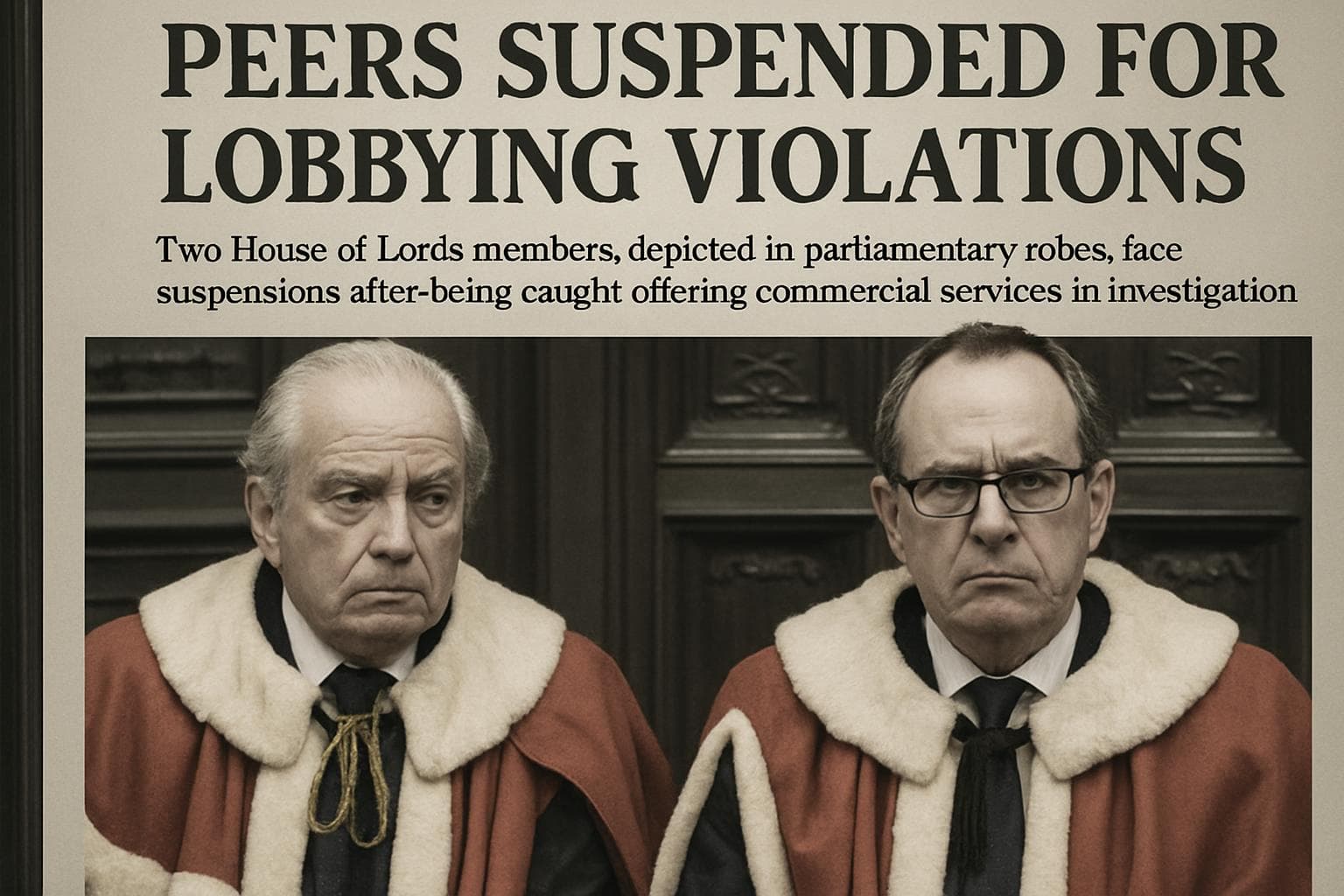
Two prominent members of the House of Lords, Lord Richard Dannatt and Lord David Evans, are set to face suspensions following a parliamentary watchdog's ruling that they breached lobbying rules. The suspensions, lasting four and five months respectively, come after an undercover investigation by the Guardian revealed the peers' involvement in offering parliamentary services for potential commercial gain.
Undercover Investigation Unveils Misconduct
The investigation, part of the Guardian's broader examination of the House of Lords, captured Lord Dannatt and Lord Evans discussing potential introductions to government ministers with undercover reporters posing as commercial clients. Lord Dannatt, a former head of the British Army, was filmed expressing his ability to facilitate meetings with key ministers, while Lord Evans, a Labour peer, was caught offering similar services to individuals he believed were property developers.
Findings and Consequences
The House of Lords' standards commissioner found that both peers had violated the code of conduct, which mandates that members act solely in the public interest. Lord Dannatt's breaches included contacting ministers regarding companies in which he held financial interests, while Lord Evans was found to have sponsored events for a company owned by his son. Despite their initial denials, both peers accepted the findings and the resulting sanctions without appeal, acknowledging their failure to uphold personal honour.
Broader Implications for the House of Lords
The suspensions of Lord Dannatt and Lord Evans underscore ongoing concerns about the culture and accountability within the House of Lords. Critics argue that the current system allows peers to exploit their positions for personal gain, a sentiment echoed by the Guardian's investigation, which highlighted the ease with which some members navigate the rules for private benefit. The case has reignited discussions about potential reforms, with calls for increased transparency and stricter enforcement of ethical standards.
WHAT THIS MIGHT MEAN
The suspensions of Lord Dannatt and Lord Evans could serve as a catalyst for broader reforms within the House of Lords. As public scrutiny intensifies, there may be increased pressure on lawmakers to implement measures that enhance transparency and accountability. Potential reforms could include stricter regulations on lobbying activities and clearer guidelines on conflicts of interest. Additionally, the case may bolster arguments for transitioning to an elected upper chamber, a proposal that has gained traction in recent political discourse. As the debate continues, the need for a system that ensures peers act solely in the public interest remains a pressing concern.
Related Articles

UK Government to Reform Asylum Seeker Support and Employment Policies

Global Counsel Faces Collapse Amidst Epstein Scandal Fallout
UK Faces Rising Youth Unemployment Amid Minimum Wage and Interest Rate Debates
Government U-turn on Local Election Delays Sparks Political Fallout

US Congress Seeks Testimony from Peter Mandelson Over Epstein Ties
Jim Ratcliffe's Immigration Comments Spark Backlash Amid UK Political Shifts
Peers Suspended from House of Lords for Breaching Lobbying Rules
In This Article
 Ethan Brooks| Published
 HIGHLIGHTS
- Two peers, Lord Richard Dannatt and Lord David Evans, face suspensions from the House of Lords for breaching lobbying rules.
- Lord Dannatt and Lord Evans were involved in offering parliamentary services for potential commercial gain, as revealed by undercover investigations.
- The House of Lords' standards commissioner found multiple breaches of conduct, leading to suspensions of four and five months, respectively.
- Both peers accepted the findings without appeal, acknowledging their failure to act on personal honour.
- The case highlights ongoing concerns about the culture and accountability within the House of Lords.
Two prominent members of the House of Lords, Lord Richard Dannatt and Lord David Evans, are set to face suspensions following a parliamentary watchdog's ruling that they breached lobbying rules. The suspensions, lasting four and five months respectively, come after an undercover investigation by the Guardian revealed the peers' involvement in offering parliamentary services for potential commercial gain.
Undercover Investigation Unveils Misconduct
The investigation, part of the Guardian's broader examination of the House of Lords, captured Lord Dannatt and Lord Evans discussing potential introductions to government ministers with undercover reporters posing as commercial clients. Lord Dannatt, a former head of the British Army, was filmed expressing his ability to facilitate meetings with key ministers, while Lord Evans, a Labour peer, was caught offering similar services to individuals he believed were property developers.
Findings and Consequences
The House of Lords' standards commissioner found that both peers had violated the code of conduct, which mandates that members act solely in the public interest. Lord Dannatt's breaches included contacting ministers regarding companies in which he held financial interests, while Lord Evans was found to have sponsored events for a company owned by his son. Despite their initial denials, both peers accepted the findings and the resulting sanctions without appeal, acknowledging their failure to uphold personal honour.
Broader Implications for the House of Lords
The suspensions of Lord Dannatt and Lord Evans underscore ongoing concerns about the culture and accountability within the House of Lords. Critics argue that the current system allows peers to exploit their positions for personal gain, a sentiment echoed by the Guardian's investigation, which highlighted the ease with which some members navigate the rules for private benefit. The case has reignited discussions about potential reforms, with calls for increased transparency and stricter enforcement of ethical standards.
WHAT THIS MIGHT MEAN
The suspensions of Lord Dannatt and Lord Evans could serve as a catalyst for broader reforms within the House of Lords. As public scrutiny intensifies, there may be increased pressure on lawmakers to implement measures that enhance transparency and accountability. Potential reforms could include stricter regulations on lobbying activities and clearer guidelines on conflicts of interest. Additionally, the case may bolster arguments for transitioning to an elected upper chamber, a proposal that has gained traction in recent political discourse. As the debate continues, the need for a system that ensures peers act solely in the public interest remains a pressing concern.
Related Articles
UK Government to Reform Asylum Seeker Support and Employment Policies
Global Counsel Faces Collapse Amidst Epstein Scandal Fallout
UK Faces Rising Youth Unemployment Amid Minimum Wage and Interest Rate Debates
Government U-turn on Local Election Delays Sparks Political Fallout
US Congress Seeks Testimony from Peter Mandelson Over Epstein Ties
Jim Ratcliffe's Immigration Comments Spark Backlash Amid UK Political Shifts