
Pentagon Severs Ties with Harvard Over 'Woke Ideology' Concerns
In This Article
HIGHLIGHTS
- The Pentagon is ending its military education programs with Harvard University, citing the institution's "woke ideology" and alleged anti-American activism.
- Secretary Pete Hegseth announced the decision, emphasizing Harvard's perceived alignment with ideologies that undermine military objectives.
- The Trump administration has been critical of Harvard, accusing it of promoting antisemitism and leftist ideologies, and is seeking $1 billion in damages.
- Harvard has received significant funding from Chinese entities, which has been a point of contention in the decision to sever ties.
- The Pentagon's decision reflects a broader strategy to reassess military education at Ivy League and other civilian universities.
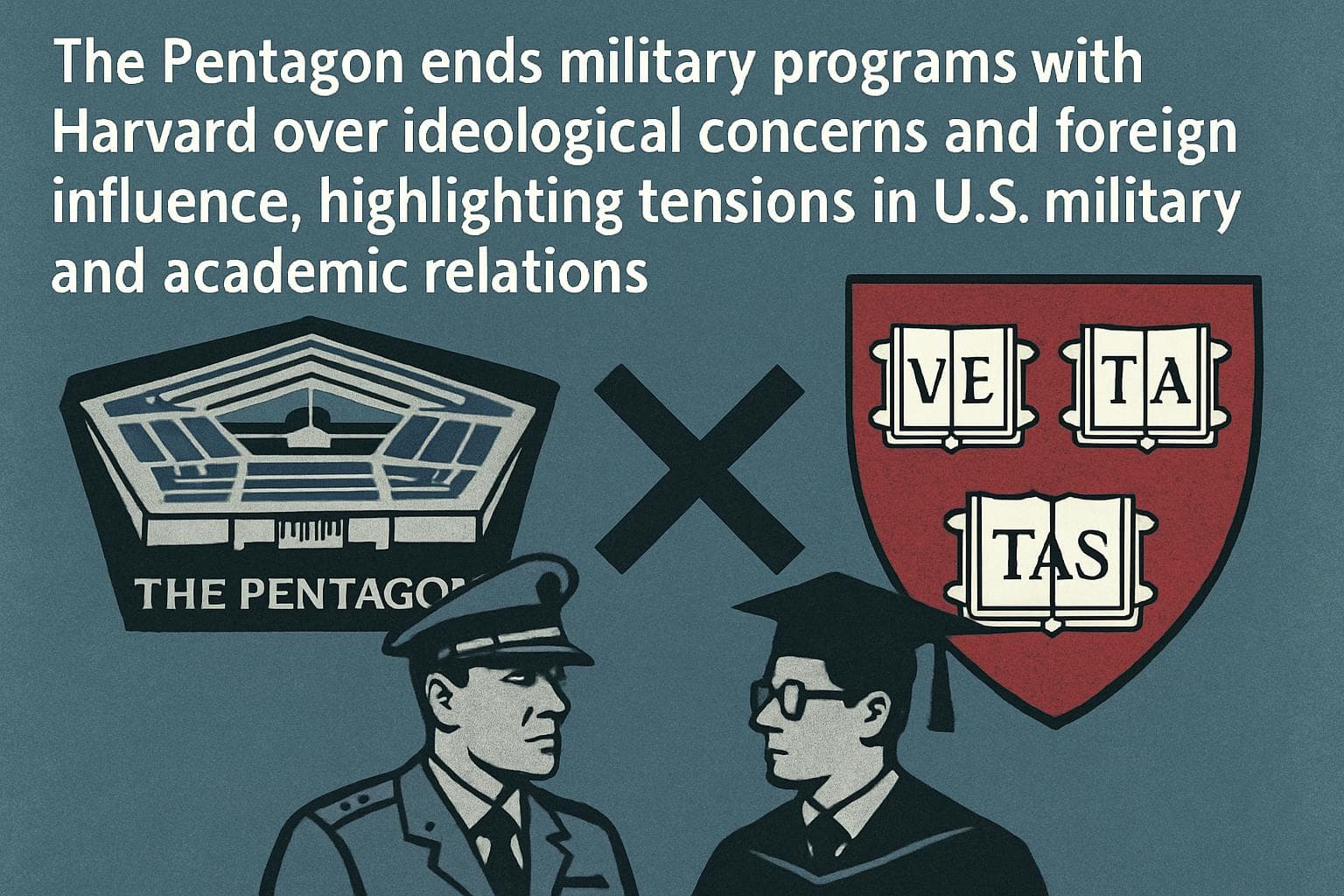
The Pentagon has announced the termination of its military education programs with Harvard University, citing concerns over the institution's alleged promotion of "woke ideology" and anti-American sentiments. This decision marks a significant escalation in the Trump administration's ongoing conflict with the Ivy League school.
Pentagon's Decision and Rationale
In a statement posted on X, Defense Secretary Pete Hegseth declared the end of all military training, fellowships, and certificate programs with Harvard. Hegseth criticized the university as a "red-hot center of hate-America activism," asserting that its teachings do not align with the Pentagon's focus on "lethality" and "deterrence." He further accused Harvard of fostering an environment that undermines the U.S. armed forces.
Trump Administration's Broader Campaign
The decision to cut ties with Harvard is part of a broader campaign by the Trump administration to challenge educational institutions perceived as promoting antisemitism and leftist ideologies. President Donald Trump recently announced plans to seek $1 billion in damages from Harvard, alleging that the university enabled antisemitism. Harvard's president, Alan Garber, has rejected these claims, defending the institution's commitment to academic freedom.
Concerns Over Foreign Influence
Another factor in the Pentagon's decision is Harvard's financial ties with Chinese entities. Between 2010 and 2025, the university reportedly received $560 million in gifts and contracts from Chinese foundations and government entities. This association has raised concerns about foreign influence on American academic institutions.
Impact on Military Education
The Pentagon's move to end its relationship with Harvard reflects a broader reevaluation of military education programs at Ivy League and other civilian universities. Hegseth emphasized the need to focus resources on institutions that support the military's mission, stating, "We train warriors, not wokesters."
WHAT THIS MIGHT MEAN
The Pentagon's decision to sever ties with Harvard could have significant implications for military education and its relationship with civilian universities. As the Pentagon reassesses its partnerships, other Ivy League institutions may face similar scrutiny. This move may also intensify the ongoing debate over academic freedom and the role of higher education in shaping military and national policy.
Legal and political ramifications could arise from the Trump administration's $1 billion lawsuit against Harvard. If pursued, this case may set a precedent for how universities navigate accusations of antisemitism and ideological bias. Additionally, the focus on foreign influence in academia could lead to increased regulatory oversight and changes in funding practices for universities nationwide.
Related Articles

Tech Giants Pledge to Cover AI Data Center Energy Costs Amid Rising Electricity Concerns

US and Israel Intensify Military Campaign as Iran's Capabilities Dwindle

Intensified US-Israel Strikes on Iran Spark Global Outcry
Congress Subpoenas Attorney General Bondi in Epstein Investigation

Cuba Faces Widespread Blackout Amid Deepening Fuel Crisis

UK Faces Dilemmas Amid Iran Conflict and China Spying Allegations
Pentagon Severs Ties with Harvard Over 'Woke Ideology' Concerns
In This Article
 Aya Nakamura| Published
 HIGHLIGHTS
- The Pentagon is ending its military education programs with Harvard University, citing the institution's "woke ideology" and alleged anti-American activism.
- Secretary Pete Hegseth announced the decision, emphasizing Harvard's perceived alignment with ideologies that undermine military objectives.
- The Trump administration has been critical of Harvard, accusing it of promoting antisemitism and leftist ideologies, and is seeking $1 billion in damages.
- Harvard has received significant funding from Chinese entities, which has been a point of contention in the decision to sever ties.
- The Pentagon's decision reflects a broader strategy to reassess military education at Ivy League and other civilian universities.
The Pentagon has announced the termination of its military education programs with Harvard University, citing concerns over the institution's alleged promotion of "woke ideology" and anti-American sentiments. This decision marks a significant escalation in the Trump administration's ongoing conflict with the Ivy League school.
Pentagon's Decision and Rationale
In a statement posted on X, Defense Secretary Pete Hegseth declared the end of all military training, fellowships, and certificate programs with Harvard. Hegseth criticized the university as a "red-hot center of hate-America activism," asserting that its teachings do not align with the Pentagon's focus on "lethality" and "deterrence." He further accused Harvard of fostering an environment that undermines the U.S. armed forces.
Trump Administration's Broader Campaign
The decision to cut ties with Harvard is part of a broader campaign by the Trump administration to challenge educational institutions perceived as promoting antisemitism and leftist ideologies. President Donald Trump recently announced plans to seek $1 billion in damages from Harvard, alleging that the university enabled antisemitism. Harvard's president, Alan Garber, has rejected these claims, defending the institution's commitment to academic freedom.
Concerns Over Foreign Influence
Another factor in the Pentagon's decision is Harvard's financial ties with Chinese entities. Between 2010 and 2025, the university reportedly received $560 million in gifts and contracts from Chinese foundations and government entities. This association has raised concerns about foreign influence on American academic institutions.
Impact on Military Education
The Pentagon's move to end its relationship with Harvard reflects a broader reevaluation of military education programs at Ivy League and other civilian universities. Hegseth emphasized the need to focus resources on institutions that support the military's mission, stating, "We train warriors, not wokesters."
WHAT THIS MIGHT MEAN
The Pentagon's decision to sever ties with Harvard could have significant implications for military education and its relationship with civilian universities. As the Pentagon reassesses its partnerships, other Ivy League institutions may face similar scrutiny. This move may also intensify the ongoing debate over academic freedom and the role of higher education in shaping military and national policy.
Legal and political ramifications could arise from the Trump administration's $1 billion lawsuit against Harvard. If pursued, this case may set a precedent for how universities navigate accusations of antisemitism and ideological bias. Additionally, the focus on foreign influence in academia could lead to increased regulatory oversight and changes in funding practices for universities nationwide.
Related Articles
Tech Giants Pledge to Cover AI Data Center Energy Costs Amid Rising Electricity Concerns
US and Israel Intensify Military Campaign as Iran's Capabilities Dwindle
Intensified US-Israel Strikes on Iran Spark Global Outcry
Congress Subpoenas Attorney General Bondi in Epstein Investigation
Cuba Faces Widespread Blackout Amid Deepening Fuel Crisis
UK Faces Dilemmas Amid Iran Conflict and China Spying Allegations