
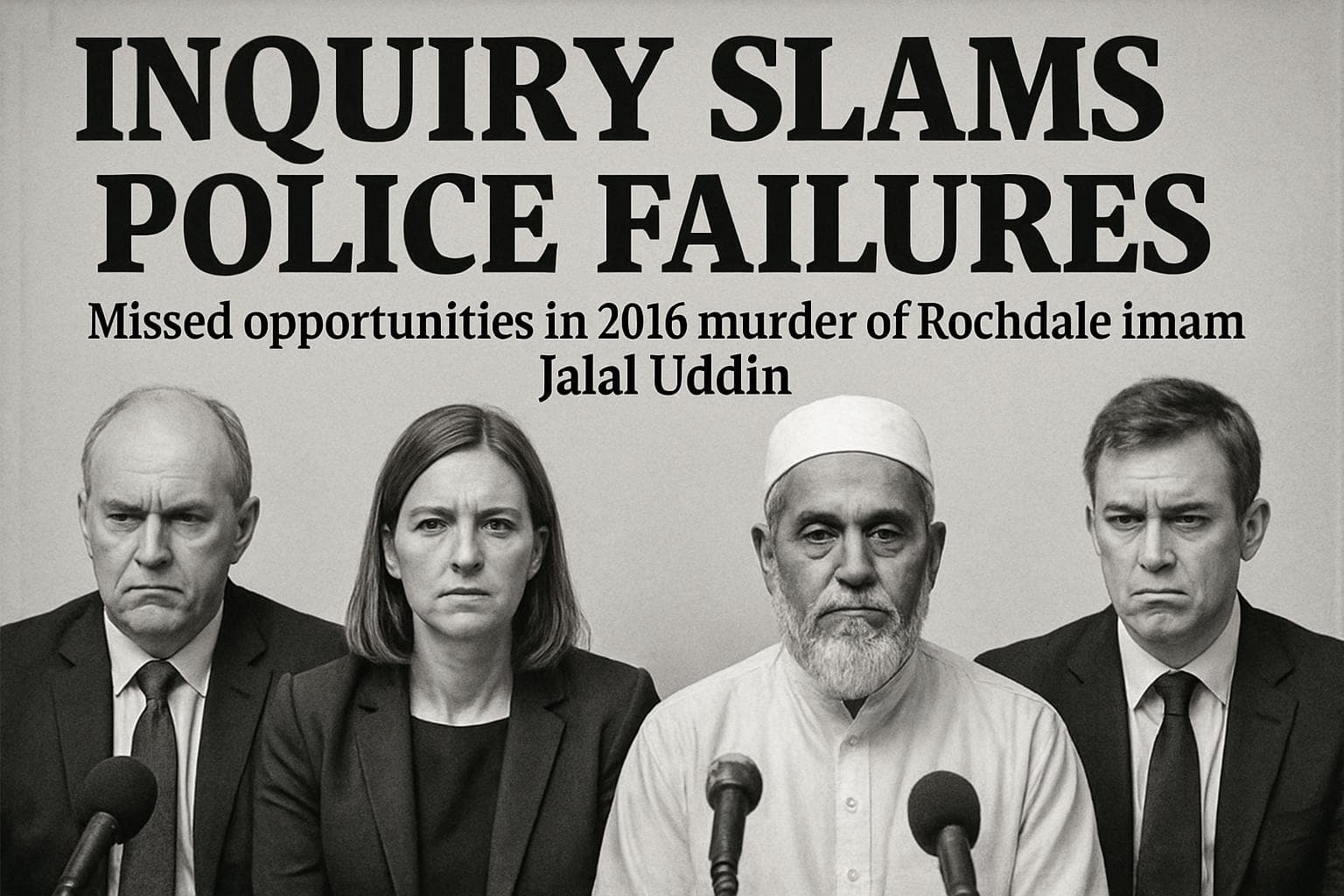
Missed Opportunities in Rochdale Imam Murder Case Highlight Police Oversight Failures
In This Article
HIGHLIGHTS
- A public inquiry found "serious blunders" in police handling of the 2016 murder of Rochdale imam Jalal Uddin by Islamic State extremists.
- Mohammed Kadir, identified as a high-risk individual, fled to Syria after the murder; his accomplice, Mohammed Syeedy, was jailed for life.
- The inquiry revealed missed opportunities to disrupt the plot due to the failure to appoint a senior investigating officer (SIO).
- Former Det Insp Frank Morris noted an investigation into an accomplice was prematurely closed two years before the murder.
- The report highlighted the need for improved counter-terrorism measures to prevent similar incidents.
A public inquiry has revealed significant police oversights in the handling of the 2016 murder of Jalal Uddin, a 71-year-old imam, by Islamic State extremists in Rochdale, Greater Manchester. The inquiry, led by His Honour Thomas Teague KC, found that critical opportunities to prevent the murder were missed due to procedural failures.
Background of the Case
Jalal Uddin was brutally killed in a Rochdale park by Mohammed Kadir, then 24, who was motivated by extremist beliefs that condemned Uddin's practice of ruqyah, a form of Islamic healing, as "black magic." Kadir, from Oldham, managed to flee to Syria after the murder, while his accomplice, Mohammed Syeedy, a former Manchester United steward, was sentenced to life imprisonment for his role as the getaway driver. A third man, Mohammed Syadul Hussain, received a five-year sentence for aiding Kadir's escape from the UK.
Inquiry Findings
The inquiry's findings, released before parliament, underscored that all three men had previously been on the police radar. Kadir, in particular, was identified as a high-risk individual by counter-terrorism police. Despite recognizing the need for a targeted investigation into Kadir's activities by December 2015, the necessary steps, including appointing a senior investigating officer (SIO), were not taken. A potential SIO was identified within the North West Counter Terrorism Unit (NWCTU), but due to reasons beyond their control, the appointment was not made.
Former Det Insp Frank Morris testified that an investigation into Hussain had been prematurely closed two years prior to the murder. The report highlighted two key missed opportunities: the failure to scrutinize Kadir's inflammatory Facebook posts from September 2015 and the lack of further investigative actions that might have disrupted the murder plot.
WHAT THIS MIGHT MEAN
The inquiry's findings have sparked calls for improved counter-terrorism measures and police oversight to prevent similar tragedies. The failure to act on known threats raises concerns about the effectiveness of current systems in identifying and mitigating risks posed by extremist individuals. Moving forward, experts suggest that enhancing inter-agency communication and ensuring timely appointments of key investigative roles could be crucial steps in bolstering national security and preventing future acts of terrorism.
Related Articles

Jim Ratcliffe's Immigration Comments Spark Outrage and Apology
UK Government Considers Removing Andrew Mountbatten-Windsor from Royal Succession Amid Arrest
Government U-turn on Local Election Delays Sparks Political Fallout
High Court Ruling Delays Trial of Pro-Palestine Activists
Jim Ratcliffe Faces Backlash Over Controversial Immigration Remarks

Keir Starmer Resolute Amid Calls for Resignation and Party Turmoil
Missed Opportunities in Rochdale Imam Murder Case Highlight Police Oversight Failures
In This Article
 Ethan Brooks| Published
 HIGHLIGHTS
- A public inquiry found "serious blunders" in police handling of the 2016 murder of Rochdale imam Jalal Uddin by Islamic State extremists.
- Mohammed Kadir, identified as a high-risk individual, fled to Syria after the murder; his accomplice, Mohammed Syeedy, was jailed for life.
- The inquiry revealed missed opportunities to disrupt the plot due to the failure to appoint a senior investigating officer (SIO).
- Former Det Insp Frank Morris noted an investigation into an accomplice was prematurely closed two years before the murder.
- The report highlighted the need for improved counter-terrorism measures to prevent similar incidents.
A public inquiry has revealed significant police oversights in the handling of the 2016 murder of Jalal Uddin, a 71-year-old imam, by Islamic State extremists in Rochdale, Greater Manchester. The inquiry, led by His Honour Thomas Teague KC, found that critical opportunities to prevent the murder were missed due to procedural failures.
Background of the Case
Jalal Uddin was brutally killed in a Rochdale park by Mohammed Kadir, then 24, who was motivated by extremist beliefs that condemned Uddin's practice of ruqyah, a form of Islamic healing, as "black magic." Kadir, from Oldham, managed to flee to Syria after the murder, while his accomplice, Mohammed Syeedy, a former Manchester United steward, was sentenced to life imprisonment for his role as the getaway driver. A third man, Mohammed Syadul Hussain, received a five-year sentence for aiding Kadir's escape from the UK.
Inquiry Findings
The inquiry's findings, released before parliament, underscored that all three men had previously been on the police radar. Kadir, in particular, was identified as a high-risk individual by counter-terrorism police. Despite recognizing the need for a targeted investigation into Kadir's activities by December 2015, the necessary steps, including appointing a senior investigating officer (SIO), were not taken. A potential SIO was identified within the North West Counter Terrorism Unit (NWCTU), but due to reasons beyond their control, the appointment was not made.
Former Det Insp Frank Morris testified that an investigation into Hussain had been prematurely closed two years prior to the murder. The report highlighted two key missed opportunities: the failure to scrutinize Kadir's inflammatory Facebook posts from September 2015 and the lack of further investigative actions that might have disrupted the murder plot.
WHAT THIS MIGHT MEAN
The inquiry's findings have sparked calls for improved counter-terrorism measures and police oversight to prevent similar tragedies. The failure to act on known threats raises concerns about the effectiveness of current systems in identifying and mitigating risks posed by extremist individuals. Moving forward, experts suggest that enhancing inter-agency communication and ensuring timely appointments of key investigative roles could be crucial steps in bolstering national security and preventing future acts of terrorism.
Related Articles
Jim Ratcliffe's Immigration Comments Spark Outrage and Apology
UK Government Considers Removing Andrew Mountbatten-Windsor from Royal Succession Amid Arrest
Government U-turn on Local Election Delays Sparks Political Fallout
High Court Ruling Delays Trial of Pro-Palestine Activists
Jim Ratcliffe Faces Backlash Over Controversial Immigration Remarks
Keir Starmer Resolute Amid Calls for Resignation and Party Turmoil