
Rachel Reeves Signals End to Two-Child Benefit Cap in Upcoming UK Budget
In This Article
HIGHLIGHTS
- Rachel Reeves plans to remove the two-child benefit cap in the upcoming UK budget, potentially lifting 350,000 children out of poverty.
- The policy change could cost over £3 billion but aims to address child poverty, a priority for Labour leader Keir Starmer.
- Reeves' proposal marks a shift from Labour's previous stance, which did not include removing the cap in their election manifesto.
- The Labour government faces criticism over potential income tax hikes, despite pledges to avoid such increases.
- The removal of the cap is seen as a move to align with Labour MPs and address internal party concerns.
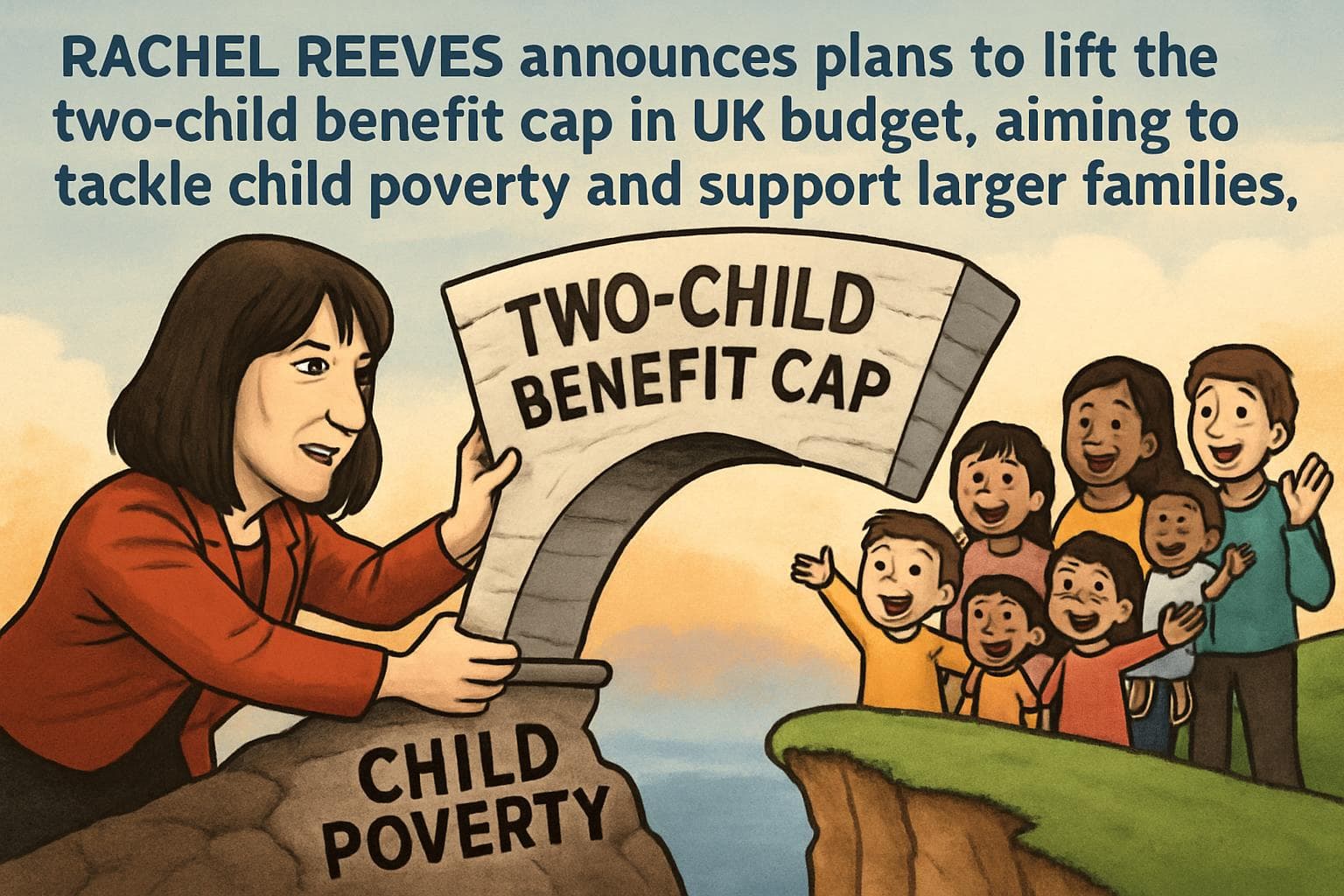
In a significant policy shift, UK Chancellor Rachel Reeves has indicated plans to abolish the two-child benefit cap in the forthcoming budget, a move that could lift 350,000 children out of poverty. This decision, expected to cost over £3 billion, underscores the Labour Party's commitment to tackling child poverty, a key priority for party leader Keir Starmer.
A Shift in Labour Policy
The two-child benefit cap, introduced by the Conservatives in 2017, has been a contentious issue, with many Labour MPs advocating for its removal. Reeves' recent comments suggest a full reversal of the policy, aligning with the party's broader goal of reducing child poverty. "I don’t think it’s right that a child is penalised because they are in a bigger family, through no fault of their own," Reeves stated in a BBC interview, emphasizing the need for a fairer welfare system.
Economic and Political Implications
While the removal of the cap is popular among Labour MPs, it poses significant financial implications, with estimates suggesting a £3.5 billion cost by 2029-30. Despite this, Reeves argues that the economic cost of unchecked child poverty is far greater. The Labour government is also navigating criticism over potential income tax hikes, despite previous pledges to avoid such increases. Reeves has defended increased funding for the NHS and other public services, stating, "I will always do what I think is right for our country."
Internal Party Dynamics
The decision to remove the cap reflects a shift from Labour's previous stance, which did not include such a promise in their election manifesto due to financial constraints. However, the move is seen as a way to placate internal party concerns and align with the broader Labour agenda. Allies of Starmer insist that reducing child poverty remains a top priority, with the party aiming to surpass the achievements of previous Labour governments.
WHAT THIS MIGHT MEAN
The removal of the two-child benefit cap could have far-reaching implications for the UK's welfare system and child poverty rates. If implemented, it may set a precedent for further welfare reforms under the Labour government. However, the financial burden of such a policy could lead to increased scrutiny of the government's fiscal strategy, particularly regarding potential tax changes. Experts suggest that while the policy is a step towards reducing child poverty, its success will depend on the government's ability to balance social welfare goals with economic sustainability. As the budget approaches, the Labour Party's ability to navigate these challenges will be closely watched by both supporters and critics.
Related Articles
UK Government to Reform Asylum Seeker Support and Employment Policies

UK Faces Dilemmas Amid Iran Conflict and China Spying Allegations

Labour MP's Husband Arrested in UK-China Espionage Probe
Middle East Conflict Drives UK Energy Prices to New Highs

UK-Iran Tensions: Starmer Defends Cautious Approach Amid Trump Criticism
Persistent Safety Concerns in Nottingham Maternity Services Amidst Calls for Systemic Reform
Rachel Reeves Signals End to Two-Child Benefit Cap in Upcoming UK Budget
In This Article
 Daniel Rivera| Published
 HIGHLIGHTS
- Rachel Reeves plans to remove the two-child benefit cap in the upcoming UK budget, potentially lifting 350,000 children out of poverty.
- The policy change could cost over £3 billion but aims to address child poverty, a priority for Labour leader Keir Starmer.
- Reeves' proposal marks a shift from Labour's previous stance, which did not include removing the cap in their election manifesto.
- The Labour government faces criticism over potential income tax hikes, despite pledges to avoid such increases.
- The removal of the cap is seen as a move to align with Labour MPs and address internal party concerns.
In a significant policy shift, UK Chancellor Rachel Reeves has indicated plans to abolish the two-child benefit cap in the forthcoming budget, a move that could lift 350,000 children out of poverty. This decision, expected to cost over £3 billion, underscores the Labour Party's commitment to tackling child poverty, a key priority for party leader Keir Starmer.
A Shift in Labour Policy
The two-child benefit cap, introduced by the Conservatives in 2017, has been a contentious issue, with many Labour MPs advocating for its removal. Reeves' recent comments suggest a full reversal of the policy, aligning with the party's broader goal of reducing child poverty. "I don’t think it’s right that a child is penalised because they are in a bigger family, through no fault of their own," Reeves stated in a BBC interview, emphasizing the need for a fairer welfare system.
Economic and Political Implications
While the removal of the cap is popular among Labour MPs, it poses significant financial implications, with estimates suggesting a £3.5 billion cost by 2029-30. Despite this, Reeves argues that the economic cost of unchecked child poverty is far greater. The Labour government is also navigating criticism over potential income tax hikes, despite previous pledges to avoid such increases. Reeves has defended increased funding for the NHS and other public services, stating, "I will always do what I think is right for our country."
Internal Party Dynamics
The decision to remove the cap reflects a shift from Labour's previous stance, which did not include such a promise in their election manifesto due to financial constraints. However, the move is seen as a way to placate internal party concerns and align with the broader Labour agenda. Allies of Starmer insist that reducing child poverty remains a top priority, with the party aiming to surpass the achievements of previous Labour governments.
WHAT THIS MIGHT MEAN
The removal of the two-child benefit cap could have far-reaching implications for the UK's welfare system and child poverty rates. If implemented, it may set a precedent for further welfare reforms under the Labour government. However, the financial burden of such a policy could lead to increased scrutiny of the government's fiscal strategy, particularly regarding potential tax changes. Experts suggest that while the policy is a step towards reducing child poverty, its success will depend on the government's ability to balance social welfare goals with economic sustainability. As the budget approaches, the Labour Party's ability to navigate these challenges will be closely watched by both supporters and critics.
Related Articles
UK Government to Reform Asylum Seeker Support and Employment Policies
UK Faces Dilemmas Amid Iran Conflict and China Spying Allegations
Labour MP's Husband Arrested in UK-China Espionage Probe
Middle East Conflict Drives UK Energy Prices to New Highs
UK-Iran Tensions: Starmer Defends Cautious Approach Amid Trump Criticism
Persistent Safety Concerns in Nottingham Maternity Services Amidst Calls for Systemic Reform