
Record GCSE Resits Highlight Growing Crisis Amid Calls for Education Reform
In This Article
HIGHLIGHTS
- A record 23.4% of GCSE Maths and English exams were resits by students aged 17 and older, highlighting a growing "resit crisis."
- The overall GCSE pass rate in England fell slightly to 67.1%, while Wales and Northern Ireland saw slight increases.
- The gender gap in GCSE results is narrowing, with boys improving in key subjects like Maths and English.
- New GCSE qualifications in Wales will align with the reformed Curriculum for Wales starting September.
- Critics argue that the resit policy, introduced by Michael Gove, is outdated and needs reform to better support students.
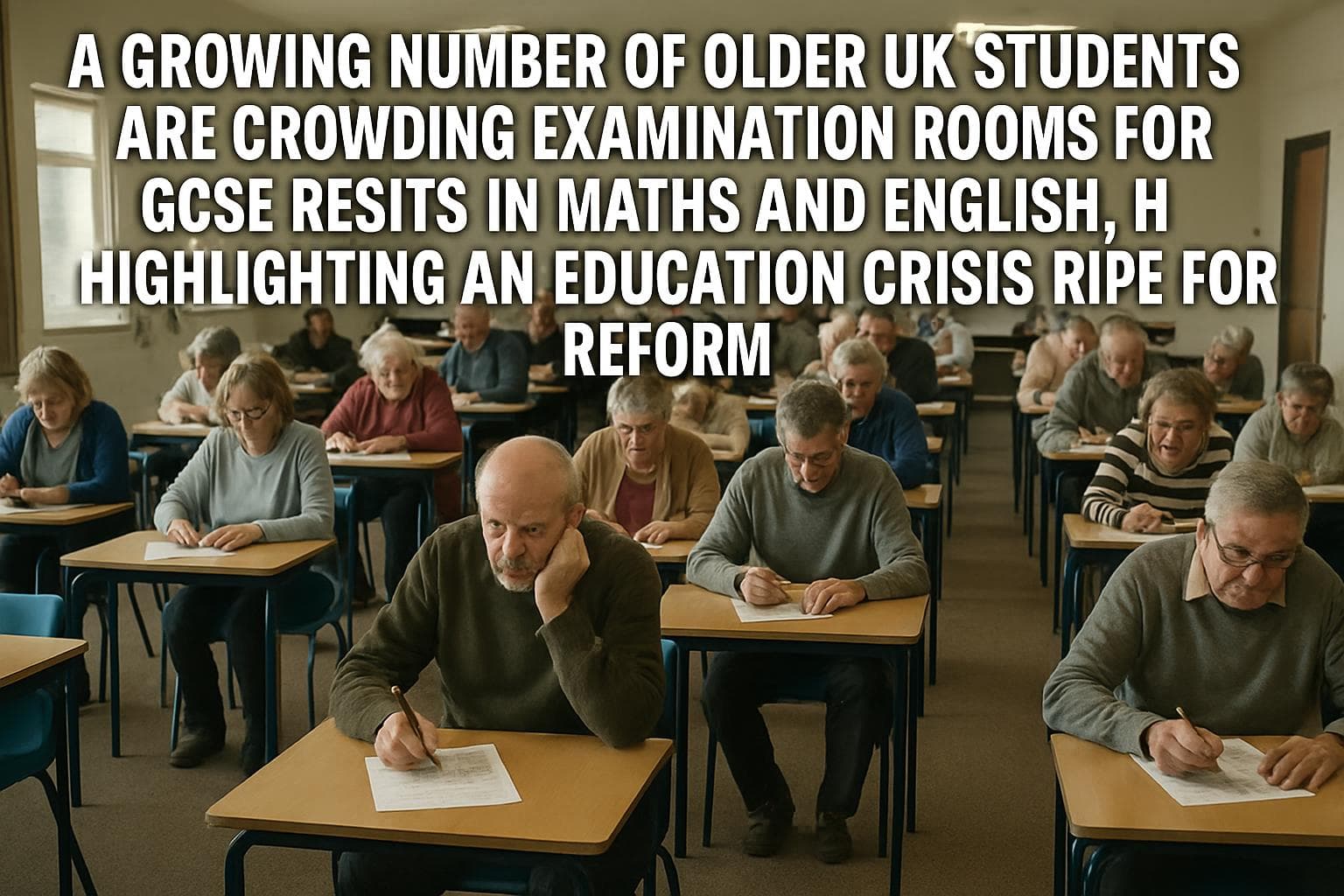
As students across the UK opened their GCSE results, a record number of resits in Maths and English has sparked concerns about a "resit crisis" in the education system. This year, 23.4% of these exams were taken by students aged 17 and older, marking an all-time high. While some were mature students sitting the exams for the first time, the majority were younger students retaking the exams after failing to achieve a passing grade initially.
In England, students who do not secure at least a grade 4 in these subjects must continue to study and retake the exams alongside their further education courses. However, the success rate for resits remains low, with only 20.9% of English and 17.1% of Maths resit entries achieving a passing grade. Jill Duffy, chief executive of the OCR exam board, described the situation as a "resit crisis," emphasizing the need for fundamental reform in secondary education.
The overall GCSE pass rate in England has dipped slightly to 67.1%, while Wales and Northern Ireland experienced minor increases. The gender gap in results is also narrowing, with boys showing improved performance in subjects like Maths and English, traditionally dominated by girls.
In Wales, a major shake-up is underway as new GCSE qualifications are set to align with the reformed Curriculum for Wales starting in September. This change aims to better prepare students for future educational and career opportunities.
Critics of the current resit policy, introduced by former Education Secretary Michael Gove, argue that it places undue pressure on students and educational institutions. Prof. Ulrike Tillmann of the Royal Society's education committee highlighted that two-thirds of resit students fail to achieve the required grade by age 19, calling for a reevaluation of the curriculum to better meet students' needs.
WHAT THIS MIGHT MEAN
The ongoing "resit crisis" could prompt significant changes in the UK's education policy. Experts suggest that reforming the curriculum to address fundamental skill gaps in Maths and English could alleviate the pressure on students and educators. As Wales implements its new curriculum, other regions may follow suit, potentially leading to a more cohesive and supportive educational framework.
Politically, the pressure is mounting on policymakers to address these issues, with calls for a comprehensive review of the resit policy. If reforms are enacted, they could reshape the landscape of secondary education in the UK, ensuring that students are better equipped for both academic and vocational pathways.
Images from the Web





Related Articles

Saharan Dust to Illuminate UK Skies with Vivid Sunrises and Sunsets

Government Announces £4 Billion Overhaul of SEND Support in England

Police Federation Chief Arrested Amid Fraud Investigation

Canada and Australia Forge Strategic Partnership Amid Global Uncertainty

UK Government to Reform Asylum Seeker Support and Employment Policies

Sisters Tragically Drown at Eryri National Park's Watkin Path
Record GCSE Resits Highlight Growing Crisis Amid Calls for Education Reform
In This Article
 Aya Nakamura| Published
 HIGHLIGHTS
- A record 23.4% of GCSE Maths and English exams were resits by students aged 17 and older, highlighting a growing "resit crisis."
- The overall GCSE pass rate in England fell slightly to 67.1%, while Wales and Northern Ireland saw slight increases.
- The gender gap in GCSE results is narrowing, with boys improving in key subjects like Maths and English.
- New GCSE qualifications in Wales will align with the reformed Curriculum for Wales starting September.
- Critics argue that the resit policy, introduced by Michael Gove, is outdated and needs reform to better support students.
As students across the UK opened their GCSE results, a record number of resits in Maths and English has sparked concerns about a "resit crisis" in the education system. This year, 23.4% of these exams were taken by students aged 17 and older, marking an all-time high. While some were mature students sitting the exams for the first time, the majority were younger students retaking the exams after failing to achieve a passing grade initially.
In England, students who do not secure at least a grade 4 in these subjects must continue to study and retake the exams alongside their further education courses. However, the success rate for resits remains low, with only 20.9% of English and 17.1% of Maths resit entries achieving a passing grade. Jill Duffy, chief executive of the OCR exam board, described the situation as a "resit crisis," emphasizing the need for fundamental reform in secondary education.
The overall GCSE pass rate in England has dipped slightly to 67.1%, while Wales and Northern Ireland experienced minor increases. The gender gap in results is also narrowing, with boys showing improved performance in subjects like Maths and English, traditionally dominated by girls.
In Wales, a major shake-up is underway as new GCSE qualifications are set to align with the reformed Curriculum for Wales starting in September. This change aims to better prepare students for future educational and career opportunities.
Critics of the current resit policy, introduced by former Education Secretary Michael Gove, argue that it places undue pressure on students and educational institutions. Prof. Ulrike Tillmann of the Royal Society's education committee highlighted that two-thirds of resit students fail to achieve the required grade by age 19, calling for a reevaluation of the curriculum to better meet students' needs.
WHAT THIS MIGHT MEAN
The ongoing "resit crisis" could prompt significant changes in the UK's education policy. Experts suggest that reforming the curriculum to address fundamental skill gaps in Maths and English could alleviate the pressure on students and educators. As Wales implements its new curriculum, other regions may follow suit, potentially leading to a more cohesive and supportive educational framework.
Politically, the pressure is mounting on policymakers to address these issues, with calls for a comprehensive review of the resit policy. If reforms are enacted, they could reshape the landscape of secondary education in the UK, ensuring that students are better equipped for both academic and vocational pathways.
Images from the Web
Related Articles
Saharan Dust to Illuminate UK Skies with Vivid Sunrises and Sunsets
Government Announces £4 Billion Overhaul of SEND Support in England
Police Federation Chief Arrested Amid Fraud Investigation
Canada and Australia Forge Strategic Partnership Amid Global Uncertainty
UK Government to Reform Asylum Seeker Support and Employment Policies
Sisters Tragically Drown at Eryri National Park's Watkin Path