
Rishi Sunak Defends Economic Measures During Covid-19 Pandemic at Public Inquiry
In This Article
HIGHLIGHTS
- Rishi Sunak defended the government's economic response to the Covid-19 pandemic, emphasizing the prevention of mass unemployment.
- The furlough scheme, introduced in March 2020, was a key measure to support workers and businesses during the crisis.
- Sunak highlighted the lack of a pre-existing "playbook" for dealing with the pandemic's economic impact.
- The Covid-19 inquiry revealed that early advice cautioned against premature action, focusing on timing to maintain public support.
- Youth unemployment remains a significant issue, exacerbated by Covid-19 and the cost of living crisis.
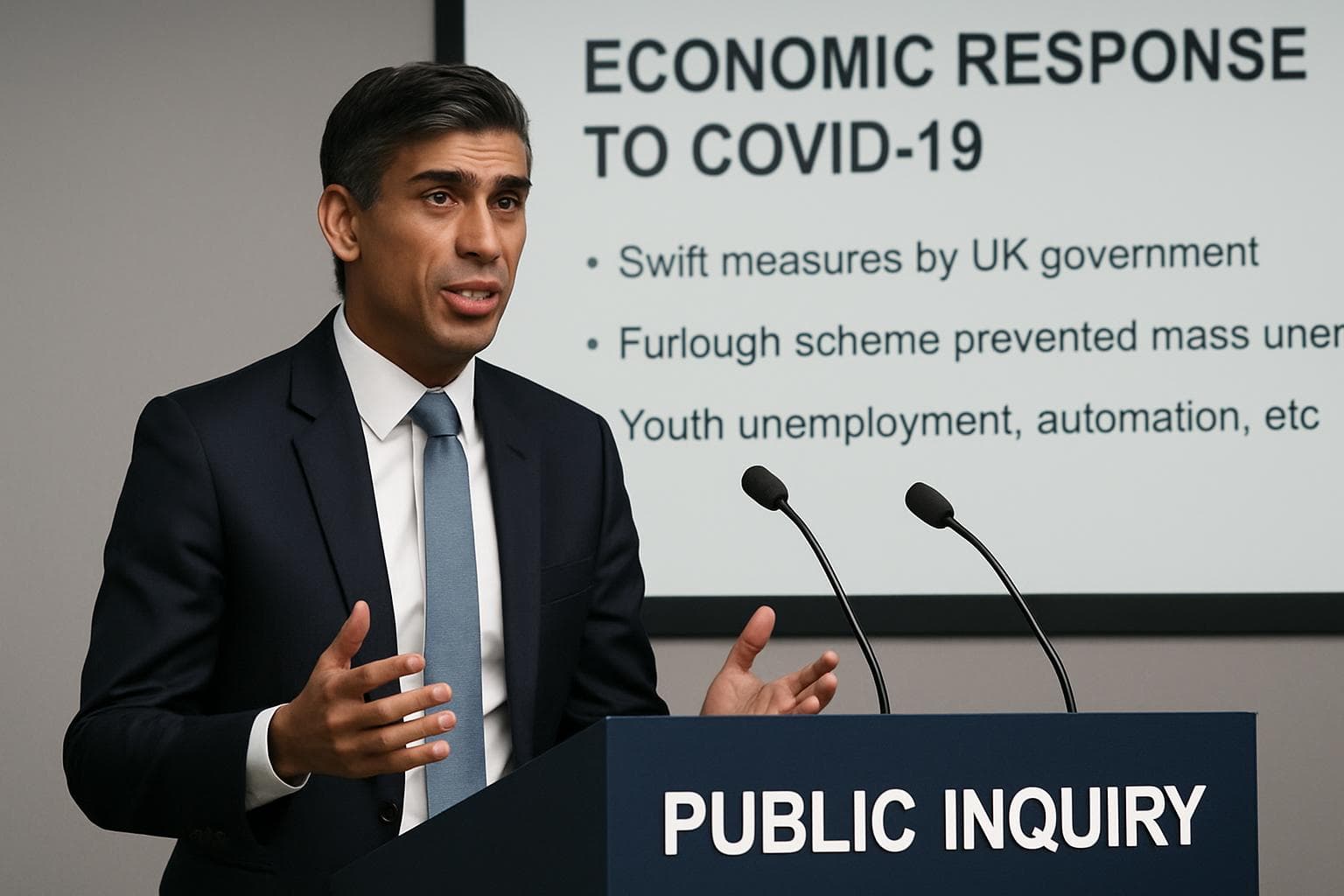
Former UK Chancellor Rishi Sunak has defended the government's economic strategies during the Covid-19 pandemic, asserting that the measures taken were crucial in preventing mass unemployment. Speaking at a public inquiry, Sunak acknowledged that while not all jobs could be saved, the government's swift actions mitigated the economic fallout significantly better than initially anticipated.
Economic Response and Furlough Scheme
Sunak, who was chancellor at the onset of the pandemic, introduced the furlough scheme in March 2020. This initiative aimed to support workers' incomes and keep businesses afloat during unprecedented times. "Speed was paramount," Sunak stated, emphasizing the urgency in implementing economic measures despite the absence of a pre-existing "playbook" for such a crisis. The scheme, although not perfect, was a pivotal element in the government's strategy to stabilize the economy.
Challenges and Strategic Decisions
The inquiry revealed that early advice from the medical and scientific community cautioned against moving "too early" with Covid-19 decisions, stressing the importance of timing to maintain public compliance. Sunak reflected on the intense pressure of the period, describing concerns over the UK's financial stability and the potential for social unrest due to widespread job losses.
Youth Unemployment Concerns
Despite the efforts to curb unemployment, youth joblessness remains a pressing issue. The pandemic, coupled with the ongoing cost of living crisis, has led to a surge in young people classified as Neets (not in employment, education, or training). The government has responded by expanding youth apprenticeships, yet challenges persist as automation increasingly replaces entry-level positions.
WHAT THIS MIGHT MEAN
Looking ahead, the economic strategies implemented during the pandemic will likely continue to be scrutinized as the UK navigates post-Covid recovery. The focus on youth unemployment suggests a need for targeted interventions to prevent long-term economic scarring among young people. Experts warn that without significant investment in training and job creation, the risk of a "lost generation" looms large. As the public inquiry progresses, further insights into the government's decision-making processes may emerge, potentially influencing future policy directions.
Related Articles
Middle East Conflict Drives UK Energy Prices to New Highs

Canada and Australia Forge Strategic Partnership Amid Global Uncertainty
UK Government to Reform Asylum Seeker Support and Employment Policies

UK Faces Dilemmas Amid Iran Conflict and China Spying Allegations

UK Reinforces Military Presence in Cyprus Amid Middle East Tensions

Police Federation Chief Arrested Amid Fraud Investigation
Rishi Sunak Defends Economic Measures During Covid-19 Pandemic at Public Inquiry
In This Article
 Daniel Rivera| Published
 HIGHLIGHTS
- Rishi Sunak defended the government's economic response to the Covid-19 pandemic, emphasizing the prevention of mass unemployment.
- The furlough scheme, introduced in March 2020, was a key measure to support workers and businesses during the crisis.
- Sunak highlighted the lack of a pre-existing "playbook" for dealing with the pandemic's economic impact.
- The Covid-19 inquiry revealed that early advice cautioned against premature action, focusing on timing to maintain public support.
- Youth unemployment remains a significant issue, exacerbated by Covid-19 and the cost of living crisis.
Former UK Chancellor Rishi Sunak has defended the government's economic strategies during the Covid-19 pandemic, asserting that the measures taken were crucial in preventing mass unemployment. Speaking at a public inquiry, Sunak acknowledged that while not all jobs could be saved, the government's swift actions mitigated the economic fallout significantly better than initially anticipated.
Economic Response and Furlough Scheme
Sunak, who was chancellor at the onset of the pandemic, introduced the furlough scheme in March 2020. This initiative aimed to support workers' incomes and keep businesses afloat during unprecedented times. "Speed was paramount," Sunak stated, emphasizing the urgency in implementing economic measures despite the absence of a pre-existing "playbook" for such a crisis. The scheme, although not perfect, was a pivotal element in the government's strategy to stabilize the economy.
Challenges and Strategic Decisions
The inquiry revealed that early advice from the medical and scientific community cautioned against moving "too early" with Covid-19 decisions, stressing the importance of timing to maintain public compliance. Sunak reflected on the intense pressure of the period, describing concerns over the UK's financial stability and the potential for social unrest due to widespread job losses.
Youth Unemployment Concerns
Despite the efforts to curb unemployment, youth joblessness remains a pressing issue. The pandemic, coupled with the ongoing cost of living crisis, has led to a surge in young people classified as Neets (not in employment, education, or training). The government has responded by expanding youth apprenticeships, yet challenges persist as automation increasingly replaces entry-level positions.
WHAT THIS MIGHT MEAN
Looking ahead, the economic strategies implemented during the pandemic will likely continue to be scrutinized as the UK navigates post-Covid recovery. The focus on youth unemployment suggests a need for targeted interventions to prevent long-term economic scarring among young people. Experts warn that without significant investment in training and job creation, the risk of a "lost generation" looms large. As the public inquiry progresses, further insights into the government's decision-making processes may emerge, potentially influencing future policy directions.
Related Articles
Middle East Conflict Drives UK Energy Prices to New Highs
Canada and Australia Forge Strategic Partnership Amid Global Uncertainty
UK Government to Reform Asylum Seeker Support and Employment Policies
UK Faces Dilemmas Amid Iran Conflict and China Spying Allegations
UK Reinforces Military Presence in Cyprus Amid Middle East Tensions
Police Federation Chief Arrested Amid Fraud Investigation