
Royal Mail's Financial Turnaround Under New Ownership
In This Article
HIGHLIGHTS
- Royal Mail reported its first profit in three years, with a pre-tax profit of £194 million for the financial year ending March.
- The company is undergoing significant changes under new owner Daniel Kretinsky, including reducing second-class deliveries.
- Parcel volumes increased by 6%, contributing to the financial turnaround, while letter volumes declined by 4%.
- The Universal Service Obligation remains under review, with potential changes to delivery schedules to save costs.
- The £3.6 billion takeover by EP Group marks the first foreign ownership of the 500-year-old company.
Royal Mail has announced its first annual profit in three years, marking a significant milestone in its ongoing transformation under the ownership of Czech billionaire Daniel Kretinsky. The postal service, which reported a pre-tax profit of £194 million for the financial year ending March, is navigating a challenging landscape marked by declining letter volumes and regulatory changes.
Strategic Shifts and Financial Performance
The financial turnaround comes in the wake of Royal Mail's £3.6 billion acquisition by Kretinsky's EP Group, finalized in April. This marks the first time the historic company has been under foreign ownership. The company has been focusing on increasing parcel deliveries, which rose by 6% over the year, while letter volumes fell by 4%. Martin Seidenberg, CEO of International Distribution Services (IDS), which owns Royal Mail, emphasized the importance of these changes, stating, "We still have a lot to do to ensure we have a profitable and successful Royal Mail for the long term."
Regulatory Changes and Operational Adjustments
In a bid to modernize and cut costs, Royal Mail is implementing significant changes to its delivery services. Ofcom, the sector regulator, has approved the reduction of second-class deliveries, allowing the company to end Saturday services and alternate weekday deliveries. This change is currently in a pilot phase across 35 delivery offices and is expected to take until 2026 to fully implement. Despite these efforts, Royal Mail has struggled to meet delivery targets, with only 75.9% of first-class mail delivered within one working day, falling short of the 93% target.
Future Outlook and Challenges
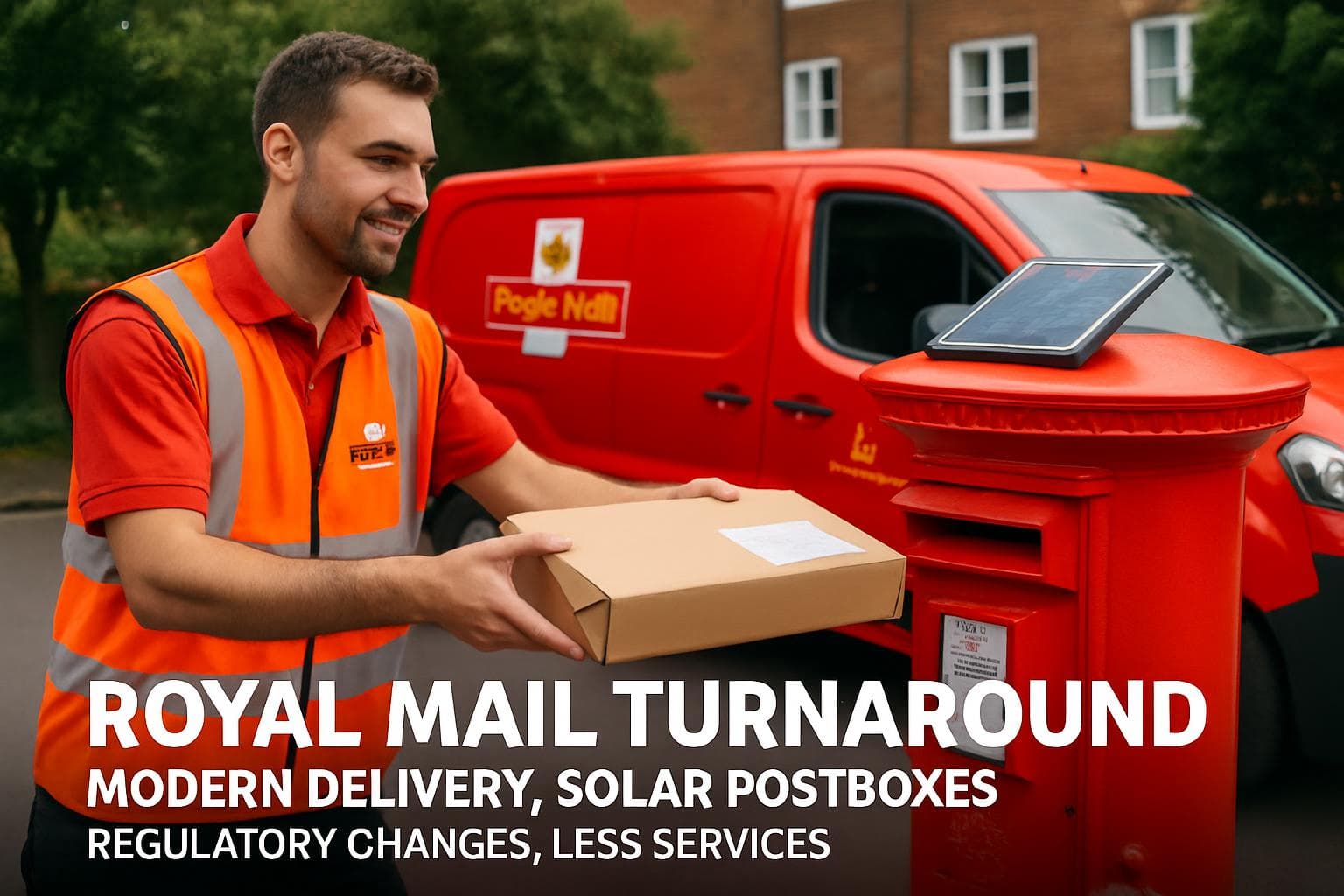
The Universal Service Obligation (USO), which mandates six-day delivery for letters and five-day delivery for parcels, is under review. Royal Mail has suggested that reducing second-class deliveries could save up to £300 million annually. The company is also investing in infrastructure, including the rollout of 3,500 solar-powered postboxes across the UK, to enhance service efficiency.
WHAT THIS MIGHT MEAN
As Royal Mail continues its transformation under EP Group, the focus will likely remain on optimizing operations and adapting to changing market demands. The potential revision of the Universal Service Obligation could significantly impact the company's cost structure and service offerings. Analysts will be watching closely to see how these changes affect customer satisfaction and market share. Additionally, the ongoing pilot of reduced second-class deliveries will be crucial in determining the feasibility and effectiveness of these operational shifts. The company's ability to meet regulatory targets and maintain service quality will be key factors in its long-term success.
Related Articles

Canada and Australia Forge Strategic Partnership Amid Global Uncertainty

UK Government to Reform Asylum Seeker Support and Employment Policies
Middle East Conflict Drives UK Energy Prices to New Highs

UK Faces Dilemmas Amid Iran Conflict and China Spying Allegations
UK Reinforces Military Presence in Cyprus Amid Middle East Tensions

Police Federation Chief Arrested Amid Fraud Investigation
Royal Mail's Financial Turnaround Under New Ownership
In This Article
 Daniel Rivera| Published
 HIGHLIGHTS
- Royal Mail reported its first profit in three years, with a pre-tax profit of £194 million for the financial year ending March.
- The company is undergoing significant changes under new owner Daniel Kretinsky, including reducing second-class deliveries.
- Parcel volumes increased by 6%, contributing to the financial turnaround, while letter volumes declined by 4%.
- The Universal Service Obligation remains under review, with potential changes to delivery schedules to save costs.
- The £3.6 billion takeover by EP Group marks the first foreign ownership of the 500-year-old company.
Royal Mail has announced its first annual profit in three years, marking a significant milestone in its ongoing transformation under the ownership of Czech billionaire Daniel Kretinsky. The postal service, which reported a pre-tax profit of £194 million for the financial year ending March, is navigating a challenging landscape marked by declining letter volumes and regulatory changes.
Strategic Shifts and Financial Performance
The financial turnaround comes in the wake of Royal Mail's £3.6 billion acquisition by Kretinsky's EP Group, finalized in April. This marks the first time the historic company has been under foreign ownership. The company has been focusing on increasing parcel deliveries, which rose by 6% over the year, while letter volumes fell by 4%. Martin Seidenberg, CEO of International Distribution Services (IDS), which owns Royal Mail, emphasized the importance of these changes, stating, "We still have a lot to do to ensure we have a profitable and successful Royal Mail for the long term."
Regulatory Changes and Operational Adjustments
In a bid to modernize and cut costs, Royal Mail is implementing significant changes to its delivery services. Ofcom, the sector regulator, has approved the reduction of second-class deliveries, allowing the company to end Saturday services and alternate weekday deliveries. This change is currently in a pilot phase across 35 delivery offices and is expected to take until 2026 to fully implement. Despite these efforts, Royal Mail has struggled to meet delivery targets, with only 75.9% of first-class mail delivered within one working day, falling short of the 93% target.
Future Outlook and Challenges
The Universal Service Obligation (USO), which mandates six-day delivery for letters and five-day delivery for parcels, is under review. Royal Mail has suggested that reducing second-class deliveries could save up to £300 million annually. The company is also investing in infrastructure, including the rollout of 3,500 solar-powered postboxes across the UK, to enhance service efficiency.
WHAT THIS MIGHT MEAN
As Royal Mail continues its transformation under EP Group, the focus will likely remain on optimizing operations and adapting to changing market demands. The potential revision of the Universal Service Obligation could significantly impact the company's cost structure and service offerings. Analysts will be watching closely to see how these changes affect customer satisfaction and market share. Additionally, the ongoing pilot of reduced second-class deliveries will be crucial in determining the feasibility and effectiveness of these operational shifts. The company's ability to meet regulatory targets and maintain service quality will be key factors in its long-term success.
Related Articles
Canada and Australia Forge Strategic Partnership Amid Global Uncertainty
UK Government to Reform Asylum Seeker Support and Employment Policies
Middle East Conflict Drives UK Energy Prices to New Highs
UK Faces Dilemmas Amid Iran Conflict and China Spying Allegations
UK Reinforces Military Presence in Cyprus Amid Middle East Tensions
Police Federation Chief Arrested Amid Fraud Investigation