
Santander to Shut 44 Branches Amid Digital Shift and TSB Takeover
In This Article
HIGHLIGHTS
- Santander is closing 44 UK branches, risking 291 jobs, as part of a shift towards digital banking.
- The closures coincide with Santander's £2.6bn takeover of TSB, potentially affecting branch and job redundancies.
- Santander will maintain 305 branches, with only 244 offering full services, amid concerns over "banking deserts."
- The bank plans to support affected customers through banking hubs and alternative roles for staff.
- Nationwide Building Society pledges to keep its branches open until 2030, contrasting with the trend of closures.
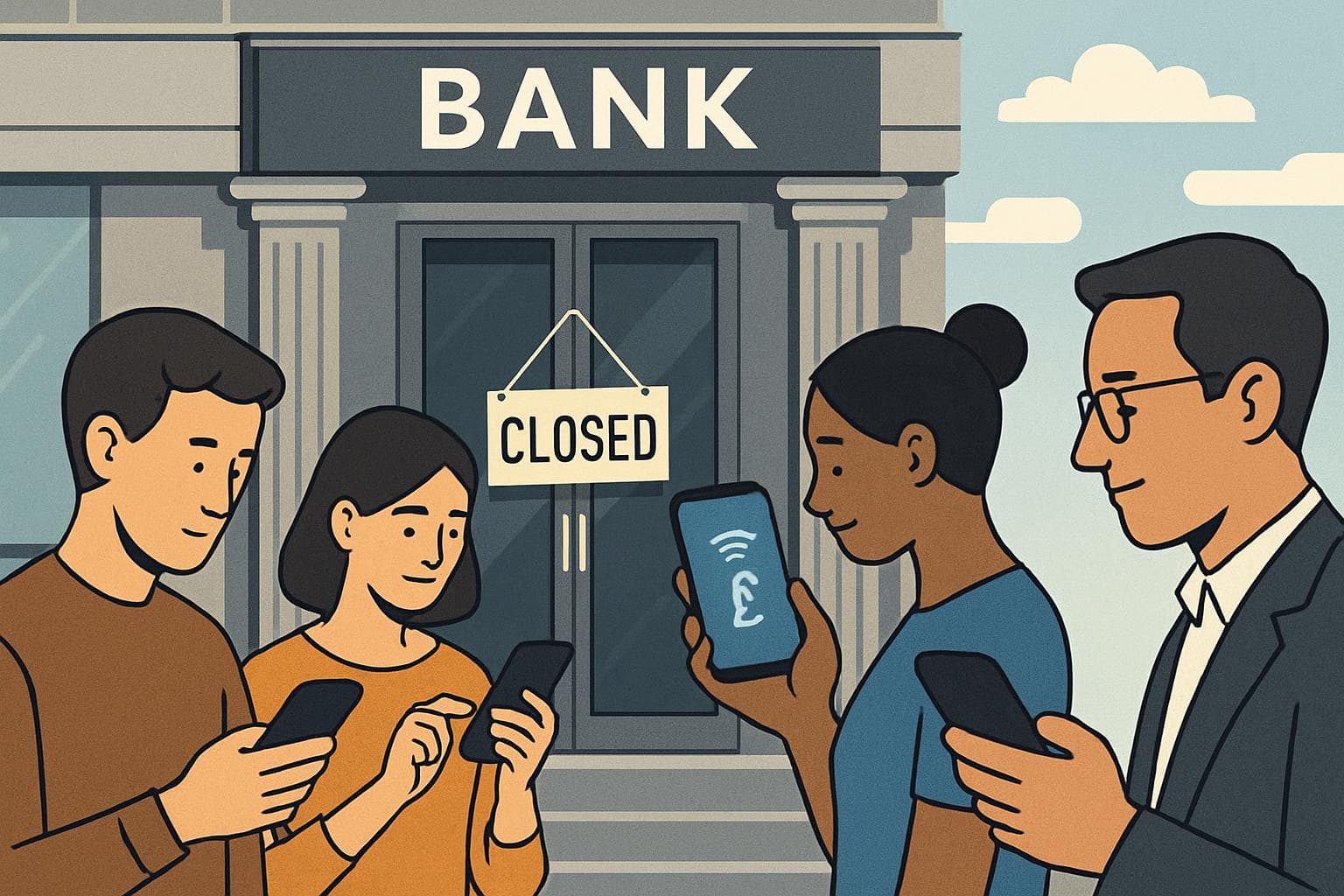
Santander has announced the closure of 44 branches across the UK, putting 291 jobs at risk as the bank adapts to the growing trend of digital banking. This move comes as the Spanish-owned lender prepares for its £2.6 billion acquisition of TSB, a deal that could reshape the UK banking landscape.
Digital Banking Drives Closures
The decision to close these branches reflects a broader industry shift towards online services, with Santander reporting that 96% of its transactions now occur digitally. The closures will leave the bank with 305 branches, of which only 244 will continue to offer a full range of services, including mortgage advice and in-person cash and cheque deposits.
Impact on Jobs and Communities
The closures have sparked concerns about job losses and the creation of "banking deserts," particularly in rural areas where access to financial services is already limited. Santander has stated that it will consult with unions and offer alternative roles to affected staff. Additionally, the bank plans to assist vulnerable customers by providing support through nearby banking hubs and Santander Locals, which operate in community centers and libraries.
TSB Takeover and Future Prospects
The branch closures are part of Santander's strategic preparation for its takeover of TSB, which is set to make it the third-largest UK bank in terms of personal current account deposits. The merger raises questions about potential redundancies and the future of the TSB brand, which has a 215-year history in the UK.
Despite the trend of closures, Nationwide Building Society has committed to keeping its branches open until at least 2030, highlighting a contrasting approach within the industry. Nationwide has reported an increase in branch usage, suggesting that physical banking still holds value for many customers.
WHAT THIS MIGHT MEAN
The closure of Santander branches and the impending TSB takeover could significantly alter the UK's banking landscape. If the merger proceeds, Santander will need to navigate regulatory approvals and address potential redundancies, which could impact both staff and customers. The consolidation may lead to a more streamlined operation but could also reduce competition on the high street.
Experts suggest that the shift towards digital banking is inevitable, yet the challenge remains to ensure that vulnerable populations retain access to essential financial services. The development of banking hubs could mitigate some of these concerns, but their rollout has been slow.
As the banking industry continues to evolve, the balance between digital convenience and physical accessibility will be crucial. The outcome of Santander's strategic moves will likely influence future trends in the sector, with implications for both consumers and the broader economy.
Related Articles

Middle East Conflict Drives UK Energy Prices to New Highs

Canada and Australia Forge Strategic Partnership Amid Global Uncertainty
UK Government to Reform Asylum Seeker Support and Employment Policies

UK Faces Dilemmas Amid Iran Conflict and China Spying Allegations

UK Reinforces Military Presence in Cyprus Amid Middle East Tensions

Police Federation Chief Arrested Amid Fraud Investigation
Santander to Shut 44 Branches Amid Digital Shift and TSB Takeover
In This Article
 Daniel Rivera| Published
 HIGHLIGHTS
- Santander is closing 44 UK branches, risking 291 jobs, as part of a shift towards digital banking.
- The closures coincide with Santander's £2.6bn takeover of TSB, potentially affecting branch and job redundancies.
- Santander will maintain 305 branches, with only 244 offering full services, amid concerns over "banking deserts."
- The bank plans to support affected customers through banking hubs and alternative roles for staff.
- Nationwide Building Society pledges to keep its branches open until 2030, contrasting with the trend of closures.
Santander has announced the closure of 44 branches across the UK, putting 291 jobs at risk as the bank adapts to the growing trend of digital banking. This move comes as the Spanish-owned lender prepares for its £2.6 billion acquisition of TSB, a deal that could reshape the UK banking landscape.
Digital Banking Drives Closures
The decision to close these branches reflects a broader industry shift towards online services, with Santander reporting that 96% of its transactions now occur digitally. The closures will leave the bank with 305 branches, of which only 244 will continue to offer a full range of services, including mortgage advice and in-person cash and cheque deposits.
Impact on Jobs and Communities
The closures have sparked concerns about job losses and the creation of "banking deserts," particularly in rural areas where access to financial services is already limited. Santander has stated that it will consult with unions and offer alternative roles to affected staff. Additionally, the bank plans to assist vulnerable customers by providing support through nearby banking hubs and Santander Locals, which operate in community centers and libraries.
TSB Takeover and Future Prospects
The branch closures are part of Santander's strategic preparation for its takeover of TSB, which is set to make it the third-largest UK bank in terms of personal current account deposits. The merger raises questions about potential redundancies and the future of the TSB brand, which has a 215-year history in the UK.
Despite the trend of closures, Nationwide Building Society has committed to keeping its branches open until at least 2030, highlighting a contrasting approach within the industry. Nationwide has reported an increase in branch usage, suggesting that physical banking still holds value for many customers.
WHAT THIS MIGHT MEAN
The closure of Santander branches and the impending TSB takeover could significantly alter the UK's banking landscape. If the merger proceeds, Santander will need to navigate regulatory approvals and address potential redundancies, which could impact both staff and customers. The consolidation may lead to a more streamlined operation but could also reduce competition on the high street.
Experts suggest that the shift towards digital banking is inevitable, yet the challenge remains to ensure that vulnerable populations retain access to essential financial services. The development of banking hubs could mitigate some of these concerns, but their rollout has been slow.
As the banking industry continues to evolve, the balance between digital convenience and physical accessibility will be crucial. The outcome of Santander's strategic moves will likely influence future trends in the sector, with implications for both consumers and the broader economy.
Related Articles
Middle East Conflict Drives UK Energy Prices to New Highs
Canada and Australia Forge Strategic Partnership Amid Global Uncertainty
UK Government to Reform Asylum Seeker Support and Employment Policies
UK Faces Dilemmas Amid Iran Conflict and China Spying Allegations
UK Reinforces Military Presence in Cyprus Amid Middle East Tensions
Police Federation Chief Arrested Amid Fraud Investigation