
Santander's Acquisition of TSB Sparks Concerns Over Job Cuts and Branch Closures
In This Article
HIGHLIGHTS
- Santander is set to acquire TSB for £2.65 billion, potentially making it the third largest UK bank by personal current accounts.
- The deal, pending Sabadell shareholder approval, could finalize by early 2026, with potential job cuts and branch closures.
- TSB's brand, with a 215-year history, may disappear as it integrates into Santander's UK operations.
- The acquisition follows Sabadell's decision to sell amid a €11 billion hostile bid from BBVA.
- Santander's executive chair, Ana Botín, emphasized the strategic importance of the UK market for the bank's long-term objectives.
In a significant move within the UK banking industry, Spanish banking giant Santander has announced its intention to acquire British lender TSB for £2.65 billion. This acquisition, which still requires approval from TSB's current owner Sabadell's shareholders, is expected to be completed by early 2026. If successful, the merger will position Santander as the third largest bank in the UK by share of personal current accounts, trailing only Lloyds and NatWest.
Potential Impact on Jobs and Branches
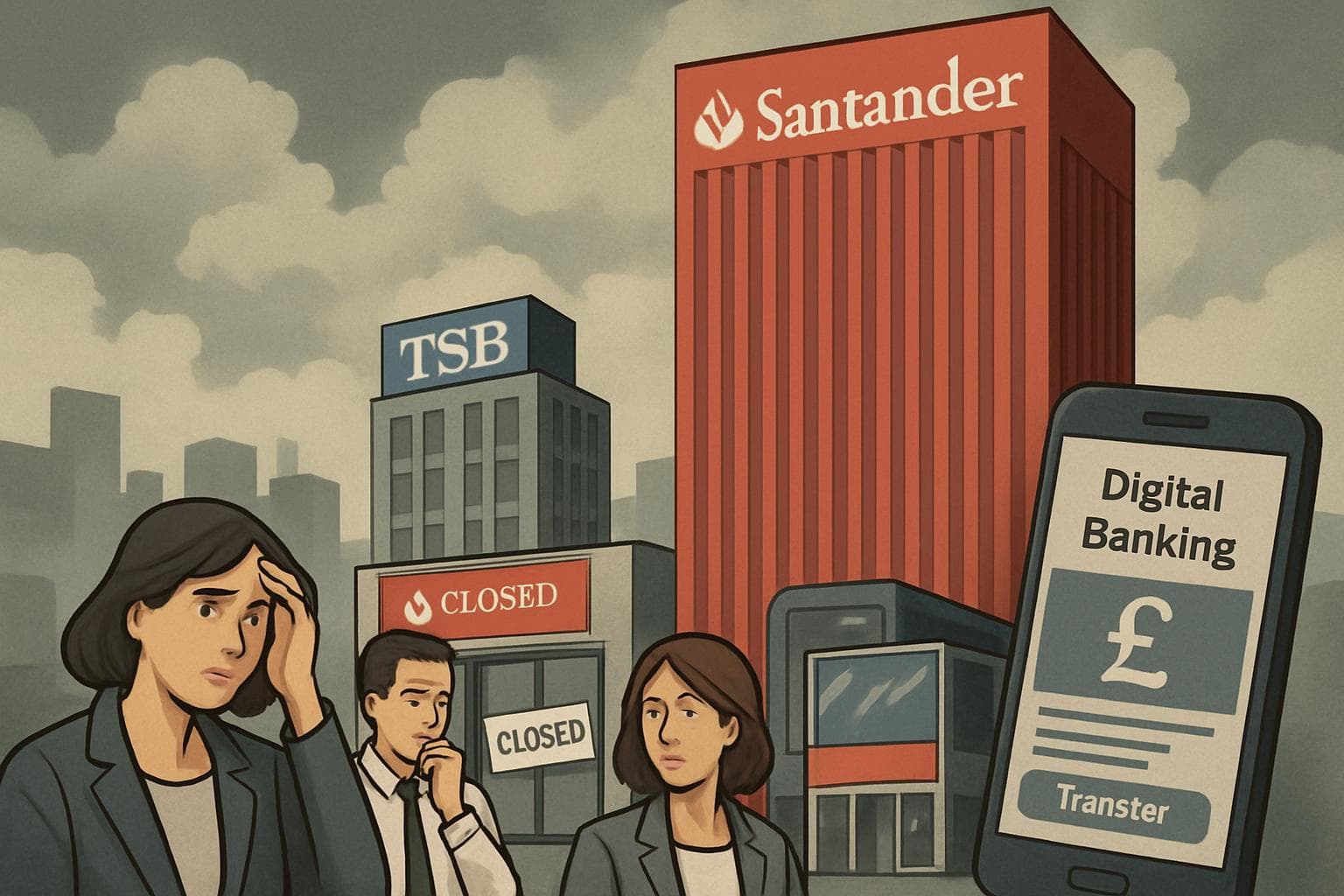
The proposed acquisition has raised concerns about potential job cuts and branch closures. Santander's spokesperson acknowledged that there would be some duplication, particularly in back-office roles, which could lead to redundancies. TSB currently operates 175 branches with a workforce of 5,000, while Santander has 349 branches and 18,000 employees across the UK. As digital banking becomes more prevalent, both banks have been adapting their operations, which may further influence branch consolidation.
A Strategic Move Amidst Market Challenges
The acquisition comes at a time when Sabadell is facing a €11 billion hostile takeover bid from rival BBVA. Selling TSB allows Sabadell to focus on its core operations amidst these challenges. Ana Botín, executive chair of Santander Group, stated that the acquisition underscores Santander's commitment to the UK market and aligns with its long-term strategic goals. She described the deal as a financially attractive opportunity that strengthens Santander's franchise in a key market.
The Future of the TSB Brand
The future of the TSB brand, which has a rich history dating back over 200 years, remains uncertain. While Santander has a history of absorbing UK banking brands, such as Abbey and Alliance & Leicester, into its operations, it has not yet decided whether to retain the TSB name. Marc Armengol, TSB's chief executive, expressed optimism about the merger, highlighting the potential benefits for TSB's loyal customers.
Historical Context and Recent Challenges
This acquisition marks the third major ownership change for TSB in just over a decade. Originally part of Lloyds, TSB was spun off following a £20 billion bailout during the global financial crisis. It was later acquired by Sabadell in 2015. TSB has faced challenges, including a significant IT failure in 2018 that disrupted customer access to accounts, resulting in a £49 million fine.
WHAT THIS MIGHT MEAN
As the acquisition progresses, the UK banking landscape could see significant shifts. If the deal is approved, Santander's increased market share may intensify competition among major banks, potentially leading to further consolidation in the industry. The potential job cuts and branch closures could also impact local communities and the banking workforce, prompting discussions on the future of traditional banking services in a digital age.
Experts suggest that the integration process will be closely watched, particularly regarding how Santander manages the transition for TSB's employees and customers. The outcome of Sabadell's situation with BBVA may also influence the broader European banking sector, as banks navigate economic uncertainties and regulatory challenges.
Santander's Acquisition of TSB Sparks Concerns Over Job Cuts and Branch Closures
In This Article
 Daniel Rivera| Published
 HIGHLIGHTS
- Santander is set to acquire TSB for £2.65 billion, potentially making it the third largest UK bank by personal current accounts.
- The deal, pending Sabadell shareholder approval, could finalize by early 2026, with potential job cuts and branch closures.
- TSB's brand, with a 215-year history, may disappear as it integrates into Santander's UK operations.
- The acquisition follows Sabadell's decision to sell amid a €11 billion hostile bid from BBVA.
- Santander's executive chair, Ana Botín, emphasized the strategic importance of the UK market for the bank's long-term objectives.
In a significant move within the UK banking industry, Spanish banking giant Santander has announced its intention to acquire British lender TSB for £2.65 billion. This acquisition, which still requires approval from TSB's current owner Sabadell's shareholders, is expected to be completed by early 2026. If successful, the merger will position Santander as the third largest bank in the UK by share of personal current accounts, trailing only Lloyds and NatWest.
Potential Impact on Jobs and Branches
The proposed acquisition has raised concerns about potential job cuts and branch closures. Santander's spokesperson acknowledged that there would be some duplication, particularly in back-office roles, which could lead to redundancies. TSB currently operates 175 branches with a workforce of 5,000, while Santander has 349 branches and 18,000 employees across the UK. As digital banking becomes more prevalent, both banks have been adapting their operations, which may further influence branch consolidation.
A Strategic Move Amidst Market Challenges
The acquisition comes at a time when Sabadell is facing a €11 billion hostile takeover bid from rival BBVA. Selling TSB allows Sabadell to focus on its core operations amidst these challenges. Ana Botín, executive chair of Santander Group, stated that the acquisition underscores Santander's commitment to the UK market and aligns with its long-term strategic goals. She described the deal as a financially attractive opportunity that strengthens Santander's franchise in a key market.
The Future of the TSB Brand
The future of the TSB brand, which has a rich history dating back over 200 years, remains uncertain. While Santander has a history of absorbing UK banking brands, such as Abbey and Alliance & Leicester, into its operations, it has not yet decided whether to retain the TSB name. Marc Armengol, TSB's chief executive, expressed optimism about the merger, highlighting the potential benefits for TSB's loyal customers.
Historical Context and Recent Challenges
This acquisition marks the third major ownership change for TSB in just over a decade. Originally part of Lloyds, TSB was spun off following a £20 billion bailout during the global financial crisis. It was later acquired by Sabadell in 2015. TSB has faced challenges, including a significant IT failure in 2018 that disrupted customer access to accounts, resulting in a £49 million fine.
WHAT THIS MIGHT MEAN
As the acquisition progresses, the UK banking landscape could see significant shifts. If the deal is approved, Santander's increased market share may intensify competition among major banks, potentially leading to further consolidation in the industry. The potential job cuts and branch closures could also impact local communities and the banking workforce, prompting discussions on the future of traditional banking services in a digital age.
Experts suggest that the integration process will be closely watched, particularly regarding how Santander manages the transition for TSB's employees and customers. The outcome of Sabadell's situation with BBVA may also influence the broader European banking sector, as banks navigate economic uncertainties and regulatory challenges.