
Scottish Government Faces Legal Challenge Over Transgender Inmate Policy

In This Article
HIGHLIGHTS
- For Women Scotland is challenging the Scottish government's policy on housing transgender inmates, arguing it contradicts a Supreme Court ruling.
- The policy allows transgender prisoners to be housed based on individual risk assessments, which critics claim neglects women's rights.
- Aidan O'Neill KC described the policy as "Orwellian" and politically motivated, lacking support from European human rights case law.
- The Scottish Prison Service reported that 80% of transgender inmates are housed according to their biological sex.
- The judicial review is being heard by Lady Ross at the Court of Session in Edinburgh and is expected to last three days.
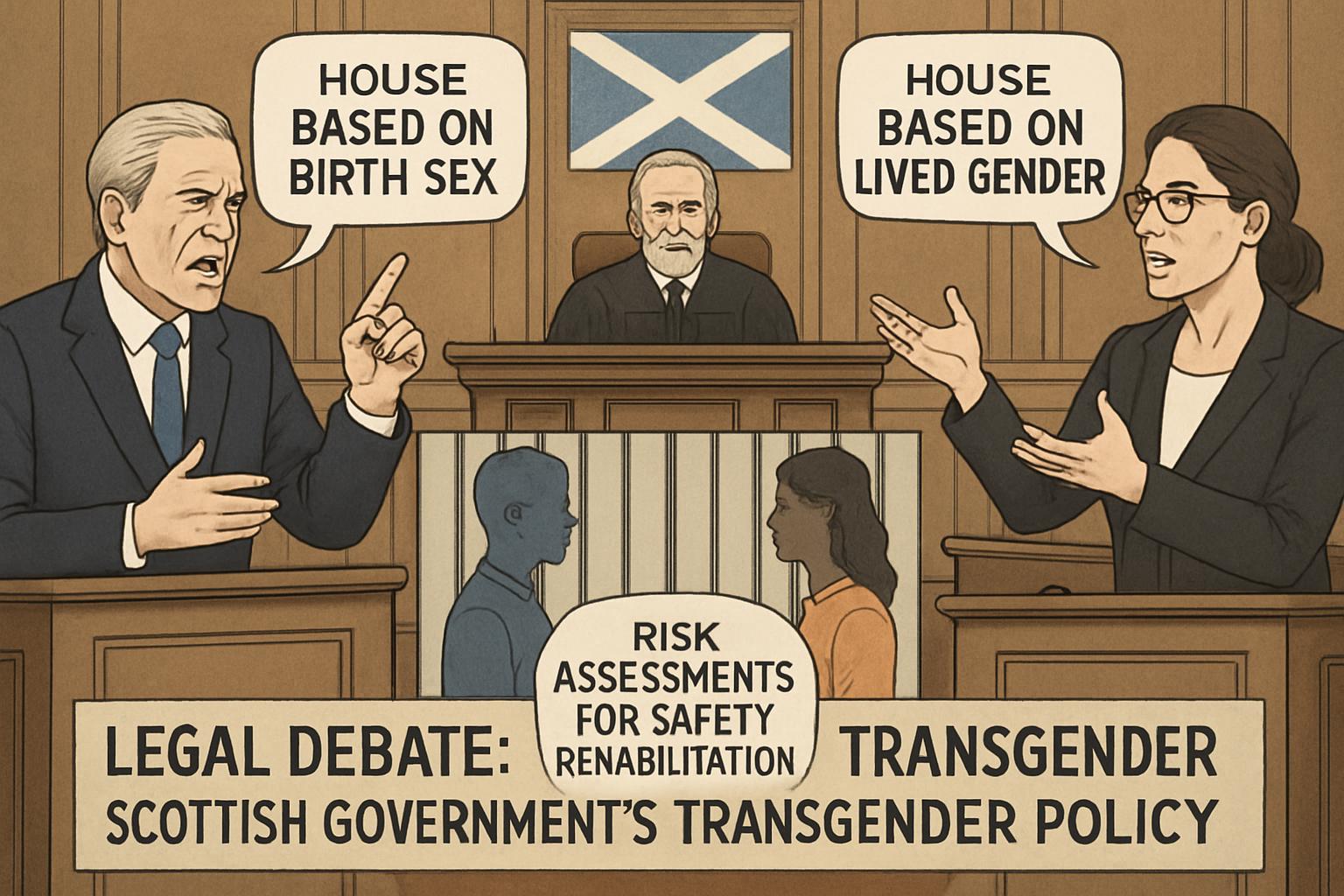
The Scottish government's policy on housing transgender inmates in women's prisons is under scrutiny as campaign group For Women Scotland challenges its legality. The group argues that the policy, which allows transgender prisoners to be housed based on individual risk assessments, is at odds with a Supreme Court ruling that defines a woman in equalities law as biological sex alone.
Legal Battle Over Prison Policy
The judicial review, taking place at the Court of Session in Edinburgh, is being heard by Lady Ross. Aidan O'Neill KC, representing For Women Scotland, criticized the policy as "Orwellian" and suggested it is driven by political motives rather than legal necessity. He argued that there is no case law from the European Court of Human Rights mandating the accommodation of transgender inmates in women's prisons.
Concerns Over Women's Rights
O'Neill emphasized that the policy neglects the rights of female prisoners, describing them as an "ultra-vulnerable population." He questioned why the Scottish Prison Service (SPS) does not have special facilities for transgender inmates, suggesting that women are unfairly bearing the risk. The SPS confirmed that as of June 2025, 80% of transgender inmates were housed according to their biological sex.
Political Reactions and Future Implications
The issue has sparked political debate, with Scottish Labour leader Anas Sarwar pledging to ban transgender prisoners from women's jails if elected as first minister. Meanwhile, SNP leader John Swinney acknowledged the controversy but stressed the need for policies to align with human rights obligations.
WHAT THIS MIGHT MEAN
The outcome of this judicial review could have significant implications for prison policies in Scotland and potentially influence similar debates across the UK. If the court rules in favor of For Women Scotland, it may prompt a reevaluation of how transgender inmates are housed, balancing human rights with the safety and rights of female prisoners. Politically, the case could impact upcoming elections, with parties potentially using the issue to sway voters. Legal experts suggest that a ruling against the current policy might lead to the development of specialized facilities for transgender inmates, ensuring their rights are respected while addressing concerns about women's safety in prisons.
Related Articles

Anas Sarwar's Call for Starmer's Resignation Sparks Labour Party Turmoil
Scottish Government Defends Transgender Prisoner Policy Amid Legal Challenge

Scottish Labour's Anas Sarwar Sparks Controversy with Call for Starmer's Resignation

Keir Starmer Faces Leadership Crisis Amid Calls for Resignation

Keir Starmer Faces Leadership Crisis Amid Calls for Resignation

Labour MP's Husband Arrested in UK-China Espionage Probe
Scottish Government Faces Legal Challenge Over Transgender Inmate Policy
In This Article
 Ethan Brooks| Published
 HIGHLIGHTS
- For Women Scotland is challenging the Scottish government's policy on housing transgender inmates, arguing it contradicts a Supreme Court ruling.
- The policy allows transgender prisoners to be housed based on individual risk assessments, which critics claim neglects women's rights.
- Aidan O'Neill KC described the policy as "Orwellian" and politically motivated, lacking support from European human rights case law.
- The Scottish Prison Service reported that 80% of transgender inmates are housed according to their biological sex.
- The judicial review is being heard by Lady Ross at the Court of Session in Edinburgh and is expected to last three days.
The Scottish government's policy on housing transgender inmates in women's prisons is under scrutiny as campaign group For Women Scotland challenges its legality. The group argues that the policy, which allows transgender prisoners to be housed based on individual risk assessments, is at odds with a Supreme Court ruling that defines a woman in equalities law as biological sex alone.
Legal Battle Over Prison Policy
The judicial review, taking place at the Court of Session in Edinburgh, is being heard by Lady Ross. Aidan O'Neill KC, representing For Women Scotland, criticized the policy as "Orwellian" and suggested it is driven by political motives rather than legal necessity. He argued that there is no case law from the European Court of Human Rights mandating the accommodation of transgender inmates in women's prisons.
Concerns Over Women's Rights
O'Neill emphasized that the policy neglects the rights of female prisoners, describing them as an "ultra-vulnerable population." He questioned why the Scottish Prison Service (SPS) does not have special facilities for transgender inmates, suggesting that women are unfairly bearing the risk. The SPS confirmed that as of June 2025, 80% of transgender inmates were housed according to their biological sex.
Political Reactions and Future Implications
The issue has sparked political debate, with Scottish Labour leader Anas Sarwar pledging to ban transgender prisoners from women's jails if elected as first minister. Meanwhile, SNP leader John Swinney acknowledged the controversy but stressed the need for policies to align with human rights obligations.
WHAT THIS MIGHT MEAN
The outcome of this judicial review could have significant implications for prison policies in Scotland and potentially influence similar debates across the UK. If the court rules in favor of For Women Scotland, it may prompt a reevaluation of how transgender inmates are housed, balancing human rights with the safety and rights of female prisoners. Politically, the case could impact upcoming elections, with parties potentially using the issue to sway voters. Legal experts suggest that a ruling against the current policy might lead to the development of specialized facilities for transgender inmates, ensuring their rights are respected while addressing concerns about women's safety in prisons.
Related Articles
Anas Sarwar's Call for Starmer's Resignation Sparks Labour Party Turmoil
Scottish Government Defends Transgender Prisoner Policy Amid Legal Challenge
Scottish Labour's Anas Sarwar Sparks Controversy with Call for Starmer's Resignation
Keir Starmer Faces Leadership Crisis Amid Calls for Resignation
Keir Starmer Faces Leadership Crisis Amid Calls for Resignation
Labour MP's Husband Arrested in UK-China Espionage Probe