
Scottish Government Defends Transgender Prisoner Policy Amid Legal Challenge
In This Article
HIGHLIGHTS
- The Scottish government argues that housing transgender prisoners based on their sex at birth violates human rights and increases suicide risk.
- For Women Scotland challenges the current policy, citing a Supreme Court ruling that defines women by biological sex under the Equality Act.
- The Scottish Prison Service uses individual risk assessments to determine housing, aiming to protect inmates and support rehabilitation.
- The European Convention on Human Rights is central to the government's argument for accommodating prisoners according to their lived gender.
- The Equality and Human Rights Commission calls for updated guidance following the Supreme Court's decision on gender definitions.
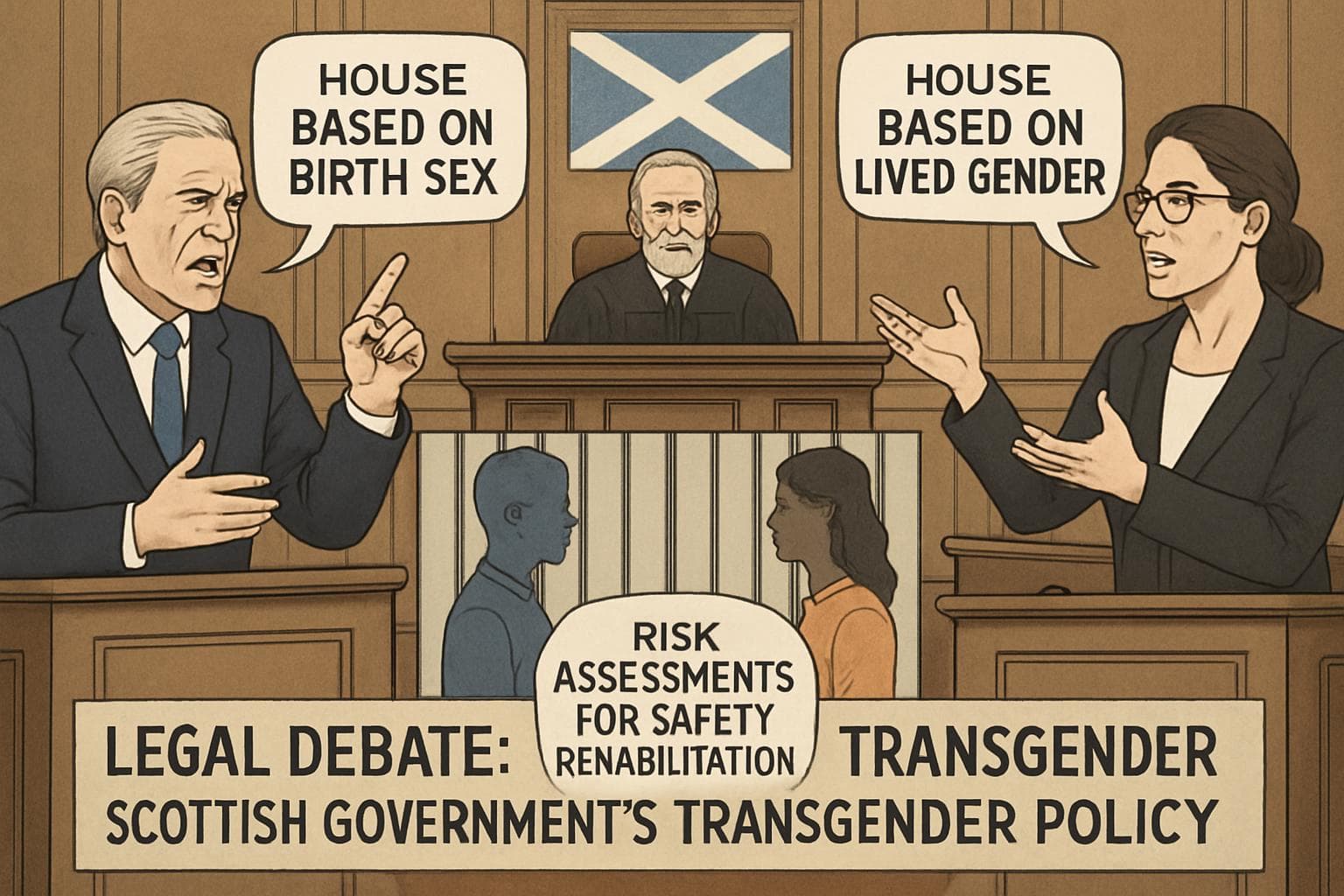
The Scottish government's policy on housing transgender prisoners has come under scrutiny in a legal challenge that questions its alignment with human rights and recent legal precedents. The debate centers around whether transgender inmates should be housed according to their sex at birth or their lived gender, with significant implications for their mental health and rehabilitation.
Legal Challenge and Human Rights Concerns
For Women Scotland, a campaign group, has initiated a legal challenge against the Scottish government's guidance, arguing that only biologically female individuals should be housed in women's prisons. This stance is rooted in a Supreme Court ruling that defined women by biological sex for the purposes of the Equality Act, the UK's primary anti-discrimination legislation.
The Scottish government, however, maintains that a blanket rule enforcing housing based on birth sex would infringe on the European Convention on Human Rights (ECHR). Gerry Moynihan KC, representing the government, emphasized that such a policy would deny transgender individuals their identity and could lead to increased suicide risks. He argued that the current system of individual risk assessments provides necessary flexibility to protect all inmates and support their rehabilitation.
The Role of Risk Assessments
The Scottish Prison Service (SPS) employs a system of individual risk assessments to determine the most appropriate housing for transgender prisoners. This approach aims to balance the safety and rehabilitation needs of all inmates, allowing for the possibility of housing trans women in female estates if they pose no risk to others. Moynihan highlighted that trans women have unique vulnerabilities that are best addressed in environments aligning with their lived gender, provided they do not endanger other inmates.
Calls for Updated Guidance
The Equality and Human Rights Commission (EHRC) has intervened, urging the Scottish government to update its guidance in light of the Supreme Court's decision. Janys Scott KC, representing the EHRC, noted the "temporary hiatus" in national guidance and emphasized the need for clarity in applying the ruling across public sectors.
The judicial review concludes amid broader discussions on single-sex provisions in public services, with growing pressure on the Scottish National Party (SNP) government to address concerns about safety and inclusivity.
WHAT THIS MIGHT MEAN
The outcome of this legal challenge could have significant implications for prison policies across the UK, potentially influencing how transgender rights are balanced with existing legal frameworks. If the court sides with For Women Scotland, it may prompt a reevaluation of current practices and lead to stricter adherence to biological definitions in other areas of public policy. Conversely, a ruling in favor of the Scottish government could reinforce the importance of individual assessments and human rights considerations in shaping inclusive policies. As the debate continues, the need for updated and clear guidance remains critical to navigating these complex issues.
Related Articles

Scottish Government Faces Legal Challenge Over Transgender Inmate Policy
High Court Dismisses Legal Challenge Over Transgender Access to Hampstead Ponds

High Court Upholds Guidance on Single-Sex Spaces Amidst Transgender Rights Debate

Scottish Labour's Anas Sarwar Sparks Controversy with Call for Starmer's Resignation

Anas Sarwar's Call for Starmer's Resignation Sparks Labour Party Turmoil

Trump's New Tariff Strategy Sparks Global Trade Uncertainty
Scottish Government Defends Transgender Prisoner Policy Amid Legal Challenge
In This Article
 Alex Carter| Published
 HIGHLIGHTS
- The Scottish government argues that housing transgender prisoners based on their sex at birth violates human rights and increases suicide risk.
- For Women Scotland challenges the current policy, citing a Supreme Court ruling that defines women by biological sex under the Equality Act.
- The Scottish Prison Service uses individual risk assessments to determine housing, aiming to protect inmates and support rehabilitation.
- The European Convention on Human Rights is central to the government's argument for accommodating prisoners according to their lived gender.
- The Equality and Human Rights Commission calls for updated guidance following the Supreme Court's decision on gender definitions.
The Scottish government's policy on housing transgender prisoners has come under scrutiny in a legal challenge that questions its alignment with human rights and recent legal precedents. The debate centers around whether transgender inmates should be housed according to their sex at birth or their lived gender, with significant implications for their mental health and rehabilitation.
Legal Challenge and Human Rights Concerns
For Women Scotland, a campaign group, has initiated a legal challenge against the Scottish government's guidance, arguing that only biologically female individuals should be housed in women's prisons. This stance is rooted in a Supreme Court ruling that defined women by biological sex for the purposes of the Equality Act, the UK's primary anti-discrimination legislation.
The Scottish government, however, maintains that a blanket rule enforcing housing based on birth sex would infringe on the European Convention on Human Rights (ECHR). Gerry Moynihan KC, representing the government, emphasized that such a policy would deny transgender individuals their identity and could lead to increased suicide risks. He argued that the current system of individual risk assessments provides necessary flexibility to protect all inmates and support their rehabilitation.
The Role of Risk Assessments
The Scottish Prison Service (SPS) employs a system of individual risk assessments to determine the most appropriate housing for transgender prisoners. This approach aims to balance the safety and rehabilitation needs of all inmates, allowing for the possibility of housing trans women in female estates if they pose no risk to others. Moynihan highlighted that trans women have unique vulnerabilities that are best addressed in environments aligning with their lived gender, provided they do not endanger other inmates.
Calls for Updated Guidance
The Equality and Human Rights Commission (EHRC) has intervened, urging the Scottish government to update its guidance in light of the Supreme Court's decision. Janys Scott KC, representing the EHRC, noted the "temporary hiatus" in national guidance and emphasized the need for clarity in applying the ruling across public sectors.
The judicial review concludes amid broader discussions on single-sex provisions in public services, with growing pressure on the Scottish National Party (SNP) government to address concerns about safety and inclusivity.
WHAT THIS MIGHT MEAN
The outcome of this legal challenge could have significant implications for prison policies across the UK, potentially influencing how transgender rights are balanced with existing legal frameworks. If the court sides with For Women Scotland, it may prompt a reevaluation of current practices and lead to stricter adherence to biological definitions in other areas of public policy. Conversely, a ruling in favor of the Scottish government could reinforce the importance of individual assessments and human rights considerations in shaping inclusive policies. As the debate continues, the need for updated and clear guidance remains critical to navigating these complex issues.
Related Articles
Scottish Government Faces Legal Challenge Over Transgender Inmate Policy
High Court Dismisses Legal Challenge Over Transgender Access to Hampstead Ponds
High Court Upholds Guidance on Single-Sex Spaces Amidst Transgender Rights Debate
Scottish Labour's Anas Sarwar Sparks Controversy with Call for Starmer's Resignation
Anas Sarwar's Call for Starmer's Resignation Sparks Labour Party Turmoil
Trump's New Tariff Strategy Sparks Global Trade Uncertainty