
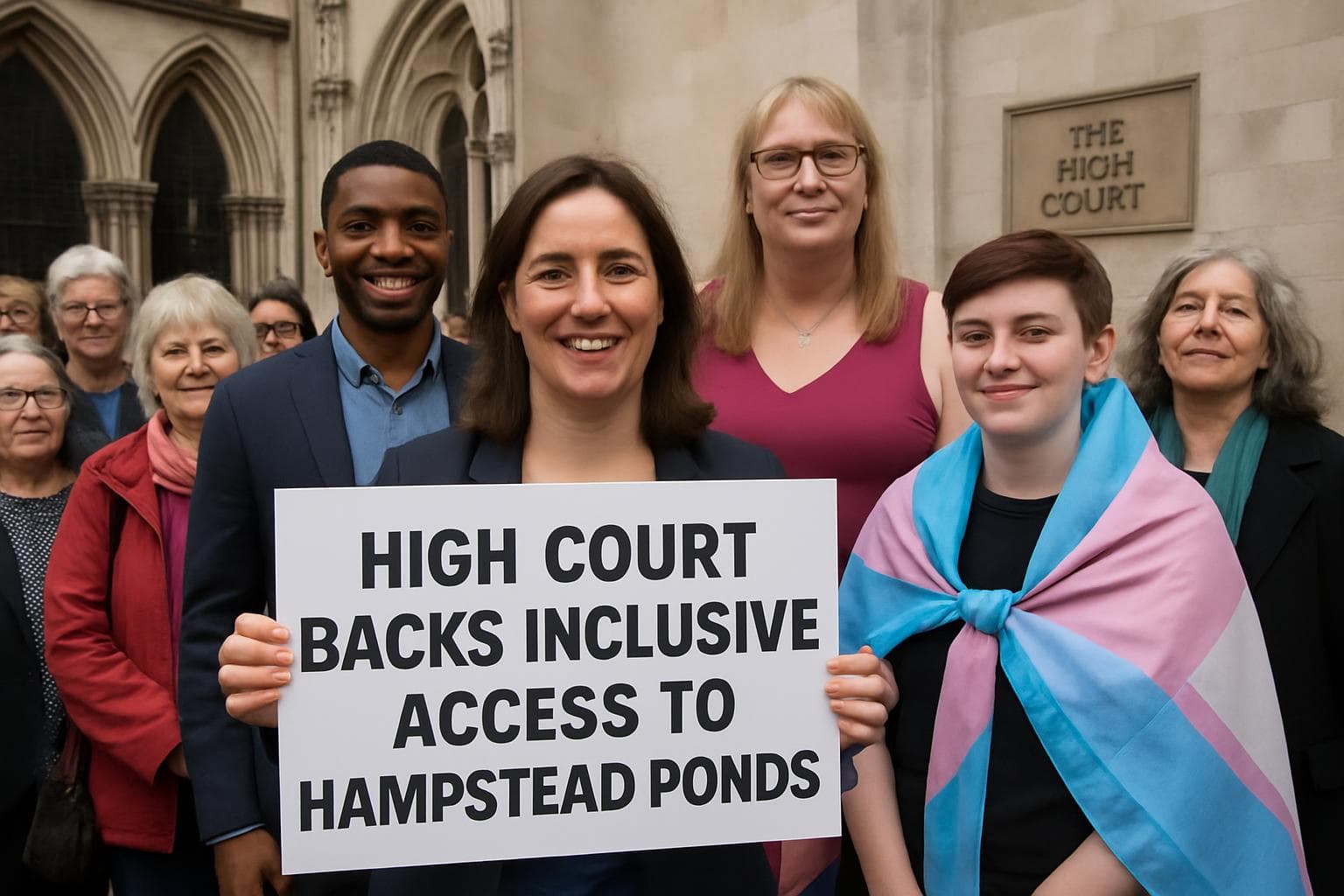
High Court Dismisses Legal Challenge Over Transgender Access to Hampstead Ponds
In This Article
HIGHLIGHTS
- A High Court judge dismissed a legal challenge by Sex Matters against the City of London Corporation's trans-inclusive policy at Hampstead Heath ponds.
- The judge ruled that the county court, not the High Court, is the appropriate forum for such claims.
- A City of London consultation showed 86% support for maintaining current trans-inclusive access to the ponds.
- Sex Matters expressed disappointment and is considering further legal options, emphasizing concerns over women's safety and privacy.
- Trans advocacy groups hailed the ruling as a victory for trans rights, maintaining that the ponds remain inclusive spaces.
A legal challenge by the charity Sex Matters against the City of London Corporation's policy allowing transgender individuals to use single-sex facilities at Hampstead Heath's swimming ponds has been dismissed by the High Court. The decision, delivered by Mrs Justice Lieven, determined that the county court is the appropriate venue for such claims, rather than the High Court.
Background and Legal Context
The legal action was initiated by Sex Matters, a gender-critical campaign group, which argued that the City of London's policy amounted to sex discrimination. This challenge followed a Supreme Court ruling in April 2025, which defined "woman" and "sex" under the Equality Act as referring to biological sex only. The charity contended that the policy compromised the privacy, dignity, and safety of women using the facilities.
Tom Cross KC, representing Sex Matters, argued that the rules treated women less favorably than men, as they faced a greater risk of privacy and safety violations. However, Daniel Stilitz KC, representing the City of London Corporation, countered that the claim was untimely, given that the policy has been in place since 2017.
Public Consultation and Community Response
Coinciding with the court's decision, the City of London Corporation released results from a public consultation, revealing strong support for the existing trans-inclusive policy. Of the more than 38,000 respondents, 86% favored maintaining the current access arrangements, while 90% opposed separate facilities for trans swimmers. The consultation, which included focus groups, highlighted the community's preference for inclusive access.
Chris Hayward, policy chair for the City of London Corporation, noted the significant public engagement and support for the ponds as inclusive spaces. The Good Law Project, opposing the Supreme Court's judgment, celebrated the ruling as a significant victory for trans rights.
Reactions and Future Implications
Despite the setback, Sex Matters remains resolute. CEO Maya Forstater stated that the fight for women's safety and privacy in single-sex spaces would continue. The group is exploring further legal avenues, emphasizing that the ruling does not permit service providers to disregard women's rights.
Conversely, trans advocacy groups welcomed the decision, asserting that the ponds should remain accessible to all, regardless of gender identity. TransLucent, a trans-led human rights organization, criticized the legal challenge as a waste of taxpayer money and an attempt to exclude trans individuals.
WHAT THIS MIGHT MEAN
The dismissal of this legal challenge may set a precedent for future cases involving transgender access to single-sex facilities. Should Sex Matters pursue further legal action, it could lead to additional scrutiny of the Equality Act's interpretation concerning gender identity. Meanwhile, the City of London Corporation's consultation results suggest strong public backing for inclusive policies, potentially influencing similar debates across the UK. As the discourse around gender identity and legal rights evolves, this case underscores the ongoing tension between gender-critical perspectives and trans-inclusive advocacy.
Related Articles
Starmer Condemns Reform UK's Plan to Repeal Equality Act as Un-British

Supreme Court Ruling Expands Compensation for Children Injured at Birth

Allegations of Unlawful Reporting Methods in Stephen Lawrence Case Denied by Ex-Daily Mail Reporter
High Court Ruling Delays Trial of Pro-Palestine Activists

High Court Upholds Guidance on Single-Sex Spaces Amidst Transgender Rights Debate

Noel Clarke Arrested Over 2007 Attempted Rape Allegation
High Court Dismisses Legal Challenge Over Transgender Access to Hampstead Ponds
In This Article
 Ethan Brooks| Published
 HIGHLIGHTS
- A High Court judge dismissed a legal challenge by Sex Matters against the City of London Corporation's trans-inclusive policy at Hampstead Heath ponds.
- The judge ruled that the county court, not the High Court, is the appropriate forum for such claims.
- A City of London consultation showed 86% support for maintaining current trans-inclusive access to the ponds.
- Sex Matters expressed disappointment and is considering further legal options, emphasizing concerns over women's safety and privacy.
- Trans advocacy groups hailed the ruling as a victory for trans rights, maintaining that the ponds remain inclusive spaces.
A legal challenge by the charity Sex Matters against the City of London Corporation's policy allowing transgender individuals to use single-sex facilities at Hampstead Heath's swimming ponds has been dismissed by the High Court. The decision, delivered by Mrs Justice Lieven, determined that the county court is the appropriate venue for such claims, rather than the High Court.
Background and Legal Context
The legal action was initiated by Sex Matters, a gender-critical campaign group, which argued that the City of London's policy amounted to sex discrimination. This challenge followed a Supreme Court ruling in April 2025, which defined "woman" and "sex" under the Equality Act as referring to biological sex only. The charity contended that the policy compromised the privacy, dignity, and safety of women using the facilities.
Tom Cross KC, representing Sex Matters, argued that the rules treated women less favorably than men, as they faced a greater risk of privacy and safety violations. However, Daniel Stilitz KC, representing the City of London Corporation, countered that the claim was untimely, given that the policy has been in place since 2017.
Public Consultation and Community Response
Coinciding with the court's decision, the City of London Corporation released results from a public consultation, revealing strong support for the existing trans-inclusive policy. Of the more than 38,000 respondents, 86% favored maintaining the current access arrangements, while 90% opposed separate facilities for trans swimmers. The consultation, which included focus groups, highlighted the community's preference for inclusive access.
Chris Hayward, policy chair for the City of London Corporation, noted the significant public engagement and support for the ponds as inclusive spaces. The Good Law Project, opposing the Supreme Court's judgment, celebrated the ruling as a significant victory for trans rights.
Reactions and Future Implications
Despite the setback, Sex Matters remains resolute. CEO Maya Forstater stated that the fight for women's safety and privacy in single-sex spaces would continue. The group is exploring further legal avenues, emphasizing that the ruling does not permit service providers to disregard women's rights.
Conversely, trans advocacy groups welcomed the decision, asserting that the ponds should remain accessible to all, regardless of gender identity. TransLucent, a trans-led human rights organization, criticized the legal challenge as a waste of taxpayer money and an attempt to exclude trans individuals.
WHAT THIS MIGHT MEAN
The dismissal of this legal challenge may set a precedent for future cases involving transgender access to single-sex facilities. Should Sex Matters pursue further legal action, it could lead to additional scrutiny of the Equality Act's interpretation concerning gender identity. Meanwhile, the City of London Corporation's consultation results suggest strong public backing for inclusive policies, potentially influencing similar debates across the UK. As the discourse around gender identity and legal rights evolves, this case underscores the ongoing tension between gender-critical perspectives and trans-inclusive advocacy.
Related Articles
Starmer Condemns Reform UK's Plan to Repeal Equality Act as Un-British
Supreme Court Ruling Expands Compensation for Children Injured at Birth
Allegations of Unlawful Reporting Methods in Stephen Lawrence Case Denied by Ex-Daily Mail Reporter
High Court Ruling Delays Trial of Pro-Palestine Activists
High Court Upholds Guidance on Single-Sex Spaces Amidst Transgender Rights Debate
Noel Clarke Arrested Over 2007 Attempted Rape Allegation