
Smart Motorways in England Criticized for Poor Value and Safety Concerns
In This Article
HIGHLIGHTS
- National Highways reports reveal most smart motorways in England offer poor value for money, with only three out of sixteen projects meeting financial expectations.
- The AA criticizes smart motorways as a "catastrophic waste," citing safety concerns and insufficient economic benefits.
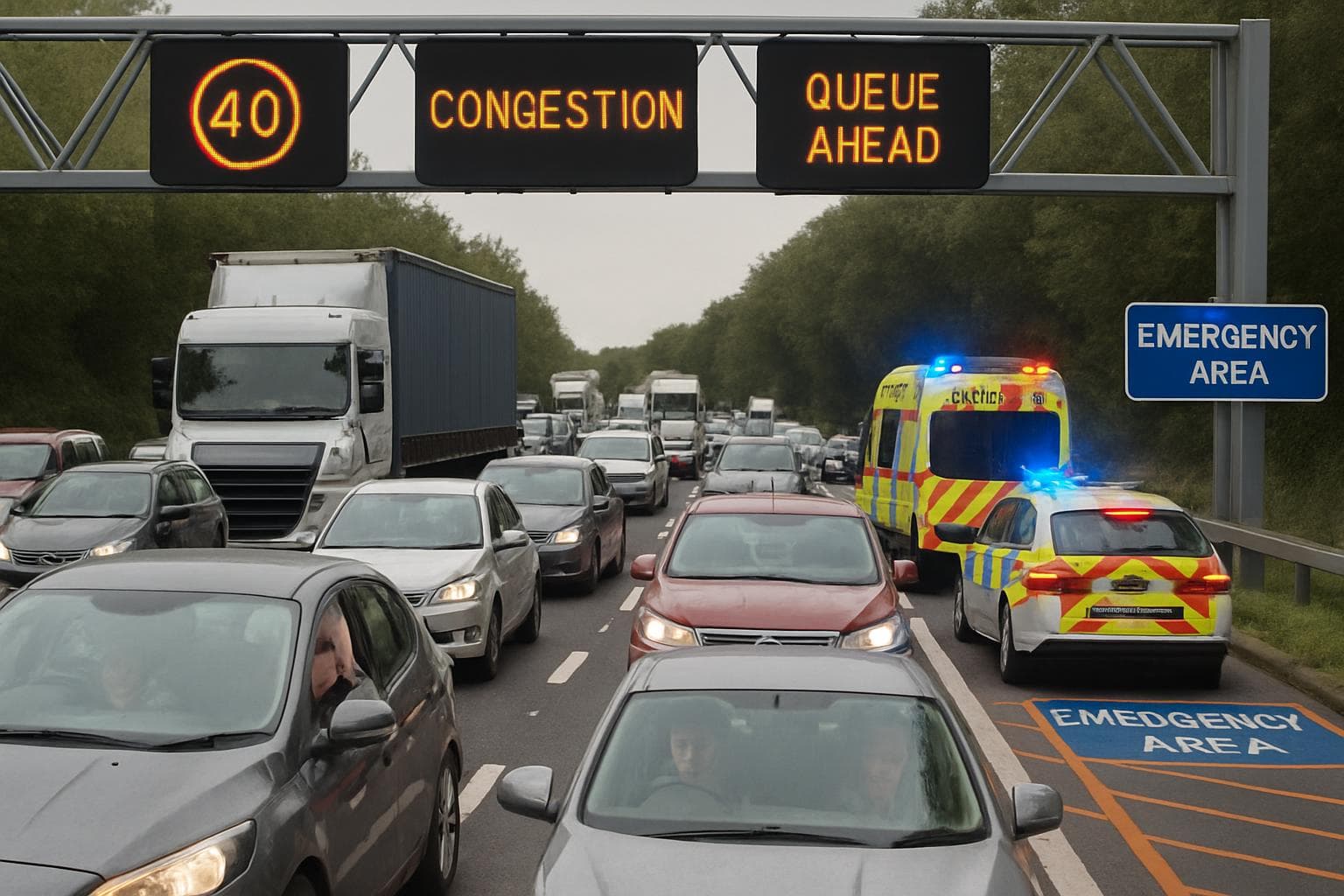
- Smart motorways were intended to reduce congestion by converting hard shoulders into live lanes, but have faced criticism due to safety issues.
- Despite safety improvements, such as additional emergency laybys, some sections have seen increased fatalities and injuries.
- Lower-than-expected traffic growth and slower travel speeds have contributed to the schemes' poor financial performance.
Recent evaluations by National Highways have revealed that the majority of smart motorway projects across England are failing to deliver the anticipated value for money. Out of sixteen projects, only three are on track to meet their financial objectives, raising significant concerns about the efficacy and safety of these road infrastructure schemes.
Evaluations and Financial Performance
The Department for Transport (DfT) recently released long-awaited reports, known as post-opening project evaluations (popes), which assessed the performance of smart motorways over a five-year period. These evaluations highlighted that most projects, including sections of the M1, M4, M6, and M25, were rated as "poor" or "very poor" in terms of value for money. The AA, representing motorists, has labeled these schemes as a "catastrophic waste of time, money, and effort."
Smart motorways were introduced to alleviate congestion by converting hard shoulders into live lanes and using electronic signs to manage traffic flow. However, the anticipated benefits have not materialized as expected. Elliot Shaw, National Highways' chief customer officer, noted that lower traffic growth and slower travel speeds have impacted the financial outcomes of these projects.
Safety Concerns and Improvements
Safety remains a contentious issue for smart motorways. While official statistics suggest they are relatively safe, surveys indicate that many motorists are apprehensive about driving on them. The absence of a permanent hard shoulder has led to several fatal collisions following vehicle breakdowns. In response, National Highways has implemented additional safety measures, including 150 more emergency laybys and enhanced vehicle detection technology.
Despite these efforts, certain sections, such as the M3 and parts of the M1, have seen a slight increase in fatalities and serious injuries. Edmund King, president of the AA, emphasized the mixed safety record of smart motorways, describing the current situation as "frightening" for drivers who experience breakdowns.
Calls for Controlled Motorways
Among the evaluated projects, a controlled motorway section between junctions 16 to 23 of the M25 has been highlighted as a success. This stretch, which retains a hard shoulder and incorporates monitoring technology, has exceeded economic and safety expectations. The AA has advocated for controlled motorways to become the standard for future motorway improvements.
WHAT THIS MIGHT MEAN
Looking ahead, the future of smart motorways in England remains uncertain. The DfT may need to reconsider the current approach, potentially shifting focus towards controlled motorways that offer better safety and economic outcomes. The ongoing debate over road safety and infrastructure investment could lead to policy changes, with increased pressure from motoring organizations and the public for more reliable and secure traffic management solutions. As the government evaluates these findings, the balance between cost-effectiveness and safety will be crucial in shaping the next steps for England's motorway network.
Related Articles

Arctic Blast Brings Snow and Ice Warnings Across the UK

Saharan Dust to Illuminate UK Skies with Vivid Sunrises and Sunsets

Government Announces £4 Billion Overhaul of SEND Support in England

UK Government Announces Major Overhaul of SEND System with £3.4 Billion Investment

Government Unveils Ambitious Plan to Halve Attainment Gap in England's Schools

UK Government's SEND Reforms: A Critical Turning Point for Special Education
Smart Motorways in England Criticized for Poor Value and Safety Concerns
In This Article
 Daniel Rivera| Published
 HIGHLIGHTS
- National Highways reports reveal most smart motorways in England offer poor value for money, with only three out of sixteen projects meeting financial expectations.
- The AA criticizes smart motorways as a "catastrophic waste," citing safety concerns and insufficient economic benefits.
- Smart motorways were intended to reduce congestion by converting hard shoulders into live lanes, but have faced criticism due to safety issues.
- Despite safety improvements, such as additional emergency laybys, some sections have seen increased fatalities and injuries.
- Lower-than-expected traffic growth and slower travel speeds have contributed to the schemes' poor financial performance.
Recent evaluations by National Highways have revealed that the majority of smart motorway projects across England are failing to deliver the anticipated value for money. Out of sixteen projects, only three are on track to meet their financial objectives, raising significant concerns about the efficacy and safety of these road infrastructure schemes.
Evaluations and Financial Performance
The Department for Transport (DfT) recently released long-awaited reports, known as post-opening project evaluations (popes), which assessed the performance of smart motorways over a five-year period. These evaluations highlighted that most projects, including sections of the M1, M4, M6, and M25, were rated as "poor" or "very poor" in terms of value for money. The AA, representing motorists, has labeled these schemes as a "catastrophic waste of time, money, and effort."
Smart motorways were introduced to alleviate congestion by converting hard shoulders into live lanes and using electronic signs to manage traffic flow. However, the anticipated benefits have not materialized as expected. Elliot Shaw, National Highways' chief customer officer, noted that lower traffic growth and slower travel speeds have impacted the financial outcomes of these projects.
Safety Concerns and Improvements
Safety remains a contentious issue for smart motorways. While official statistics suggest they are relatively safe, surveys indicate that many motorists are apprehensive about driving on them. The absence of a permanent hard shoulder has led to several fatal collisions following vehicle breakdowns. In response, National Highways has implemented additional safety measures, including 150 more emergency laybys and enhanced vehicle detection technology.
Despite these efforts, certain sections, such as the M3 and parts of the M1, have seen a slight increase in fatalities and serious injuries. Edmund King, president of the AA, emphasized the mixed safety record of smart motorways, describing the current situation as "frightening" for drivers who experience breakdowns.
Calls for Controlled Motorways
Among the evaluated projects, a controlled motorway section between junctions 16 to 23 of the M25 has been highlighted as a success. This stretch, which retains a hard shoulder and incorporates monitoring technology, has exceeded economic and safety expectations. The AA has advocated for controlled motorways to become the standard for future motorway improvements.
WHAT THIS MIGHT MEAN
Looking ahead, the future of smart motorways in England remains uncertain. The DfT may need to reconsider the current approach, potentially shifting focus towards controlled motorways that offer better safety and economic outcomes. The ongoing debate over road safety and infrastructure investment could lead to policy changes, with increased pressure from motoring organizations and the public for more reliable and secure traffic management solutions. As the government evaluates these findings, the balance between cost-effectiveness and safety will be crucial in shaping the next steps for England's motorway network.
Related Articles
Arctic Blast Brings Snow and Ice Warnings Across the UK
Saharan Dust to Illuminate UK Skies with Vivid Sunrises and Sunsets
Government Announces £4 Billion Overhaul of SEND Support in England
UK Government Announces Major Overhaul of SEND System with £3.4 Billion Investment
Government Unveils Ambitious Plan to Halve Attainment Gap in England's Schools
UK Government's SEND Reforms: A Critical Turning Point for Special Education