
South Australia Leads Global Ban on Fish-Shaped Soy Sauce Containers
In This Article
HIGHLIGHTS
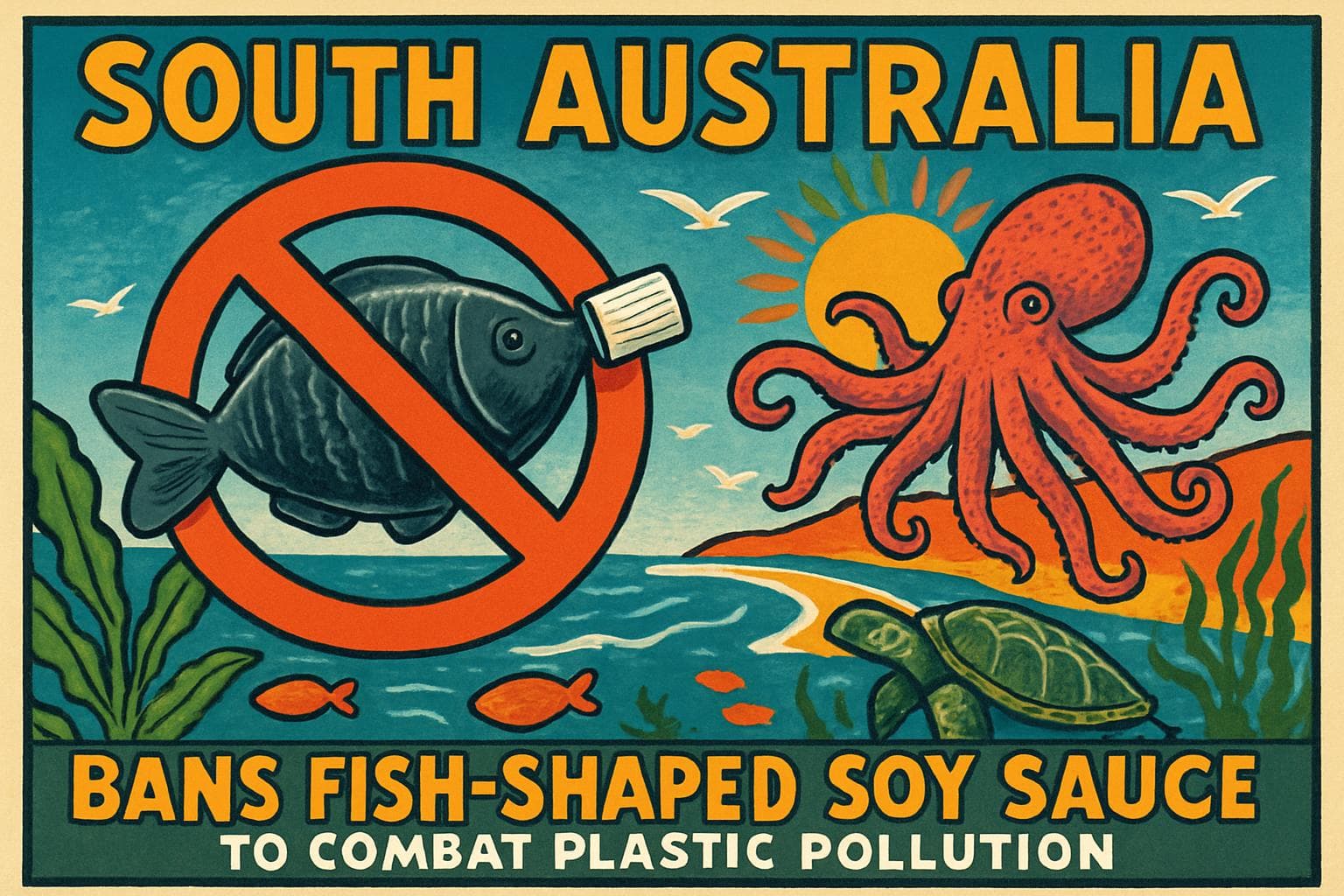
- South Australia will implement a world-first ban on fish-shaped soy sauce containers starting September 1, as part of a broader single-use plastics prohibition.
- The ban targets pre-filled soy sauce containers under 30ml, aiming to reduce plastic pollution and protect marine life.
- Environment Minister Susan Close emphasized the environmental impact of these containers, which are often not recycled due to their small size.
- Marine ecologist Dr. Nina Wootton highlighted the risk of these plastics being mistaken for food by marine life, contributing to ocean pollution.
- The initiative is part of a larger effort to curb plastic waste, with Australia ranking seventh globally in plastics waste management.
In a pioneering move to combat plastic pollution, South Australia is set to become the first region worldwide to ban the iconic fish-shaped soy sauce containers. This initiative, effective from September 1, is part of a comprehensive strategy to eliminate single-use plastics and safeguard marine ecosystems.
A Landmark Environmental Policy
The ban specifically targets pre-filled soy sauce containers under 30ml, including the well-known fish-shaped packets, which have been a staple in sushi takeaways globally. These containers, despite being made from recyclable polyethylene, often evade recycling processes due to their diminutive size. "Each fish-shaped container is used for just seconds, yet remains in the environment for decades or centuries if littered," stated Susan Close, South Australia's Environment Minister.
Environmental and Marine Life Concerns
The environmental implications of these plastics are significant. Dr. Nina Wootton, a marine ecologist at the University of Adelaide, warned that these containers could be mistaken for food by marine life, posing a substantial threat to oceanic ecosystems. "If it hasn’t already been broken down into microplastics yet and it’s floating around in its whole form, then other organisms that eat fish that size could think it is a fish and then eat it," she explained.
Broader Implications and Future Directions
This ban is part of a broader legislative effort that has already seen the prohibition of plastic straws, cutlery, and expanded polystyrene food packaging. The South Australian government aims to encourage the use of bulk bottles or dispensers in sushi shops as a sustainable alternative. Cip Hamilton from the Australian Marine Conservation Society praised the move but urged for more comprehensive measures to tackle plastic waste.
Global Context and Australia's Role
Australia ranks seventh among 25 nations for its efforts in plastic waste management, reflecting its commitment to environmental sustainability. Without such interventions, officials warn that the annual flow of plastic into oceans could triple by 2040, reaching 29 million tonnes per year.
WHAT THIS MIGHT MEAN
The ban on fish-shaped soy sauce containers marks a significant step in South Australia's environmental policy, potentially setting a precedent for other regions to follow. As the world grapples with escalating plastic pollution, this initiative could inspire similar legislative actions globally. Experts suggest that while this ban is a crucial step, comprehensive strategies addressing the entire lifecycle of plastics are essential for meaningful change. Future policies may focus on incentivizing sustainable packaging solutions and enhancing recycling infrastructure to further mitigate environmental impacts.
Related Articles
Canada and Australia Forge Strategic Partnership Amid Global Uncertainty
Canada Calls for De-escalation Amid US-Israel Strikes on Iran
Trump's New Tariff Strategy Sparks Global Trade Uncertainty
Trump Raises Import Tariffs to 15% After Supreme Court Setback

Anna Murdoch-Mann: Influential Figure in Media and Philanthropy Dies at 81
Prince Andrew's Arrest Raises Questions About Royal Succession and Monarchy's Future
South Australia Leads Global Ban on Fish-Shaped Soy Sauce Containers
In This Article
 Aya Nakamura| Published
 HIGHLIGHTS
- South Australia will implement a world-first ban on fish-shaped soy sauce containers starting September 1, as part of a broader single-use plastics prohibition.
- The ban targets pre-filled soy sauce containers under 30ml, aiming to reduce plastic pollution and protect marine life.
- Environment Minister Susan Close emphasized the environmental impact of these containers, which are often not recycled due to their small size.
- Marine ecologist Dr. Nina Wootton highlighted the risk of these plastics being mistaken for food by marine life, contributing to ocean pollution.
- The initiative is part of a larger effort to curb plastic waste, with Australia ranking seventh globally in plastics waste management.
In a pioneering move to combat plastic pollution, South Australia is set to become the first region worldwide to ban the iconic fish-shaped soy sauce containers. This initiative, effective from September 1, is part of a comprehensive strategy to eliminate single-use plastics and safeguard marine ecosystems.
A Landmark Environmental Policy
The ban specifically targets pre-filled soy sauce containers under 30ml, including the well-known fish-shaped packets, which have been a staple in sushi takeaways globally. These containers, despite being made from recyclable polyethylene, often evade recycling processes due to their diminutive size. "Each fish-shaped container is used for just seconds, yet remains in the environment for decades or centuries if littered," stated Susan Close, South Australia's Environment Minister.
Environmental and Marine Life Concerns
The environmental implications of these plastics are significant. Dr. Nina Wootton, a marine ecologist at the University of Adelaide, warned that these containers could be mistaken for food by marine life, posing a substantial threat to oceanic ecosystems. "If it hasn’t already been broken down into microplastics yet and it’s floating around in its whole form, then other organisms that eat fish that size could think it is a fish and then eat it," she explained.
Broader Implications and Future Directions
This ban is part of a broader legislative effort that has already seen the prohibition of plastic straws, cutlery, and expanded polystyrene food packaging. The South Australian government aims to encourage the use of bulk bottles or dispensers in sushi shops as a sustainable alternative. Cip Hamilton from the Australian Marine Conservation Society praised the move but urged for more comprehensive measures to tackle plastic waste.
Global Context and Australia's Role
Australia ranks seventh among 25 nations for its efforts in plastic waste management, reflecting its commitment to environmental sustainability. Without such interventions, officials warn that the annual flow of plastic into oceans could triple by 2040, reaching 29 million tonnes per year.
WHAT THIS MIGHT MEAN
The ban on fish-shaped soy sauce containers marks a significant step in South Australia's environmental policy, potentially setting a precedent for other regions to follow. As the world grapples with escalating plastic pollution, this initiative could inspire similar legislative actions globally. Experts suggest that while this ban is a crucial step, comprehensive strategies addressing the entire lifecycle of plastics are essential for meaningful change. Future policies may focus on incentivizing sustainable packaging solutions and enhancing recycling infrastructure to further mitigate environmental impacts.
Related Articles
Canada and Australia Forge Strategic Partnership Amid Global Uncertainty
Canada Calls for De-escalation Amid US-Israel Strikes on Iran
Trump's New Tariff Strategy Sparks Global Trade Uncertainty
Trump Raises Import Tariffs to 15% After Supreme Court Setback
Anna Murdoch-Mann: Influential Figure in Media and Philanthropy Dies at 81
Prince Andrew's Arrest Raises Questions About Royal Succession and Monarchy's Future