
Torrential Rains in South Korea Cause Fatalities and Mass Evacuations
In This Article
HIGHLIGHTS
- Torrential rains in South Korea have resulted in four deaths and the evacuation of over 7,000 people.
- The hardest-hit area, Seosan, recorded over 500mm of rain, marking a once-in-a-century event.
- Authorities have issued high-level disaster alerts, warning of potential landslides and flash floods.
- More than 641 buildings and 388 roads have been damaged, with significant agricultural losses reported.
- Rain is expected to continue until Monday, with similar weather conditions forecasted for North Korea.
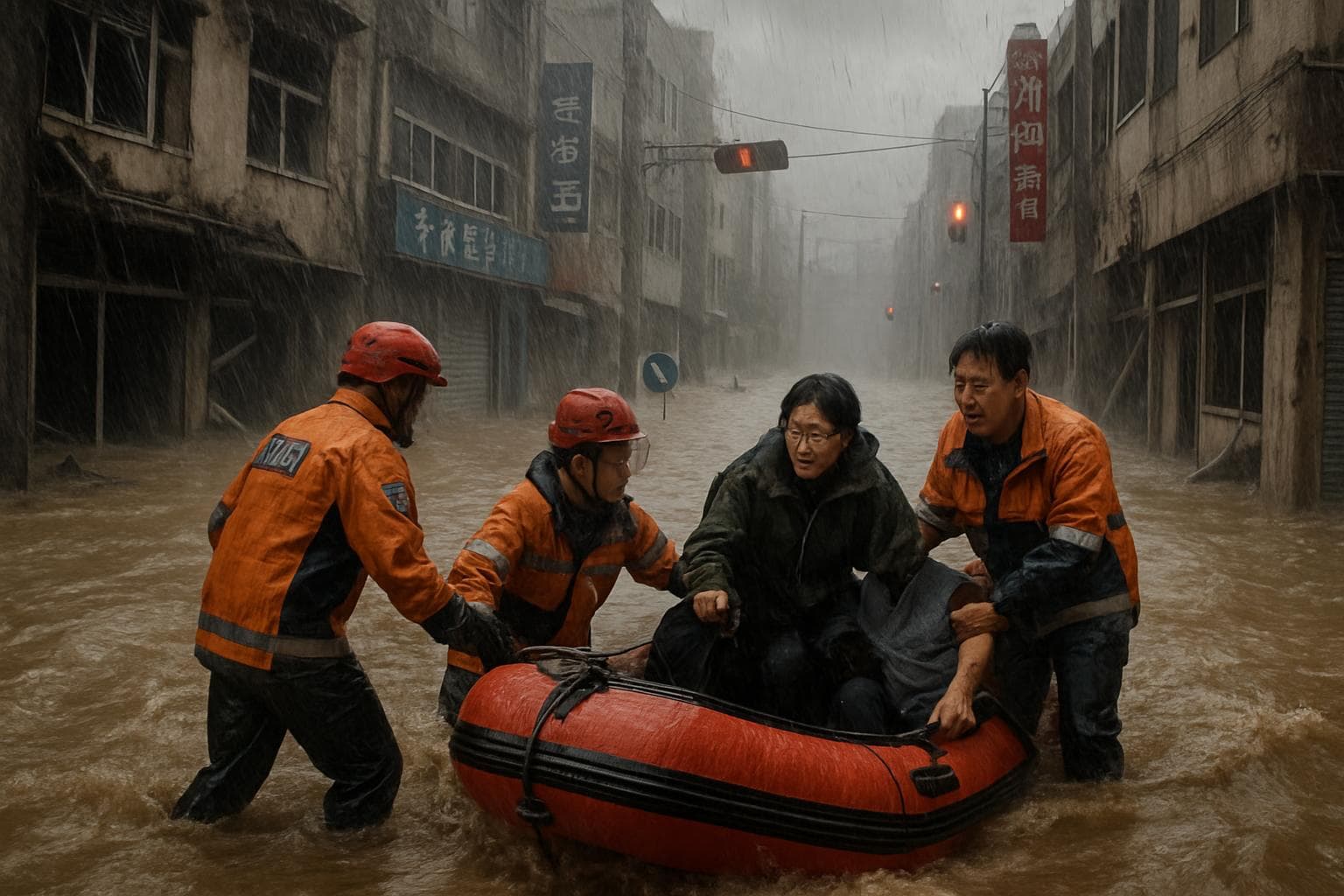
South Korea is grappling with severe weather conditions as torrential rains have led to the deaths of four individuals and forced the evacuation of over 7,000 residents. The unrelenting downpour, described by meteorologists as a once-in-a-century event, has particularly devastated the city of Seosan, where more than 500mm of rain has fallen since Wednesday.
Impact and Response
The South Korean government has elevated its weather-related disaster alert to the highest level, urging citizens to exercise extreme caution. The Ministry of the Interior reported that nearly 3,000 people remain displaced as of Saturday morning, with warnings of landslides and flash floods persisting across the nation. Among the deceased are two elderly men, one of whom was attempting to drain floodwaters from his basement, and another individual who was crushed by a collapsing wall.
Widespread Damage
The torrential rains have left a trail of destruction, with over 641 buildings and 388 roads damaged. In the South Chungcheong province, livestock struggled to survive as sheds and stables were inundated. The agricultural sector has suffered significant losses, with 59 farms affected. Residents like Kim Ha-min, a cafe owner in Gwangju, have been forced to close their businesses due to flooding. "I've never seen a flood here before," she remarked, expressing disbelief at the unprecedented weather.
Ongoing Threats
The meteorological administration attributes the extreme weather to a mix of dry air from the northwest and hot, humid air from the south, resulting in massive rain clouds. While the rains are expected to subside by Monday, forecasters warn of a potential heatwave next week. Meanwhile, similar weather conditions are anticipated in neighboring North Korea, with up to 300mm of rain expected in some areas.
WHAT THIS MIGHT MEAN
As South Korea continues to battle the aftermath of these torrential rains, the immediate focus remains on ensuring the safety of displaced residents and preventing further casualties. The government's response and disaster preparedness will be scrutinized, especially if the predicted heatwave exacerbates the situation. Additionally, the agricultural damage could have longer-term economic impacts, potentially affecting food supply and prices. Experts suggest that this extreme weather event underscores the urgent need for enhanced infrastructure and climate resilience measures to mitigate future disasters.
Images from the Web

Related Articles

Kim Jong Un's Daughter Poised as North Korea's Future Leader, South Korean Intelligence Suggests
Pentagon Shifts Defense Strategy to Prioritize US Homeland and Regional Allies

K-pop Diplomacy: South Korea and Japan Leaders Drum Up Unity

Labour's Push for Closer EU Ties Sparks Debate

Sanae Takaichi's Snap Election Gamble: Will Japan's First Female Prime Minister Secure a Landslide Victory?

Gold and Silver Prices Plummet Amid Market Volatility
Torrential Rains in South Korea Cause Fatalities and Mass Evacuations
In This Article
 Leila Hassan| Published
 HIGHLIGHTS
- Torrential rains in South Korea have resulted in four deaths and the evacuation of over 7,000 people.
- The hardest-hit area, Seosan, recorded over 500mm of rain, marking a once-in-a-century event.
- Authorities have issued high-level disaster alerts, warning of potential landslides and flash floods.
- More than 641 buildings and 388 roads have been damaged, with significant agricultural losses reported.
- Rain is expected to continue until Monday, with similar weather conditions forecasted for North Korea.
South Korea is grappling with severe weather conditions as torrential rains have led to the deaths of four individuals and forced the evacuation of over 7,000 residents. The unrelenting downpour, described by meteorologists as a once-in-a-century event, has particularly devastated the city of Seosan, where more than 500mm of rain has fallen since Wednesday.
Impact and Response
The South Korean government has elevated its weather-related disaster alert to the highest level, urging citizens to exercise extreme caution. The Ministry of the Interior reported that nearly 3,000 people remain displaced as of Saturday morning, with warnings of landslides and flash floods persisting across the nation. Among the deceased are two elderly men, one of whom was attempting to drain floodwaters from his basement, and another individual who was crushed by a collapsing wall.
Widespread Damage
The torrential rains have left a trail of destruction, with over 641 buildings and 388 roads damaged. In the South Chungcheong province, livestock struggled to survive as sheds and stables were inundated. The agricultural sector has suffered significant losses, with 59 farms affected. Residents like Kim Ha-min, a cafe owner in Gwangju, have been forced to close their businesses due to flooding. "I've never seen a flood here before," she remarked, expressing disbelief at the unprecedented weather.
Ongoing Threats
The meteorological administration attributes the extreme weather to a mix of dry air from the northwest and hot, humid air from the south, resulting in massive rain clouds. While the rains are expected to subside by Monday, forecasters warn of a potential heatwave next week. Meanwhile, similar weather conditions are anticipated in neighboring North Korea, with up to 300mm of rain expected in some areas.
WHAT THIS MIGHT MEAN
As South Korea continues to battle the aftermath of these torrential rains, the immediate focus remains on ensuring the safety of displaced residents and preventing further casualties. The government's response and disaster preparedness will be scrutinized, especially if the predicted heatwave exacerbates the situation. Additionally, the agricultural damage could have longer-term economic impacts, potentially affecting food supply and prices. Experts suggest that this extreme weather event underscores the urgent need for enhanced infrastructure and climate resilience measures to mitigate future disasters.
Images from the Web
Related Articles
Kim Jong Un's Daughter Poised as North Korea's Future Leader, South Korean Intelligence Suggests
Pentagon Shifts Defense Strategy to Prioritize US Homeland and Regional Allies
K-pop Diplomacy: South Korea and Japan Leaders Drum Up Unity
Labour's Push for Closer EU Ties Sparks Debate
Sanae Takaichi's Snap Election Gamble: Will Japan's First Female Prime Minister Secure a Landslide Victory?
Gold and Silver Prices Plummet Amid Market Volatility