
Spectacular Auroras Expected Across Hemispheres Amid Severe Solar Storm
In This Article
HIGHLIGHTS
- The Northern Lights were visible across the UK on Tuesday night, with a chance of further displays on Wednesday due to solar activity.
- A severe geomagnetic storm, classified as G4, is expected to enhance aurora visibility in both the northern and southern hemispheres.
- The aurora australis may be visible in parts of Australia, including Sydney and Perth, as well as New Zealand.
- Coronal Mass Ejections (CMEs) from the Sun are responsible for these auroras, potentially affecting satellites and electronic devices.
- Experts recommend finding dark locations away from city lights for optimal aurora viewing.
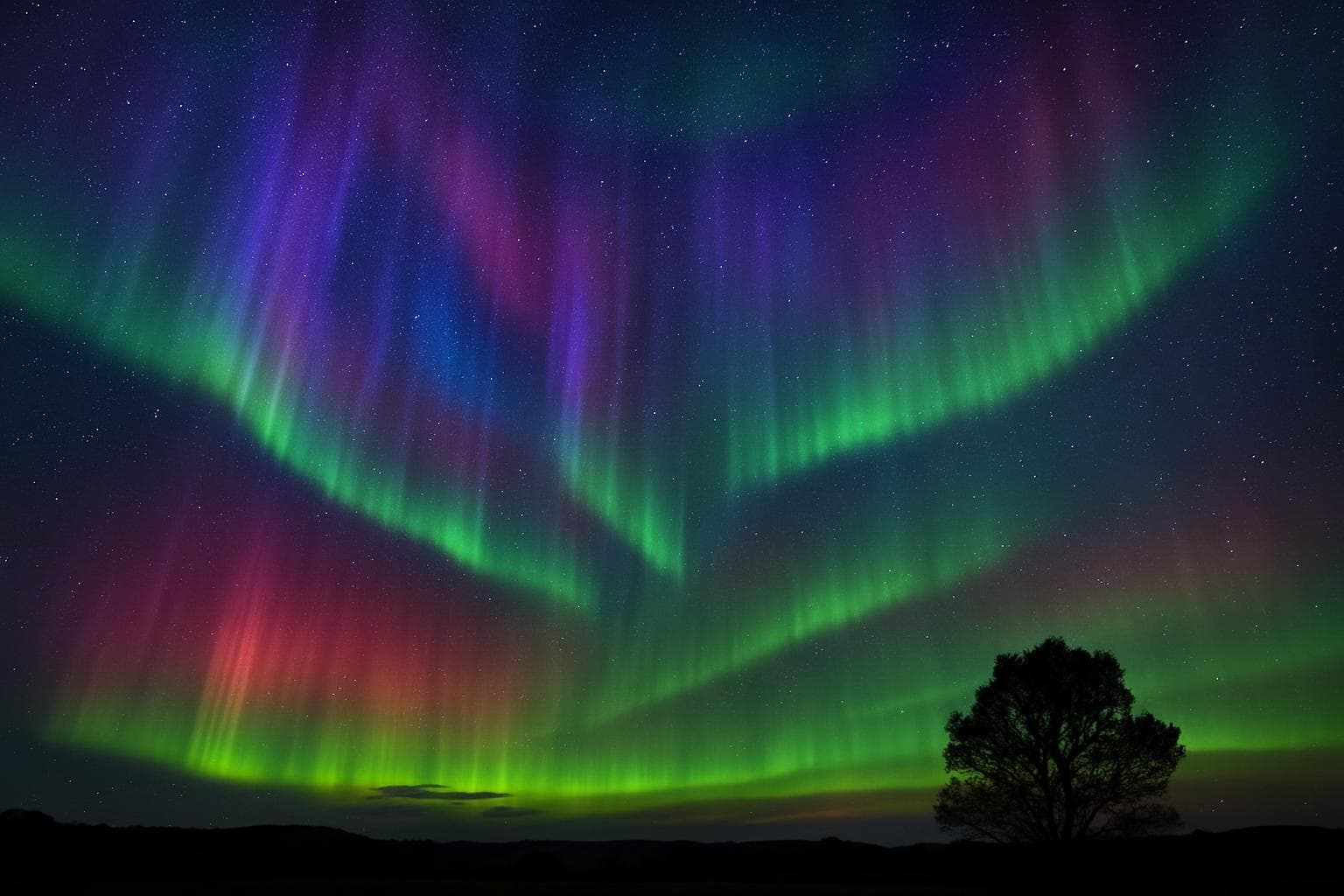
Skywatchers in both the northern and southern hemispheres are in for a celestial treat as a severe geomagnetic storm enhances the visibility of the Northern and Southern Lights. The UK Met Office has forecasted a rare opportunity to witness the Northern Lights, or aurora borealis, across the UK, while the Bureau of Meteorology in Australia has issued an alert for the aurora australis.
Aurora Borealis Dazzles the UK
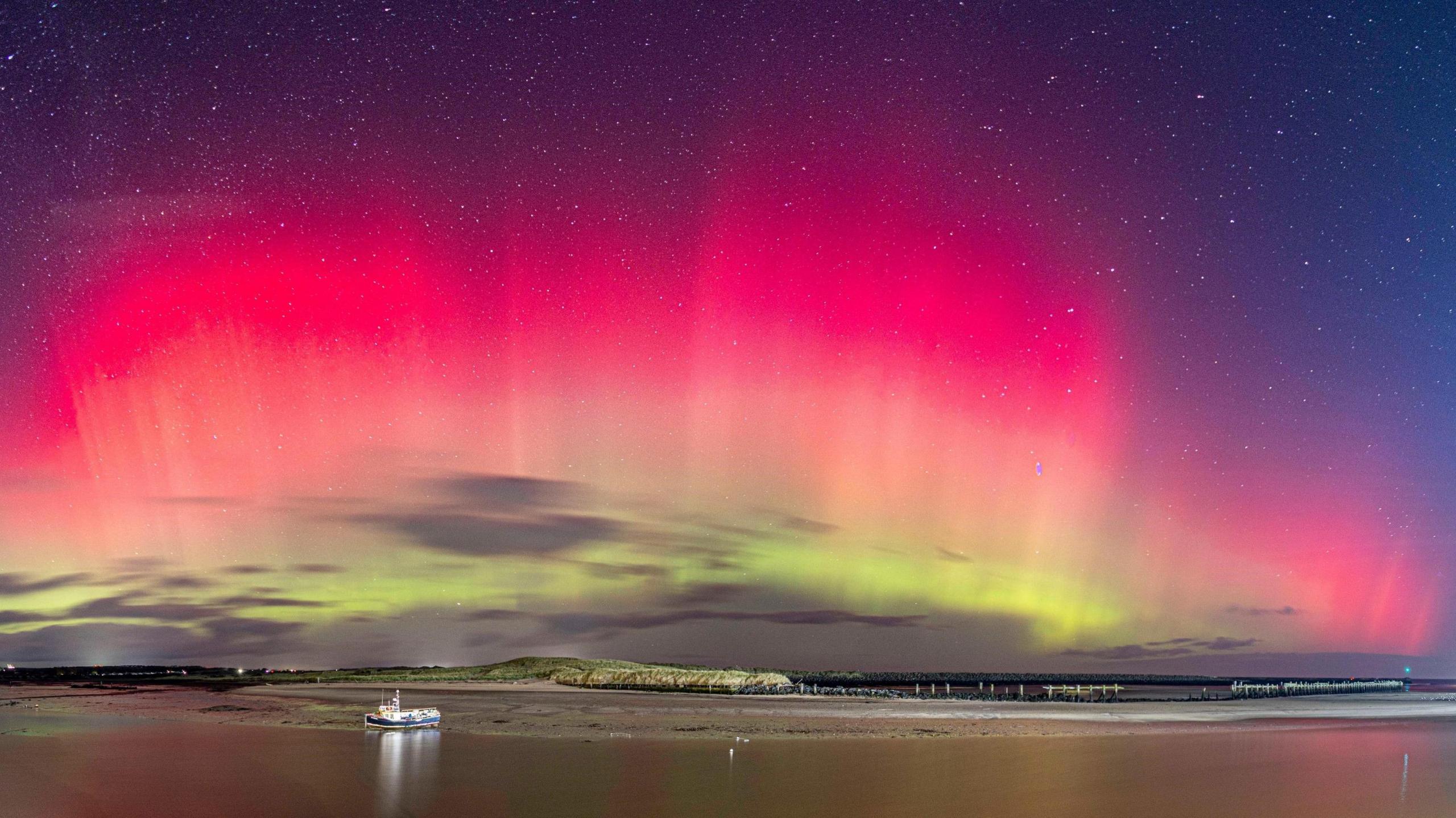
On Tuesday night, the Northern Lights illuminated the skies over the UK, with further displays anticipated on Wednesday evening. This phenomenon is attributed to the Sun's active phase, which has resulted in several Coronal Mass Ejections (CMEs) sending solar particles towards Earth. These particles interact with the Earth's atmosphere, creating the stunning light displays. The UK Met Office predicts that the best viewing opportunities will be in the northern half of the UK, although clear skies could allow sightings further south.
Southern Hemisphere Awaits Aurora Australis
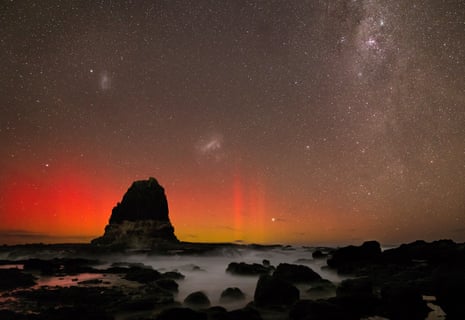
Meanwhile, in the southern hemisphere, the aurora australis may be visible across large parts of Australia, including cities like Sydney and Perth, as well as New Zealand. Dr. Laura Driessen from the Sydney Institute for Astronomy noted that the strength of the current geomagnetic storm could allow people farther north than usual to witness the spectacle. Astrophysicist Dr. Sara Webb emphasized that Wednesday night offers the best chance to catch a glimpse of the aurora, particularly along Australia's southern coast.
Impact of Geomagnetic Storms
The geomagnetic storm, classified as G4, is one of the most intense observed in recent years. While not harmful to humans, such storms can disrupt satellites and electronic devices. Historical events, like the 1859 Carrington Event, have shown the potential for significant technological disruptions. The National Oceanographic Atmospheric Administration (NOAA) has warned of possible effects on power grids and satellite navigation systems.
Tips for Aurora Viewing
For those eager to witness the auroras, experts recommend finding a dark spot away from city lights, with a clear view of the northern or southern horizon. Allowing your eyes to adjust to the darkness and using a camera with a long exposure can enhance the viewing experience.
WHAT THIS MIGHT MEAN
As the geomagnetic storm continues, experts will closely monitor its impact on technology and infrastructure. The potential for disruptions to satellites and power grids remains a concern, highlighting the need for robust space weather forecasting. Additionally, the increased visibility of auroras could boost interest in astronomy and space science, encouraging more people to engage with these fields. Looking ahead, understanding and predicting solar activity will be crucial in mitigating the effects of future geomagnetic storms.
Images from the Web
Related Articles

Canada and Australia Forge Strategic Partnership Amid Global Uncertainty

Saharan Dust to Illuminate UK Skies with Vivid Sunrises and Sunsets

Canada Calls for De-escalation Amid US-Israel Strikes on Iran

Trump's New Tariff Strategy Sparks Global Trade Uncertainty

UK Government to Reform Asylum Seeker Support and Employment Policies

Middle East Conflict Drives UK Energy Prices to New Highs
Spectacular Auroras Expected Across Hemispheres Amid Severe Solar Storm
In This Article
 Leila Hassan| Published
 HIGHLIGHTS
- The Northern Lights were visible across the UK on Tuesday night, with a chance of further displays on Wednesday due to solar activity.
- A severe geomagnetic storm, classified as G4, is expected to enhance aurora visibility in both the northern and southern hemispheres.
- The aurora australis may be visible in parts of Australia, including Sydney and Perth, as well as New Zealand.
- Coronal Mass Ejections (CMEs) from the Sun are responsible for these auroras, potentially affecting satellites and electronic devices.
- Experts recommend finding dark locations away from city lights for optimal aurora viewing.
Skywatchers in both the northern and southern hemispheres are in for a celestial treat as a severe geomagnetic storm enhances the visibility of the Northern and Southern Lights. The UK Met Office has forecasted a rare opportunity to witness the Northern Lights, or aurora borealis, across the UK, while the Bureau of Meteorology in Australia has issued an alert for the aurora australis.
Aurora Borealis Dazzles the UK
On Tuesday night, the Northern Lights illuminated the skies over the UK, with further displays anticipated on Wednesday evening. This phenomenon is attributed to the Sun's active phase, which has resulted in several Coronal Mass Ejections (CMEs) sending solar particles towards Earth. These particles interact with the Earth's atmosphere, creating the stunning light displays. The UK Met Office predicts that the best viewing opportunities will be in the northern half of the UK, although clear skies could allow sightings further south.
Southern Hemisphere Awaits Aurora Australis
Meanwhile, in the southern hemisphere, the aurora australis may be visible across large parts of Australia, including cities like Sydney and Perth, as well as New Zealand. Dr. Laura Driessen from the Sydney Institute for Astronomy noted that the strength of the current geomagnetic storm could allow people farther north than usual to witness the spectacle. Astrophysicist Dr. Sara Webb emphasized that Wednesday night offers the best chance to catch a glimpse of the aurora, particularly along Australia's southern coast.
Impact of Geomagnetic Storms
The geomagnetic storm, classified as G4, is one of the most intense observed in recent years. While not harmful to humans, such storms can disrupt satellites and electronic devices. Historical events, like the 1859 Carrington Event, have shown the potential for significant technological disruptions. The National Oceanographic Atmospheric Administration (NOAA) has warned of possible effects on power grids and satellite navigation systems.
Tips for Aurora Viewing
For those eager to witness the auroras, experts recommend finding a dark spot away from city lights, with a clear view of the northern or southern horizon. Allowing your eyes to adjust to the darkness and using a camera with a long exposure can enhance the viewing experience.
WHAT THIS MIGHT MEAN
As the geomagnetic storm continues, experts will closely monitor its impact on technology and infrastructure. The potential for disruptions to satellites and power grids remains a concern, highlighting the need for robust space weather forecasting. Additionally, the increased visibility of auroras could boost interest in astronomy and space science, encouraging more people to engage with these fields. Looking ahead, understanding and predicting solar activity will be crucial in mitigating the effects of future geomagnetic storms.
Images from the Web
Related Articles
Canada and Australia Forge Strategic Partnership Amid Global Uncertainty
Saharan Dust to Illuminate UK Skies with Vivid Sunrises and Sunsets
Canada Calls for De-escalation Amid US-Israel Strikes on Iran
Trump's New Tariff Strategy Sparks Global Trade Uncertainty
UK Government to Reform Asylum Seeker Support and Employment Policies
Middle East Conflict Drives UK Energy Prices to New Highs