
Speed Limit Proposals Stir Debate in Isle of Man and Australia
In This Article
HIGHLIGHTS
- The Isle of Man's Department of Infrastructure has revised its 20mph speed limit rollout in Douglas and Onchan after public consultation.
- In Australia, a proposal to lower speed limits on regional roads faces significant opposition from both Labor and Nationals MPs.
- Infrastructure Minister Michelle Haywood emphasized the cost-effectiveness of the Isle of Man's speed limit changes in reducing road incidents.
- Australia's National Road Safety Strategy aims to halve road fatalities by 2030, but current progress is insufficient.
- Public feedback is being sought in both regions, with ongoing consultations and analyses influencing final decisions.
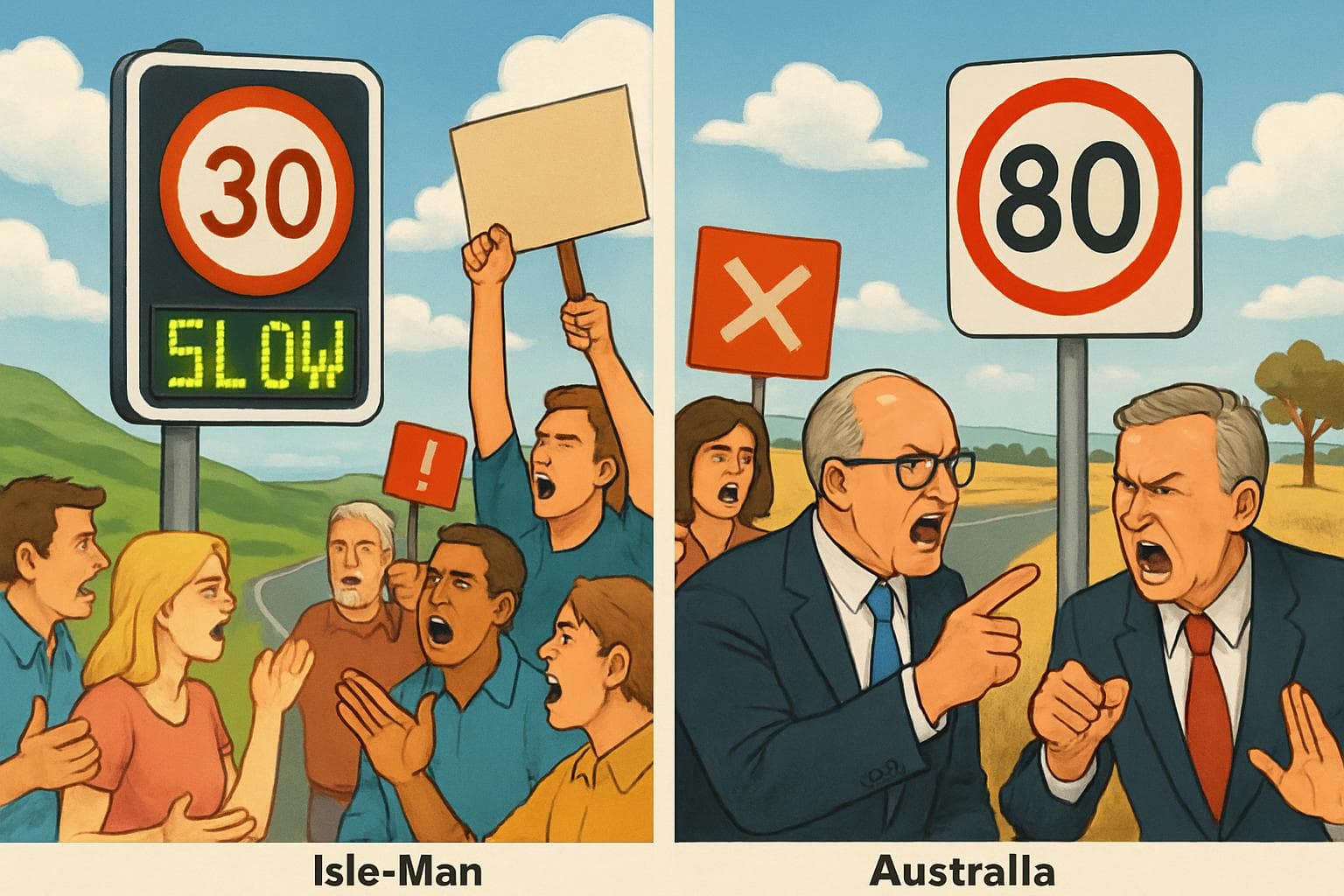
Efforts to modify speed limits have sparked debates in both the Isle of Man and Australia, highlighting the complexities of balancing road safety with public opinion.
Isle of Man Adjusts Speed Limit Plans
The Isle of Man's Department of Infrastructure has announced changes to its planned 20mph speed limit zones in Douglas and Onchan, following a public consultation that drew 558 responses. The feedback, reviewed by a third-party company, led to the decision to maintain 30mph limits on sections of Groves Road, Victoria Road, and Tromode Road, while a section of Whitebridge Road will see a reduction to 20mph. Infrastructure Minister Michelle Haywood, who assumed her role in November last year, stated that the adjustments demonstrate the department's responsiveness to public concerns. The initiative, initially supported by Tynwald in 2020 and renewed in 2023, is expected to cost £160,000, with an additional £10,000 for the recent changes. Haywood underscored the potential savings from reduced road incidents, stating, "I only need one child's life to be saved and this would have been a cost-effective scheme." The department plans to complete the rollout by next summer, with a traffic regulation order open for public comment until 28 November.
Australian Proposal Faces Political Pushback
In Australia, a proposal to reduce default speed limits on regional roads from 100km/h to between 70 and 90km/h has encountered strong opposition. The federal infrastructure department's consultation, part of the National Road Safety Action Plan, closed on 10 November. Labor senator Helen Polley criticized the proposal as "a complete overreach," advocating instead for improved driver education and road maintenance. Nationals members, including shadow infrastructure minister Bridget McKenzie, have also voiced their disapproval, arguing that the changes could negatively impact regional productivity and freight costs. The proposal is part of a broader National Road Safety Strategy aiming to reduce road fatalities by 50% by 2030. However, the latest analysis indicates that the country is not on track to meet these targets, necessitating further government intervention.
WHAT THIS MIGHT MEAN
As the Isle of Man moves forward with its revised speed limit plans, the focus will likely remain on monitoring the impact on road safety and public satisfaction. The ongoing consultations in other parts of the island may lead to further adjustments, reflecting the department's commitment to responsive governance.
In Australia, the political pushback against the proposed speed limit reductions suggests that any implementation will require careful negotiation and compromise. The government's ability to align state and territory policies with national safety goals will be crucial in achieving the ambitious targets set by the National Road Safety Strategy. The outcome of these debates could significantly influence future road safety policies and infrastructure investments.
Related Articles

Canada and Australia Forge Strategic Partnership Amid Global Uncertainty

Canada Calls for De-escalation Amid US-Israel Strikes on Iran

Trump's New Tariff Strategy Sparks Global Trade Uncertainty

Trump Raises Import Tariffs to 15% After Supreme Court Setback

Anna Murdoch-Mann: Influential Figure in Media and Philanthropy Dies at 81

Prince Andrew's Arrest Raises Questions About Royal Succession and Monarchy's Future
Speed Limit Proposals Stir Debate in Isle of Man and Australia
In This Article
 Daniel Rivera| Published
 HIGHLIGHTS
- The Isle of Man's Department of Infrastructure has revised its 20mph speed limit rollout in Douglas and Onchan after public consultation.
- In Australia, a proposal to lower speed limits on regional roads faces significant opposition from both Labor and Nationals MPs.
- Infrastructure Minister Michelle Haywood emphasized the cost-effectiveness of the Isle of Man's speed limit changes in reducing road incidents.
- Australia's National Road Safety Strategy aims to halve road fatalities by 2030, but current progress is insufficient.
- Public feedback is being sought in both regions, with ongoing consultations and analyses influencing final decisions.
Efforts to modify speed limits have sparked debates in both the Isle of Man and Australia, highlighting the complexities of balancing road safety with public opinion.
Isle of Man Adjusts Speed Limit Plans
The Isle of Man's Department of Infrastructure has announced changes to its planned 20mph speed limit zones in Douglas and Onchan, following a public consultation that drew 558 responses. The feedback, reviewed by a third-party company, led to the decision to maintain 30mph limits on sections of Groves Road, Victoria Road, and Tromode Road, while a section of Whitebridge Road will see a reduction to 20mph. Infrastructure Minister Michelle Haywood, who assumed her role in November last year, stated that the adjustments demonstrate the department's responsiveness to public concerns. The initiative, initially supported by Tynwald in 2020 and renewed in 2023, is expected to cost £160,000, with an additional £10,000 for the recent changes. Haywood underscored the potential savings from reduced road incidents, stating, "I only need one child's life to be saved and this would have been a cost-effective scheme." The department plans to complete the rollout by next summer, with a traffic regulation order open for public comment until 28 November.
Australian Proposal Faces Political Pushback
In Australia, a proposal to reduce default speed limits on regional roads from 100km/h to between 70 and 90km/h has encountered strong opposition. The federal infrastructure department's consultation, part of the National Road Safety Action Plan, closed on 10 November. Labor senator Helen Polley criticized the proposal as "a complete overreach," advocating instead for improved driver education and road maintenance. Nationals members, including shadow infrastructure minister Bridget McKenzie, have also voiced their disapproval, arguing that the changes could negatively impact regional productivity and freight costs. The proposal is part of a broader National Road Safety Strategy aiming to reduce road fatalities by 50% by 2030. However, the latest analysis indicates that the country is not on track to meet these targets, necessitating further government intervention.
WHAT THIS MIGHT MEAN
As the Isle of Man moves forward with its revised speed limit plans, the focus will likely remain on monitoring the impact on road safety and public satisfaction. The ongoing consultations in other parts of the island may lead to further adjustments, reflecting the department's commitment to responsive governance.
In Australia, the political pushback against the proposed speed limit reductions suggests that any implementation will require careful negotiation and compromise. The government's ability to align state and territory policies with national safety goals will be crucial in achieving the ambitious targets set by the National Road Safety Strategy. The outcome of these debates could significantly influence future road safety policies and infrastructure investments.
Related Articles
Canada and Australia Forge Strategic Partnership Amid Global Uncertainty
Canada Calls for De-escalation Amid US-Israel Strikes on Iran
Trump's New Tariff Strategy Sparks Global Trade Uncertainty
Trump Raises Import Tariffs to 15% After Supreme Court Setback
Anna Murdoch-Mann: Influential Figure in Media and Philanthropy Dies at 81
Prince Andrew's Arrest Raises Questions About Royal Succession and Monarchy's Future