
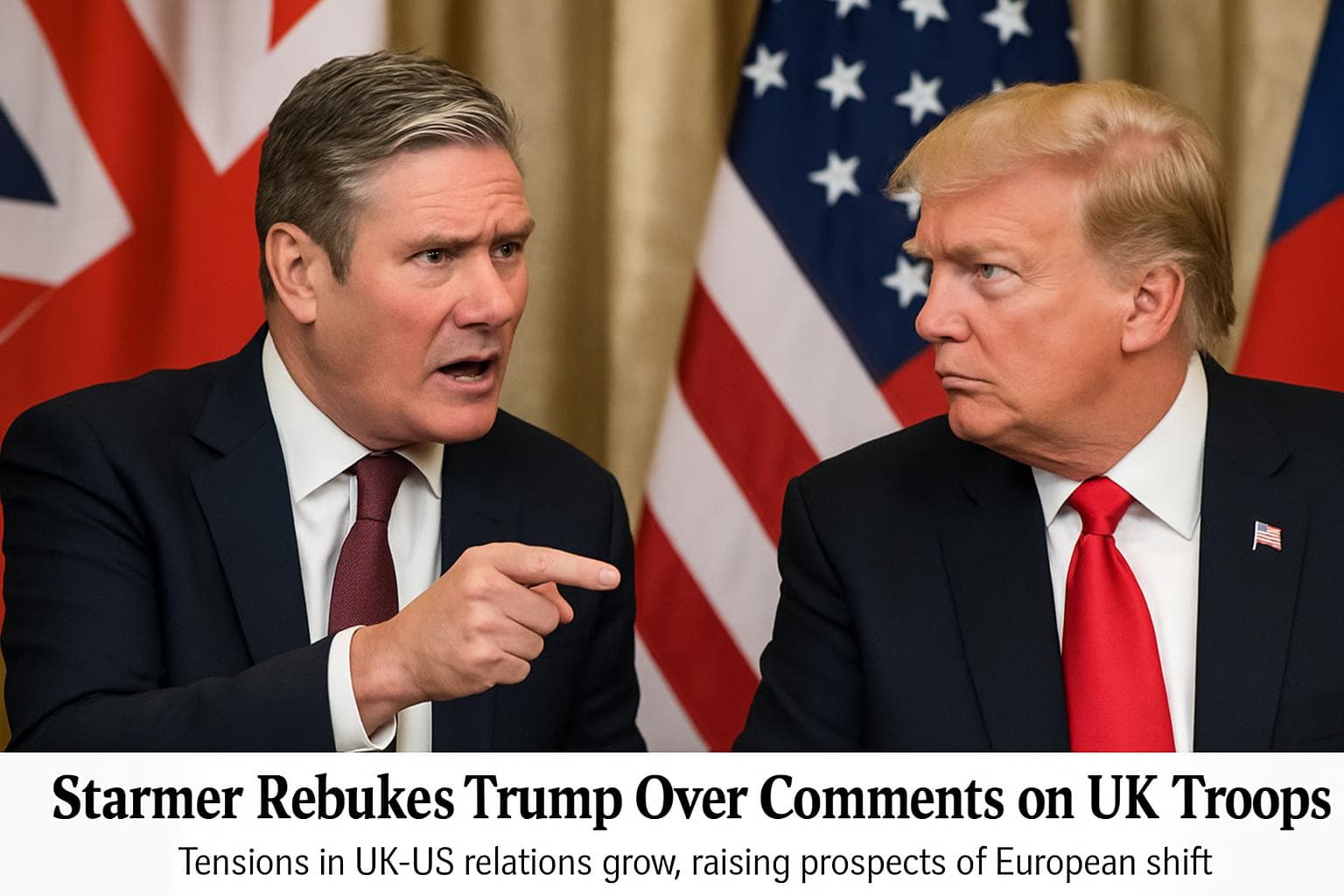
Starmer Rebukes Trump Over Afghanistan Remarks, Straining UK-US Relations
In This Article
HIGHLIGHTS
- UK Prime Minister Keir Starmer issued his strongest public criticism of Donald Trump over remarks about British troops in Afghanistan.
- Trump's comments, deemed "insulting and frankly appalling," have strained UK-US relations, marking a low point since Trump took office.
- Starmer's response reflects a shift from his usual diplomatic approach, as he demands an apology from Trump.
- The controversy may influence Starmer's domestic standing and his party's stance on UK-EU relations.
- The situation has delayed the UK's Chagos bill, highlighting potential diplomatic repercussions.
In a significant diplomatic escalation, UK Prime Minister Keir Starmer has delivered his most forceful public rebuke of US President Donald Trump. This follows Trump's controversial comments regarding British troops' involvement in Afghanistan, which Starmer described as "insulting and frankly appalling." The remarks have sparked a diplomatic row, marking the most challenging week for UK-US relations since Trump assumed office.
A Shift in Diplomatic Tone
Starmer, who has typically employed a strategy of "serious, calm, pragmatic, behind-the-scenes diplomacy" with the volatile Trump administration, found himself compelled to publicly demand an apology. Trump's assertion that NATO allies, including the UK, did not adequately contribute to the Afghan conflict has been widely criticized as factually inaccurate and offensive. With 457 British service personnel having lost their lives in Afghanistan, Starmer emphasized his duty to defend the armed forces, stating that those who served cannot speak for themselves.
Domestic and International Repercussions
The prime minister's bold stance has resonated with many within his Labour Party, who have long been uneasy about the UK's perceived deference to Trump. This incident could bolster Starmer's domestic standing, particularly as he faces potential leadership challenges from within his party. However, the international implications are more complex. The UK has already postponed its Chagos bill due to concerns over potential US opposition, highlighting the delicate balance of diplomatic relations.
A Potential Pivot Towards Europe
As tensions with the US rise, Starmer may consider strengthening ties with Europe. This aligns with recent calls from Labour members to mitigate the unpredictability of US relations by enhancing EU partnerships. Such a move could redefine the UK's foreign policy landscape, especially as figures like Canada's Mark Carney and France's Emmanuel Macron advocate for closer cooperation among middle-ranking countries.
WHAT THIS MIGHT MEAN
The diplomatic fallout from Starmer's rebuke of Trump could lead to several potential outcomes. Domestically, Starmer's assertiveness may consolidate his leadership position within the Labour Party, particularly if he successfully navigates the internal challenges posed by figures like Andy Burnham. Internationally, the strain on UK-US relations could prompt a strategic pivot towards Europe, potentially reshaping the UK's foreign policy priorities. However, this path is fraught with risks, as it may further complicate the UK's post-Brexit positioning. As the situation unfolds, the global community will be watching closely to see how these diplomatic tensions influence broader geopolitical dynamics.
Related Articles
UK-Iran Tensions: Starmer Defends Cautious Approach Amid Trump Criticism

UK Faces Dilemmas Amid Iran Conflict and China Spying Allegations
UK Government to Reform Asylum Seeker Support and Employment Policies
UK Reinforces Military Presence in Cyprus Amid Middle East Tensions

Labour MP's Husband Arrested in UK-China Espionage Probe
Canada and Australia Forge Strategic Partnership Amid Global Uncertainty
Starmer Rebukes Trump Over Afghanistan Remarks, Straining UK-US Relations
In This Article
 Ethan Brooks| Published
 HIGHLIGHTS
- UK Prime Minister Keir Starmer issued his strongest public criticism of Donald Trump over remarks about British troops in Afghanistan.
- Trump's comments, deemed "insulting and frankly appalling," have strained UK-US relations, marking a low point since Trump took office.
- Starmer's response reflects a shift from his usual diplomatic approach, as he demands an apology from Trump.
- The controversy may influence Starmer's domestic standing and his party's stance on UK-EU relations.
- The situation has delayed the UK's Chagos bill, highlighting potential diplomatic repercussions.
In a significant diplomatic escalation, UK Prime Minister Keir Starmer has delivered his most forceful public rebuke of US President Donald Trump. This follows Trump's controversial comments regarding British troops' involvement in Afghanistan, which Starmer described as "insulting and frankly appalling." The remarks have sparked a diplomatic row, marking the most challenging week for UK-US relations since Trump assumed office.
A Shift in Diplomatic Tone
Starmer, who has typically employed a strategy of "serious, calm, pragmatic, behind-the-scenes diplomacy" with the volatile Trump administration, found himself compelled to publicly demand an apology. Trump's assertion that NATO allies, including the UK, did not adequately contribute to the Afghan conflict has been widely criticized as factually inaccurate and offensive. With 457 British service personnel having lost their lives in Afghanistan, Starmer emphasized his duty to defend the armed forces, stating that those who served cannot speak for themselves.
Domestic and International Repercussions
The prime minister's bold stance has resonated with many within his Labour Party, who have long been uneasy about the UK's perceived deference to Trump. This incident could bolster Starmer's domestic standing, particularly as he faces potential leadership challenges from within his party. However, the international implications are more complex. The UK has already postponed its Chagos bill due to concerns over potential US opposition, highlighting the delicate balance of diplomatic relations.
A Potential Pivot Towards Europe
As tensions with the US rise, Starmer may consider strengthening ties with Europe. This aligns with recent calls from Labour members to mitigate the unpredictability of US relations by enhancing EU partnerships. Such a move could redefine the UK's foreign policy landscape, especially as figures like Canada's Mark Carney and France's Emmanuel Macron advocate for closer cooperation among middle-ranking countries.
WHAT THIS MIGHT MEAN
The diplomatic fallout from Starmer's rebuke of Trump could lead to several potential outcomes. Domestically, Starmer's assertiveness may consolidate his leadership position within the Labour Party, particularly if he successfully navigates the internal challenges posed by figures like Andy Burnham. Internationally, the strain on UK-US relations could prompt a strategic pivot towards Europe, potentially reshaping the UK's foreign policy priorities. However, this path is fraught with risks, as it may further complicate the UK's post-Brexit positioning. As the situation unfolds, the global community will be watching closely to see how these diplomatic tensions influence broader geopolitical dynamics.
Related Articles
UK-Iran Tensions: Starmer Defends Cautious Approach Amid Trump Criticism
UK Faces Dilemmas Amid Iran Conflict and China Spying Allegations
UK Government to Reform Asylum Seeker Support and Employment Policies
UK Reinforces Military Presence in Cyprus Amid Middle East Tensions
Labour MP's Husband Arrested in UK-China Espionage Probe
Canada and Australia Forge Strategic Partnership Amid Global Uncertainty