
Starmer Defends Plan to Cut Jury Trials Amidst Growing Backlash
In This Article
HIGHLIGHTS
- Prime Minister Keir Starmer is committed to reducing jury trials to address the court backlog in England and Wales.
- The proposed changes aim to expedite justice for victims, particularly in cases of violence against women.
- Critics argue that judge-only trials could undermine public trust and have minimal impact on the backlog.
- The Ministry of Justice reports over 79,600 criminal cases in backlog, with projections reaching 100,000 by 2028.
- Justice Secretary David Lammy plans to recruit more magistrates and limit jury trials for cases with sentences of three years or less.
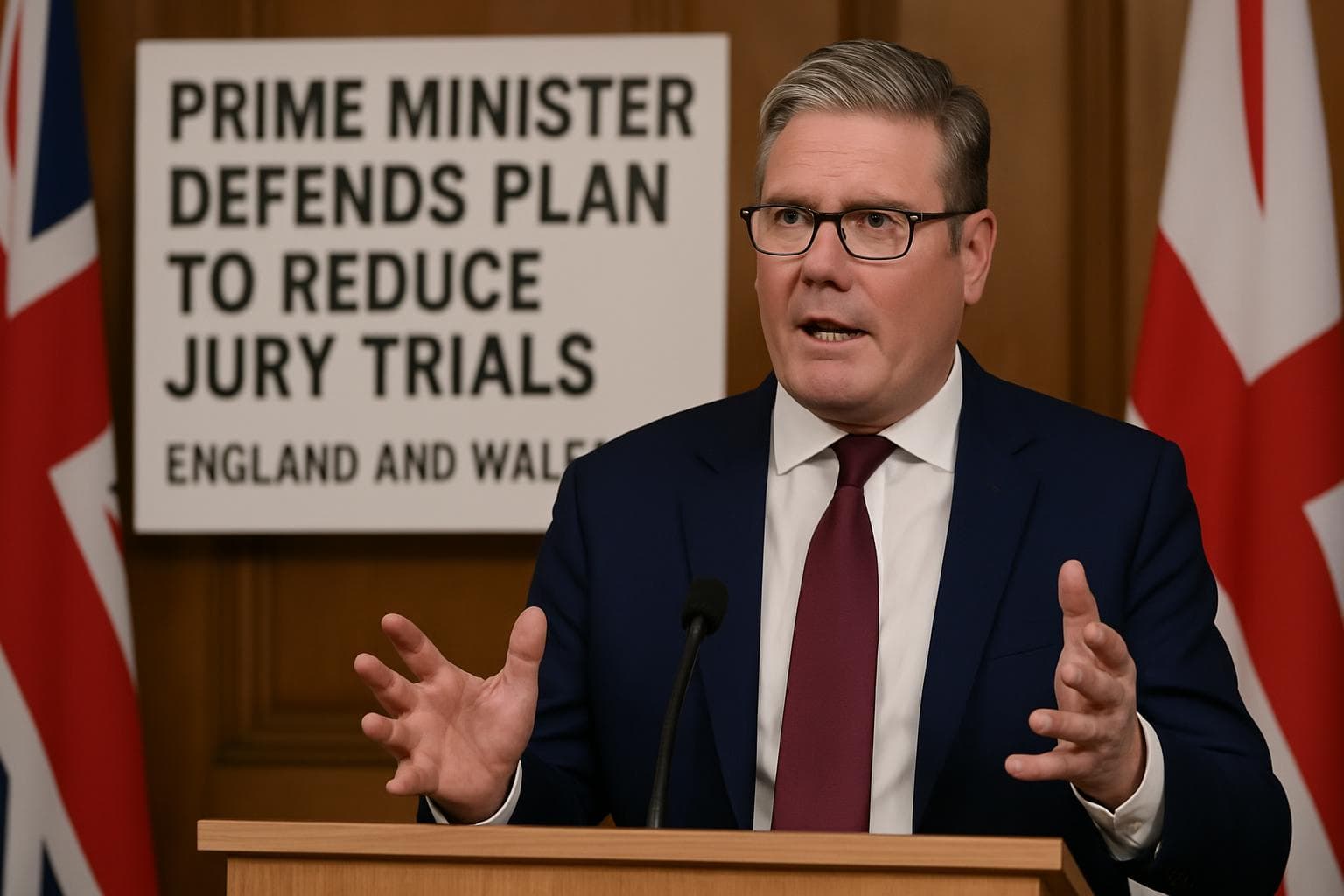
Prime Minister Keir Starmer has reaffirmed his commitment to reducing the number of jury trials in England and Wales, despite facing significant opposition from within his own party and legal experts. The controversial proposal aims to tackle the burgeoning backlog of criminal cases, which has reached over 79,600 and is projected to hit 100,000 by 2028.
Addressing the Backlog
Starmer, currently visiting China, emphasized the urgency of reforming the justice system to deliver timely justice to victims, particularly in cases of violence against women. "I've been working with victims of crime for a very long time, and they have to wait too long for justice," he stated. The Prime Minister highlighted that only 3% of criminal cases currently go to jury trial, suggesting that the proposed changes would slightly reduce this percentage.
Proposed Reforms and Opposition
The reforms, spearheaded by Justice Secretary David Lammy, include judge-only trials for less serious offenses and complex fraud cases. Defendants facing sentences of three years or less would no longer have the option of a jury trial. While the government argues these measures will expedite the judicial process, critics, including Labour MPs and legal experts, warn they could erode public trust in the justice system.
Impact on Victims and Legal System
Starmer has pledged to uphold his promise to victims' campaigners, asserting that the delays in the current system lead many victims to lose faith and withdraw from the process. Despite the backlash, Lammy is moving forward with the proposals, which also involve recruiting more volunteer magistrates to alleviate the backlog. However, the government has yet to publish its impact assessment of these changes.
WHAT THIS MIGHT MEAN
The proposed reforms to the justice system could significantly alter the landscape of criminal trials in England and Wales. If implemented, the reduction in jury trials may expedite case resolutions, potentially restoring some public confidence in the system's efficiency. However, the move could also face legal challenges and further political opposition, particularly if public trust in judge-only trials falters. Experts suggest that the success of these reforms will largely depend on their execution and the government's ability to demonstrate tangible improvements in the backlog and victim satisfaction.
Related Articles
UK to Enforce Swift Removal of Non-Consensual Intimate Images by Tech Firms

UK Faces Dilemmas Amid Iran Conflict and China Spying Allegations

Labour MP's Husband Arrested in UK-China Espionage Probe
Antonia Romeo Appointed as First Female UK Cabinet Secretary Amid Controversy

China Sets Lowest GDP Growth Target in Decades Amid Economic Challenges

UK-Iran Tensions: Starmer Defends Cautious Approach Amid Trump Criticism
Starmer Defends Plan to Cut Jury Trials Amidst Growing Backlash
In This Article
 Sofia Romano| Published
 HIGHLIGHTS
- Prime Minister Keir Starmer is committed to reducing jury trials to address the court backlog in England and Wales.
- The proposed changes aim to expedite justice for victims, particularly in cases of violence against women.
- Critics argue that judge-only trials could undermine public trust and have minimal impact on the backlog.
- The Ministry of Justice reports over 79,600 criminal cases in backlog, with projections reaching 100,000 by 2028.
- Justice Secretary David Lammy plans to recruit more magistrates and limit jury trials for cases with sentences of three years or less.
Prime Minister Keir Starmer has reaffirmed his commitment to reducing the number of jury trials in England and Wales, despite facing significant opposition from within his own party and legal experts. The controversial proposal aims to tackle the burgeoning backlog of criminal cases, which has reached over 79,600 and is projected to hit 100,000 by 2028.
Addressing the Backlog
Starmer, currently visiting China, emphasized the urgency of reforming the justice system to deliver timely justice to victims, particularly in cases of violence against women. "I've been working with victims of crime for a very long time, and they have to wait too long for justice," he stated. The Prime Minister highlighted that only 3% of criminal cases currently go to jury trial, suggesting that the proposed changes would slightly reduce this percentage.
Proposed Reforms and Opposition
The reforms, spearheaded by Justice Secretary David Lammy, include judge-only trials for less serious offenses and complex fraud cases. Defendants facing sentences of three years or less would no longer have the option of a jury trial. While the government argues these measures will expedite the judicial process, critics, including Labour MPs and legal experts, warn they could erode public trust in the justice system.
Impact on Victims and Legal System
Starmer has pledged to uphold his promise to victims' campaigners, asserting that the delays in the current system lead many victims to lose faith and withdraw from the process. Despite the backlash, Lammy is moving forward with the proposals, which also involve recruiting more volunteer magistrates to alleviate the backlog. However, the government has yet to publish its impact assessment of these changes.
WHAT THIS MIGHT MEAN
The proposed reforms to the justice system could significantly alter the landscape of criminal trials in England and Wales. If implemented, the reduction in jury trials may expedite case resolutions, potentially restoring some public confidence in the system's efficiency. However, the move could also face legal challenges and further political opposition, particularly if public trust in judge-only trials falters. Experts suggest that the success of these reforms will largely depend on their execution and the government's ability to demonstrate tangible improvements in the backlog and victim satisfaction.
Related Articles
UK to Enforce Swift Removal of Non-Consensual Intimate Images by Tech Firms
UK Faces Dilemmas Amid Iran Conflict and China Spying Allegations
Labour MP's Husband Arrested in UK-China Espionage Probe
Antonia Romeo Appointed as First Female UK Cabinet Secretary Amid Controversy
China Sets Lowest GDP Growth Target in Decades Amid Economic Challenges
UK-Iran Tensions: Starmer Defends Cautious Approach Amid Trump Criticism