
Call for Stricter Regulation of YouTube Ads Amid Rising Scam Concerns
In This Article
HIGHLIGHTS
- The Liberal Democrats are urging for stricter regulation of YouTube ads, similar to TV, to prevent scams and misleading content.
- Ofcom's report shows YouTube has surpassed ITV in UK viewership, highlighting the need for robust advertising oversight.
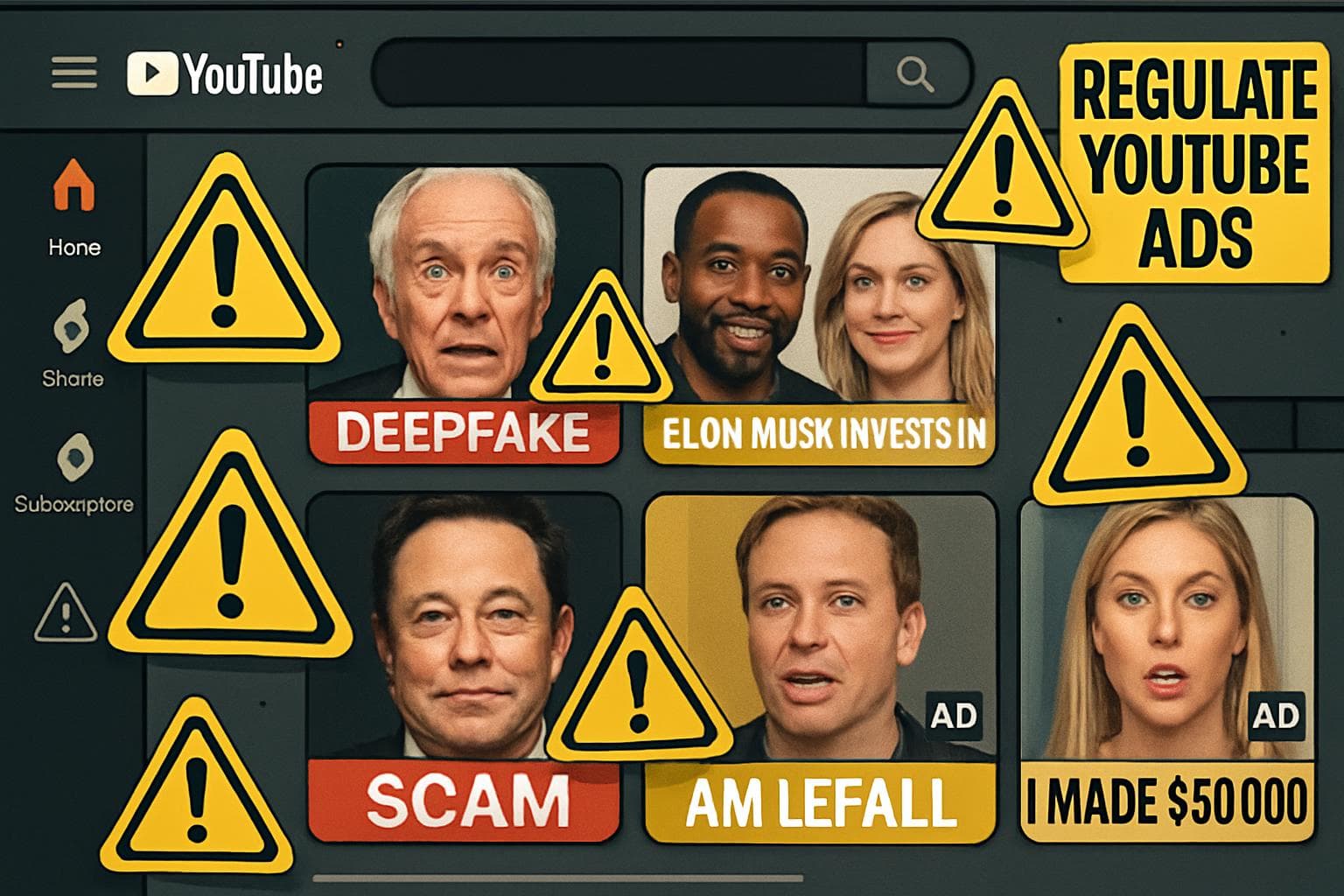
- Recent scams include deepfake videos of public figures promoting fraudulent schemes, raising concerns over ad vetting.
- The ASA supports Ofcom's efforts to tackle fraudulent ads, with 1,691 scam reports in 2024, including AI-generated impersonations.
- Google claims to have removed 411.7 million UK ads in 2024, yet the Liberal Democrats argue for more proactive regulation.
The Liberal Democrats have called for urgent regulatory measures to be applied to YouTube advertisements, akin to those governing traditional television, in response to a surge in scams and misleading content. This appeal follows Ofcom's recent findings that YouTube has overtaken ITV as the UK's second most-watched media service, emphasizing the platform's significant influence on viewers.
Rising Concerns Over Online Scams
The Liberal Democrats have highlighted the proliferation of scams on YouTube, including deepfake videos and impersonations of public figures endorsing fraudulent investment schemes. Notably, an AI-generated likeness of consumer advocate Martin Lewis was used in ads promoting a cryptocurrency scheme, misleading users into believing they were receiving credible financial advice. Such scams have sparked thousands of complaints on platforms like Reddit and X, with users reporting false product claims and fake competitions.
Calls for Enhanced Oversight
Currently, YouTube ads are subject to the Advertising Standards Authority (ASA) rules, but unlike TV ads, they lack pre-approval and real-time scrutiny. Max Wilkinson, the Liberal Democrats' culture spokesperson, criticized the existing system, stating, "We cannot allow a two-tier system where traditional broadcasters face robust scrutiny, while a digital giant like YouTube is allowed to mark its own homework." The party is advocating for YouTube ads to undergo the same rigorous oversight as TV and radio, including the power for Ofcom to impose fines on platforms that repeatedly allow harmful or misleading ads.
Industry and Regulatory Responses
Google, which owns YouTube, asserts its commitment to maintaining a "trustworthy and transparent" advertising ecosystem. In 2024, Google reported the removal of 411.7 million UK ads and the suspension of 1.1 million ad accounts. Meanwhile, the ASA has received 1,691 reports of potential scam ads, with 177 flagged to online platforms. The ASA supports Ofcom's efforts under the Online Safety Act to hold platforms accountable for tackling fraud.
WHAT THIS MIGHT MEAN
The push for stricter regulation of YouTube ads could lead to significant changes in how digital advertising is managed in the UK. If the government heeds the Liberal Democrats' call, platforms like YouTube may face increased scrutiny and potential fines for non-compliance, aligning their ad vetting processes with those of traditional broadcasters. However, some industry insiders caution that such measures could complicate targeted advertising efforts, particularly for younger audiences who are less engaged with traditional media. As discussions continue, the balance between consumer protection and advertising innovation remains a critical consideration for policymakers.
Related Articles
Zuckerberg Defends Meta in Landmark Social Media Addiction Trial

Google Faces Legal Battle Over AI Chatbot's Alleged Role in Tragic Death
UK to Enforce Swift Removal of Non-Consensual Intimate Images by Tech Firms
Tech Giants Pledge to Cover AI Data Center Energy Costs Amid Rising Electricity Concerns

Breakthrough Drug Offers Hope for Children with Severe Epilepsy
Trump Raises Import Tariffs to 15% After Supreme Court Setback
Call for Stricter Regulation of YouTube Ads Amid Rising Scam Concerns
In This Article
 Marcus Blake| Published
 HIGHLIGHTS
- The Liberal Democrats are urging for stricter regulation of YouTube ads, similar to TV, to prevent scams and misleading content.
- Ofcom's report shows YouTube has surpassed ITV in UK viewership, highlighting the need for robust advertising oversight.
- Recent scams include deepfake videos of public figures promoting fraudulent schemes, raising concerns over ad vetting.
- The ASA supports Ofcom's efforts to tackle fraudulent ads, with 1,691 scam reports in 2024, including AI-generated impersonations.
- Google claims to have removed 411.7 million UK ads in 2024, yet the Liberal Democrats argue for more proactive regulation.
The Liberal Democrats have called for urgent regulatory measures to be applied to YouTube advertisements, akin to those governing traditional television, in response to a surge in scams and misleading content. This appeal follows Ofcom's recent findings that YouTube has overtaken ITV as the UK's second most-watched media service, emphasizing the platform's significant influence on viewers.
Rising Concerns Over Online Scams
The Liberal Democrats have highlighted the proliferation of scams on YouTube, including deepfake videos and impersonations of public figures endorsing fraudulent investment schemes. Notably, an AI-generated likeness of consumer advocate Martin Lewis was used in ads promoting a cryptocurrency scheme, misleading users into believing they were receiving credible financial advice. Such scams have sparked thousands of complaints on platforms like Reddit and X, with users reporting false product claims and fake competitions.
Calls for Enhanced Oversight
Currently, YouTube ads are subject to the Advertising Standards Authority (ASA) rules, but unlike TV ads, they lack pre-approval and real-time scrutiny. Max Wilkinson, the Liberal Democrats' culture spokesperson, criticized the existing system, stating, "We cannot allow a two-tier system where traditional broadcasters face robust scrutiny, while a digital giant like YouTube is allowed to mark its own homework." The party is advocating for YouTube ads to undergo the same rigorous oversight as TV and radio, including the power for Ofcom to impose fines on platforms that repeatedly allow harmful or misleading ads.
Industry and Regulatory Responses
Google, which owns YouTube, asserts its commitment to maintaining a "trustworthy and transparent" advertising ecosystem. In 2024, Google reported the removal of 411.7 million UK ads and the suspension of 1.1 million ad accounts. Meanwhile, the ASA has received 1,691 reports of potential scam ads, with 177 flagged to online platforms. The ASA supports Ofcom's efforts under the Online Safety Act to hold platforms accountable for tackling fraud.
WHAT THIS MIGHT MEAN
The push for stricter regulation of YouTube ads could lead to significant changes in how digital advertising is managed in the UK. If the government heeds the Liberal Democrats' call, platforms like YouTube may face increased scrutiny and potential fines for non-compliance, aligning their ad vetting processes with those of traditional broadcasters. However, some industry insiders caution that such measures could complicate targeted advertising efforts, particularly for younger audiences who are less engaged with traditional media. As discussions continue, the balance between consumer protection and advertising innovation remains a critical consideration for policymakers.
Related Articles
Zuckerberg Defends Meta in Landmark Social Media Addiction Trial
Google Faces Legal Battle Over AI Chatbot's Alleged Role in Tragic Death
UK to Enforce Swift Removal of Non-Consensual Intimate Images by Tech Firms
Tech Giants Pledge to Cover AI Data Center Energy Costs Amid Rising Electricity Concerns
Breakthrough Drug Offers Hope for Children with Severe Epilepsy
Trump Raises Import Tariffs to 15% After Supreme Court Setback