
US Supreme Court Upholds Texas Redistricting in Key Ruling
In This Article
HIGHLIGHTS
- The US Supreme Court has allowed Texas to use a redrawn congressional map, potentially adding up to five Republican-friendly districts for the 2026 midterm elections.
- The decision, made by a 6-3 conservative majority, overturned a lower court ruling that found the map was likely racially gerrymandered.
- Justice Elena Kagan, in her dissent, criticized the decision for undermining the lower court's findings and potentially violating constitutional protections against racial gerrymandering.
- The ruling is part of a broader national battle over redistricting, with states like California and Virginia proposing new maps to counterbalance Republican gains.
- Texas Governor Greg Abbott praised the Supreme Court's decision, claiming it aligns congressional representation with state values.
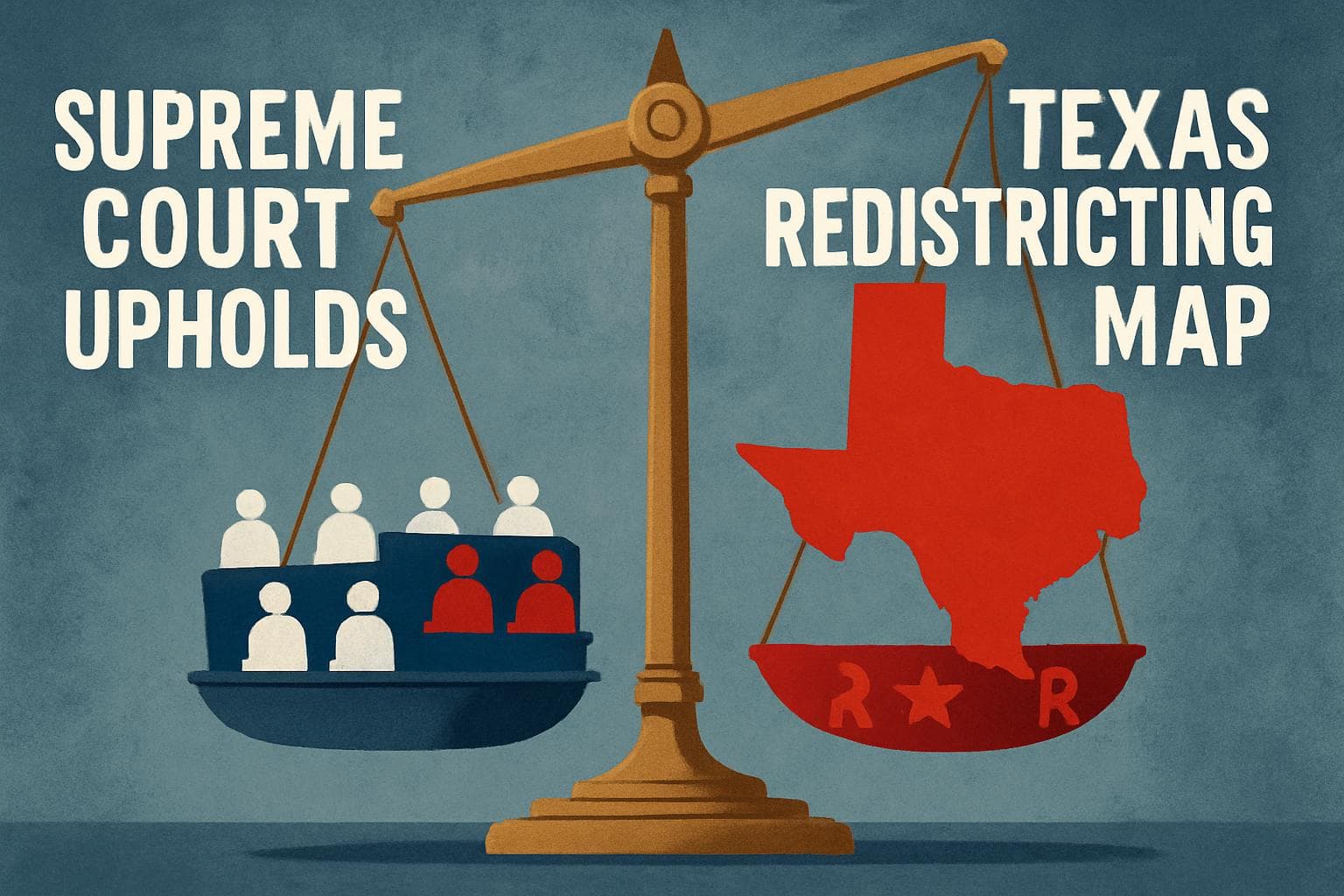
In a pivotal decision, the US Supreme Court has sanctioned Texas to implement a redrawn congressional map, a move that could bolster Republican representation by up to five seats in the 2026 midterm elections. The ruling, delivered on Thursday by a 6-3 conservative majority, reverses a prior decision by a lower court that had blocked the map, citing potential racial gerrymandering.
Supreme Court's Decision and Dissent
The Supreme Court's unsigned order criticized the lower court for interfering in an ongoing primary campaign, suggesting it disrupted the federal-state balance in electoral processes. The decision was met with dissent from the court's three liberal justices, with Justice Elena Kagan arguing that the ruling disregards the lower court's findings and risks violating constitutional protections against racial gerrymandering. "This court’s stay ensures that many Texas citizens, for no good reason, will be placed in electoral districts because of their race," Kagan stated.
National Redistricting Battle
The ruling is a significant victory for former President Donald Trump, who has been advocating for Republican gains in the House. Texas's redistricting is part of a broader national struggle over electoral maps, with states like North Carolina and Missouri also redrawing boundaries to favor Republicans. In response, Democrats have introduced new maps in states such as California and Virginia to offset these changes.
Political Implications and Reactions
Texas Governor Greg Abbott celebrated the Supreme Court's decision, asserting that the new districts better reflect the state's values and align with constitutional principles. "We won! Texas is officially—and legally—more red," Abbott declared. The decision underscores the ongoing partisan tensions surrounding redistricting, a process traditionally conducted after each decade's census but now increasingly contested mid-cycle.
WHAT THIS MIGHT MEAN
The Supreme Court's ruling on Texas's redistricting could set a precedent for similar cases across the United States, potentially encouraging other states to pursue partisan map redraws. This decision may lead to increased legal challenges, particularly from civil rights groups concerned about racial gerrymandering. As the 2026 midterm elections approach, the ruling could significantly impact the balance of power in Congress, with Republicans seeking to maintain or expand their majority. Legal experts suggest that the decision could prompt further scrutiny of the Supreme Court's role in electoral matters, especially concerning the delicate balance between state autonomy and federal oversight in redistricting.
Related Articles
Congress Subpoenas Attorney General Bondi in Epstein Investigation

James Talarico Secures Democratic Nomination in Texas Senate Race Amidst Republican Runoff
Senate Blocks Resolution to Limit Trump's Military Actions in Iran

US Supreme Court Ruling Sparks Trade Uncertainty in Asia and Beyond

Tech Giants Pledge to Cover AI Data Center Energy Costs Amid Rising Electricity Concerns

Cuba Faces Widespread Blackout Amid Deepening Fuel Crisis
US Supreme Court Upholds Texas Redistricting in Key Ruling
In This Article
 Alex Carter| Published
 HIGHLIGHTS
- The US Supreme Court has allowed Texas to use a redrawn congressional map, potentially adding up to five Republican-friendly districts for the 2026 midterm elections.
- The decision, made by a 6-3 conservative majority, overturned a lower court ruling that found the map was likely racially gerrymandered.
- Justice Elena Kagan, in her dissent, criticized the decision for undermining the lower court's findings and potentially violating constitutional protections against racial gerrymandering.
- The ruling is part of a broader national battle over redistricting, with states like California and Virginia proposing new maps to counterbalance Republican gains.
- Texas Governor Greg Abbott praised the Supreme Court's decision, claiming it aligns congressional representation with state values.
In a pivotal decision, the US Supreme Court has sanctioned Texas to implement a redrawn congressional map, a move that could bolster Republican representation by up to five seats in the 2026 midterm elections. The ruling, delivered on Thursday by a 6-3 conservative majority, reverses a prior decision by a lower court that had blocked the map, citing potential racial gerrymandering.
Supreme Court's Decision and Dissent
The Supreme Court's unsigned order criticized the lower court for interfering in an ongoing primary campaign, suggesting it disrupted the federal-state balance in electoral processes. The decision was met with dissent from the court's three liberal justices, with Justice Elena Kagan arguing that the ruling disregards the lower court's findings and risks violating constitutional protections against racial gerrymandering. "This court’s stay ensures that many Texas citizens, for no good reason, will be placed in electoral districts because of their race," Kagan stated.
National Redistricting Battle
The ruling is a significant victory for former President Donald Trump, who has been advocating for Republican gains in the House. Texas's redistricting is part of a broader national struggle over electoral maps, with states like North Carolina and Missouri also redrawing boundaries to favor Republicans. In response, Democrats have introduced new maps in states such as California and Virginia to offset these changes.
Political Implications and Reactions
Texas Governor Greg Abbott celebrated the Supreme Court's decision, asserting that the new districts better reflect the state's values and align with constitutional principles. "We won! Texas is officially—and legally—more red," Abbott declared. The decision underscores the ongoing partisan tensions surrounding redistricting, a process traditionally conducted after each decade's census but now increasingly contested mid-cycle.
WHAT THIS MIGHT MEAN
The Supreme Court's ruling on Texas's redistricting could set a precedent for similar cases across the United States, potentially encouraging other states to pursue partisan map redraws. This decision may lead to increased legal challenges, particularly from civil rights groups concerned about racial gerrymandering. As the 2026 midterm elections approach, the ruling could significantly impact the balance of power in Congress, with Republicans seeking to maintain or expand their majority. Legal experts suggest that the decision could prompt further scrutiny of the Supreme Court's role in electoral matters, especially concerning the delicate balance between state autonomy and federal oversight in redistricting.
Related Articles
Congress Subpoenas Attorney General Bondi in Epstein Investigation
James Talarico Secures Democratic Nomination in Texas Senate Race Amidst Republican Runoff
Senate Blocks Resolution to Limit Trump's Military Actions in Iran
US Supreme Court Ruling Sparks Trade Uncertainty in Asia and Beyond
Tech Giants Pledge to Cover AI Data Center Energy Costs Amid Rising Electricity Concerns
Cuba Faces Widespread Blackout Amid Deepening Fuel Crisis