
Supreme Court Orders Removal of Stray Dogs in Delhi Amid Rabies Concerns
In This Article
HIGHLIGHTS
- India's Supreme Court has mandated the removal of stray dogs from Delhi and its suburbs within eight weeks due to rising rabies concerns.
- The court ordered the establishment of shelters with sterilisation and vaccination facilities, with each shelter housing at least 5,000 dogs.
- Animal welfare groups criticize the plan as unrealistic, citing insufficient shelter capacity and advocating for better implementation of existing regulations.
- Delhi's stray dog population is estimated at one million, contributing to India's high rabies death toll, which the WHO estimates at up to 20,000 annually.
- Public opinion is divided, with some viewing stray dogs as a menace and others considering them part of the community.
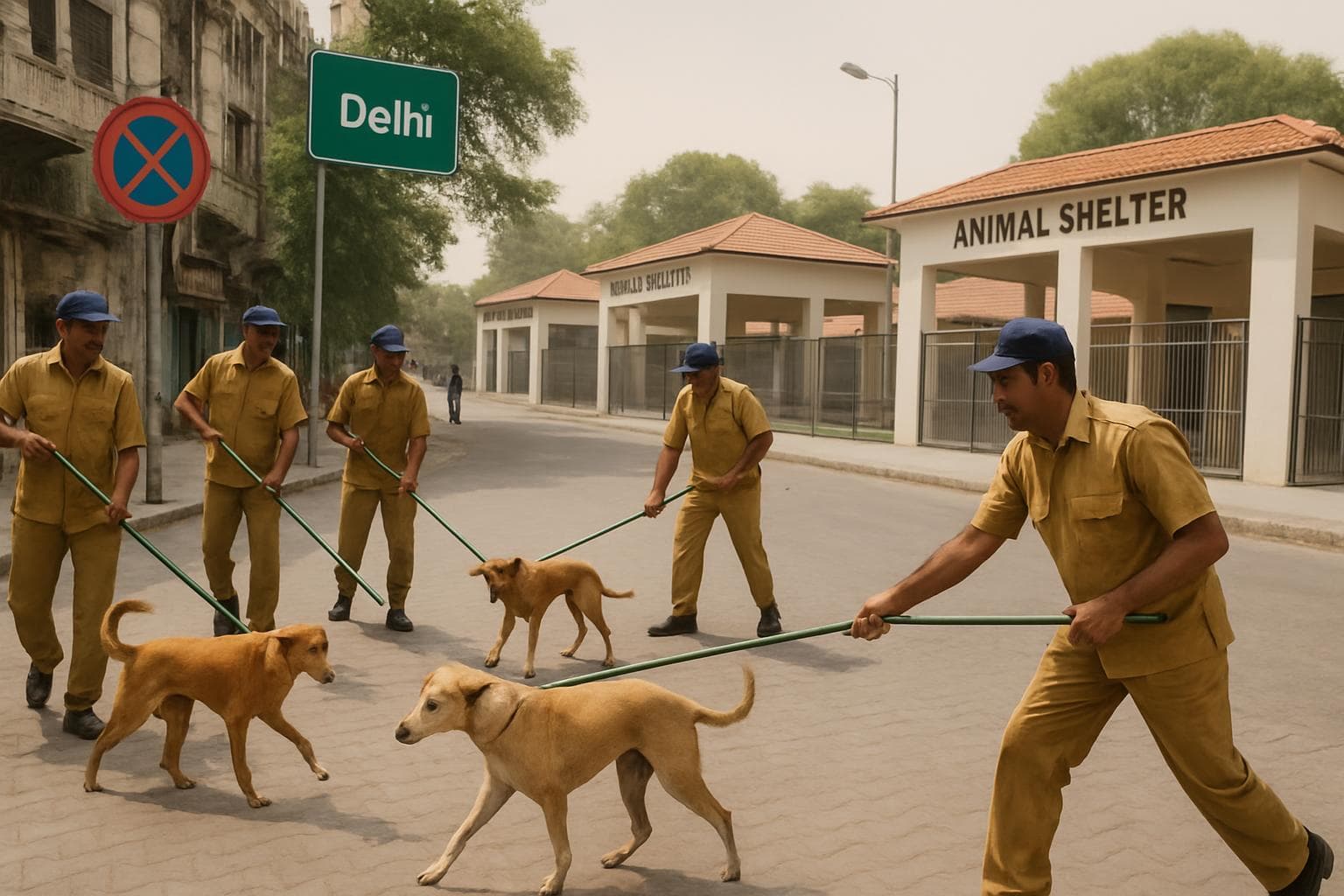
In a decisive move addressing public safety and health concerns, India's Supreme Court has ordered the removal of all stray dogs from the streets of Delhi and its surrounding areas within eight weeks. This directive comes as a response to the escalating number of dog bites and rabies cases, which have become a significant public health issue in the region.
Court's Directive and Public Safety Concerns
The court's ruling mandates the creation of animal shelters equipped with sterilisation and vaccination facilities, each capable of housing at least 5,000 dogs. The decision aims to mitigate the risk of rabies, a disease that claims thousands of lives annually in India. Justice JB Pardiwala emphasized the urgency of the situation, stating, "Children must feel safe while cycling and playing. The elderly must feel safe on their walks."
Challenges and Criticisms
Despite the court's intentions, animal welfare organizations have expressed strong opposition to the plan. They argue that the timeline is impractical given the current lack of infrastructure. Nilesh Bhanage, founder of PAWS, highlighted the need for a more sustainable approach, suggesting that authorities focus on enhancing existing measures such as vaccination, sterilisation, and efficient waste management.
Public Reaction and Rabies Statistics
The issue of stray dogs has polarized public opinion in Delhi. While some residents view the animals as a threat, others see them as integral to their communities. Nishima Bhagat, a protester against the court's decision, remarked, "We are walking in solidarity to show that there are people for the voiceless." According to the World Health Organization, India accounts for 36% of global rabies deaths, with estimates suggesting up to 20,000 fatalities annually.
Legal and Social Implications
The court's ruling has sparked a debate over the effectiveness of current animal birth control policies, which require sterilised dogs to be returned to their original locations. Justice Pardiwala dismissed these rules as "absurd," urging immediate action. The ruling also warns that those resisting the removal of stray dogs could face legal consequences.
WHAT THIS MIGHT MEAN
The Supreme Court's directive could lead to significant changes in how stray dogs are managed in Delhi and potentially across India. If successfully implemented, the establishment of large-scale shelters could reduce rabies cases and improve public safety. However, the logistical challenges and financial costs involved may hinder progress. Experts suggest that a more comprehensive approach, including public education and community involvement, is essential for long-term success. The ongoing debate highlights the need for a balanced solution that addresses both public health concerns and animal welfare.
Related Articles

Trump's New Tariff Strategy Sparks Global Trade Uncertainty

Bill Gates Withdraws from India AI Summit Amid Epstein Controversy

India's AI Impact Summit Faces Logistical Hurdles Amid Global AI Discussions

Indian National Pleads Guilty in US Murder-for-Hire Plot Targeting Sikh Activist

Iran Postpones Khamenei Funeral Amid Escalating US-Israeli Strikes

Canada Calls for De-escalation Amid US-Israel Strikes on Iran
Supreme Court Orders Removal of Stray Dogs in Delhi Amid Rabies Concerns
In This Article
 Maya Singh| Published
 HIGHLIGHTS
- India's Supreme Court has mandated the removal of stray dogs from Delhi and its suburbs within eight weeks due to rising rabies concerns.
- The court ordered the establishment of shelters with sterilisation and vaccination facilities, with each shelter housing at least 5,000 dogs.
- Animal welfare groups criticize the plan as unrealistic, citing insufficient shelter capacity and advocating for better implementation of existing regulations.
- Delhi's stray dog population is estimated at one million, contributing to India's high rabies death toll, which the WHO estimates at up to 20,000 annually.
- Public opinion is divided, with some viewing stray dogs as a menace and others considering them part of the community.
In a decisive move addressing public safety and health concerns, India's Supreme Court has ordered the removal of all stray dogs from the streets of Delhi and its surrounding areas within eight weeks. This directive comes as a response to the escalating number of dog bites and rabies cases, which have become a significant public health issue in the region.
Court's Directive and Public Safety Concerns
The court's ruling mandates the creation of animal shelters equipped with sterilisation and vaccination facilities, each capable of housing at least 5,000 dogs. The decision aims to mitigate the risk of rabies, a disease that claims thousands of lives annually in India. Justice JB Pardiwala emphasized the urgency of the situation, stating, "Children must feel safe while cycling and playing. The elderly must feel safe on their walks."
Challenges and Criticisms
Despite the court's intentions, animal welfare organizations have expressed strong opposition to the plan. They argue that the timeline is impractical given the current lack of infrastructure. Nilesh Bhanage, founder of PAWS, highlighted the need for a more sustainable approach, suggesting that authorities focus on enhancing existing measures such as vaccination, sterilisation, and efficient waste management.
Public Reaction and Rabies Statistics
The issue of stray dogs has polarized public opinion in Delhi. While some residents view the animals as a threat, others see them as integral to their communities. Nishima Bhagat, a protester against the court's decision, remarked, "We are walking in solidarity to show that there are people for the voiceless." According to the World Health Organization, India accounts for 36% of global rabies deaths, with estimates suggesting up to 20,000 fatalities annually.
Legal and Social Implications
The court's ruling has sparked a debate over the effectiveness of current animal birth control policies, which require sterilised dogs to be returned to their original locations. Justice Pardiwala dismissed these rules as "absurd," urging immediate action. The ruling also warns that those resisting the removal of stray dogs could face legal consequences.
WHAT THIS MIGHT MEAN
The Supreme Court's directive could lead to significant changes in how stray dogs are managed in Delhi and potentially across India. If successfully implemented, the establishment of large-scale shelters could reduce rabies cases and improve public safety. However, the logistical challenges and financial costs involved may hinder progress. Experts suggest that a more comprehensive approach, including public education and community involvement, is essential for long-term success. The ongoing debate highlights the need for a balanced solution that addresses both public health concerns and animal welfare.
Related Articles
Trump's New Tariff Strategy Sparks Global Trade Uncertainty
Bill Gates Withdraws from India AI Summit Amid Epstein Controversy
India's AI Impact Summit Faces Logistical Hurdles Amid Global AI Discussions
Indian National Pleads Guilty in US Murder-for-Hire Plot Targeting Sikh Activist
Iran Postpones Khamenei Funeral Amid Escalating US-Israeli Strikes
Canada Calls for De-escalation Amid US-Israel Strikes on Iran