
US Supreme Court to Decide on Transgender Athlete Bans in Landmark Case
In This Article
HIGHLIGHTS
- The US Supreme Court will review state laws in Idaho and West Virginia that ban transgender athletes from competing in female sports.
- The cases involve transgender students Becky Pepper-Jackson and Lindsay Hecox, who argue the bans violate constitutional rights and Title IX.
- A total of 27 states have enacted similar laws, sparking a national debate over transgender rights and sports participation.
- The Supreme Court's decision could have widespread implications for transgender rights across the United States.
- The court's conservative majority recently upheld a Tennessee law banning gender transition care for minors, highlighting ongoing legal battles over transgender issues.
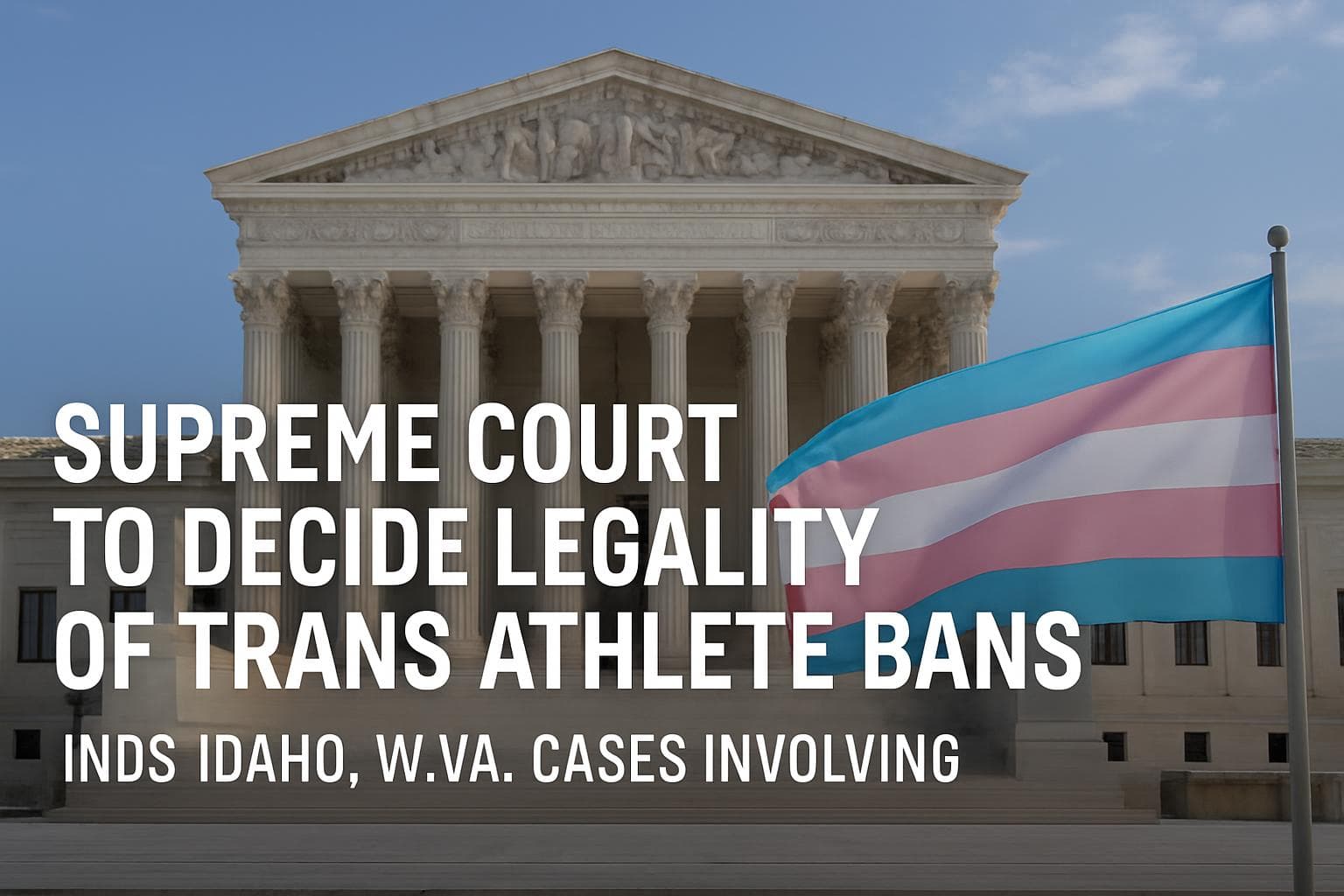
The US Supreme Court is set to hear a pivotal case concerning the legality of state laws that ban transgender athletes from participating in female sports teams. This decision comes as part of a broader examination of transgender rights in the United States, with significant implications for similar laws across the country.
Background and Legal Context
The cases under review originate from Idaho and West Virginia, where state laws have been challenged by transgender students Becky Pepper-Jackson and Lindsay Hecox. Both students argue that these bans are discriminatory, violating the US Constitution's 14th Amendment and Title IX, which prohibits sex-based discrimination in education. Idaho was the first state to enact such a law, with 27 states following suit, primarily under Republican leadership.
Key Legal Battles
In Idaho, Lindsay Hecox, a long-distance runner, successfully obtained injunctions from lower courts, allowing her to compete. The courts ruled that the state failed to provide evidence that the law protected "sex equality and opportunity for women athletes." Similarly, in West Virginia, Becky Pepper-Jackson's case saw a federal judge initially rule in her favor, only to later reverse the decision. However, the Fourth Circuit Court of Appeals found the law discriminatory under Title IX, emphasizing that it treats transgender girls differently from other girls.
National Implications
The Supreme Court's decision to hear these cases underscores the contentious nature of transgender rights in the US. The court's conservative majority recently upheld a Tennessee law banning gender transition care for minors, a ruling seen as a setback for transgender rights advocates. The outcome of the current cases could influence similar laws nationwide and shape the future of transgender participation in sports.
Political and Social Reactions
The issue has become a flashpoint in the broader culture war over transgender rights. West Virginia Attorney General John McCuskey supports the bans, arguing they preserve fairness in women's sports. Conversely, the American Civil Liberties Union (ACLU), representing the athletes, contends that such laws make schools less safe and inclusive for transgender youth.
WHAT THIS MIGHT MEAN
As the Supreme Court prepares to hear these cases in its next term, starting in October, the outcomes could set significant precedents for transgender rights in the US. A ruling in favor of the state laws might embolden other states to enact similar bans, potentially leading to further legal challenges. Conversely, a decision siding with the transgender athletes could reinforce protections under Title IX and the 14th Amendment, impacting future legislation and policy-making. Legal experts and civil rights advocates will be closely watching the proceedings, as the court's decision could redefine the landscape of transgender rights and sports participation in America.
Related Articles
China Sets Lowest GDP Growth Target in Decades Amid Economic Challenges
Cuba Faces Widespread Blackout Amid Deepening Fuel Crisis

UK Faces Dilemmas Amid Iran Conflict and China Spying Allegations

Google Faces Legal Battle Over AI Chatbot's Alleged Role in Tragic Death
Senate Blocks Resolution to Limit Trump's Military Actions in Iran

Iran Postpones Khamenei Funeral Amid Escalating US-Israeli Strikes
US Supreme Court to Decide on Transgender Athlete Bans in Landmark Case
In This Article
 Marcus Blake| Published
 HIGHLIGHTS
- The US Supreme Court will review state laws in Idaho and West Virginia that ban transgender athletes from competing in female sports.
- The cases involve transgender students Becky Pepper-Jackson and Lindsay Hecox, who argue the bans violate constitutional rights and Title IX.
- A total of 27 states have enacted similar laws, sparking a national debate over transgender rights and sports participation.
- The Supreme Court's decision could have widespread implications for transgender rights across the United States.
- The court's conservative majority recently upheld a Tennessee law banning gender transition care for minors, highlighting ongoing legal battles over transgender issues.
The US Supreme Court is set to hear a pivotal case concerning the legality of state laws that ban transgender athletes from participating in female sports teams. This decision comes as part of a broader examination of transgender rights in the United States, with significant implications for similar laws across the country.
Background and Legal Context
The cases under review originate from Idaho and West Virginia, where state laws have been challenged by transgender students Becky Pepper-Jackson and Lindsay Hecox. Both students argue that these bans are discriminatory, violating the US Constitution's 14th Amendment and Title IX, which prohibits sex-based discrimination in education. Idaho was the first state to enact such a law, with 27 states following suit, primarily under Republican leadership.
Key Legal Battles
In Idaho, Lindsay Hecox, a long-distance runner, successfully obtained injunctions from lower courts, allowing her to compete. The courts ruled that the state failed to provide evidence that the law protected "sex equality and opportunity for women athletes." Similarly, in West Virginia, Becky Pepper-Jackson's case saw a federal judge initially rule in her favor, only to later reverse the decision. However, the Fourth Circuit Court of Appeals found the law discriminatory under Title IX, emphasizing that it treats transgender girls differently from other girls.
National Implications
The Supreme Court's decision to hear these cases underscores the contentious nature of transgender rights in the US. The court's conservative majority recently upheld a Tennessee law banning gender transition care for minors, a ruling seen as a setback for transgender rights advocates. The outcome of the current cases could influence similar laws nationwide and shape the future of transgender participation in sports.
Political and Social Reactions
The issue has become a flashpoint in the broader culture war over transgender rights. West Virginia Attorney General John McCuskey supports the bans, arguing they preserve fairness in women's sports. Conversely, the American Civil Liberties Union (ACLU), representing the athletes, contends that such laws make schools less safe and inclusive for transgender youth.
WHAT THIS MIGHT MEAN
As the Supreme Court prepares to hear these cases in its next term, starting in October, the outcomes could set significant precedents for transgender rights in the US. A ruling in favor of the state laws might embolden other states to enact similar bans, potentially leading to further legal challenges. Conversely, a decision siding with the transgender athletes could reinforce protections under Title IX and the 14th Amendment, impacting future legislation and policy-making. Legal experts and civil rights advocates will be closely watching the proceedings, as the court's decision could redefine the landscape of transgender rights and sports participation in America.
Related Articles
China Sets Lowest GDP Growth Target in Decades Amid Economic Challenges
Cuba Faces Widespread Blackout Amid Deepening Fuel Crisis
UK Faces Dilemmas Amid Iran Conflict and China Spying Allegations
Google Faces Legal Battle Over AI Chatbot's Alleged Role in Tragic Death
Senate Blocks Resolution to Limit Trump's Military Actions in Iran
Iran Postpones Khamenei Funeral Amid Escalating US-Israeli Strikes