
Syrian Army Advances East of Aleppo Amid Kurdish Withdrawal
In This Article
HIGHLIGHTS
- The Syrian army has moved into areas east of Aleppo, taking control of Deir Hafer and other strategic locations following Kurdish withdrawal.
- Kurdish forces, under the Syrian Democratic Forces (SDF), have agreed to redeploy east of the Euphrates River after talks with US officials.
- President Ahmed al-Sharaa declared Kurdish a national language, marking the first formal recognition of Kurdish rights in Syria.
- Tensions remain as both sides accuse each other of violating agreements, with clashes reported in several areas.
- International calls for de-escalation have been made by the US, France, and Iraqi Kurdistan leaders.
The Syrian army has made significant advances into areas east of Aleppo, following the withdrawal of Kurdish forces from key territories. This strategic move comes after the Kurdish-led Syrian Democratic Forces (SDF) agreed to redeploy east of the Euphrates River, a decision reached after discussions with US officials.
Military Movements and Strategic Gains
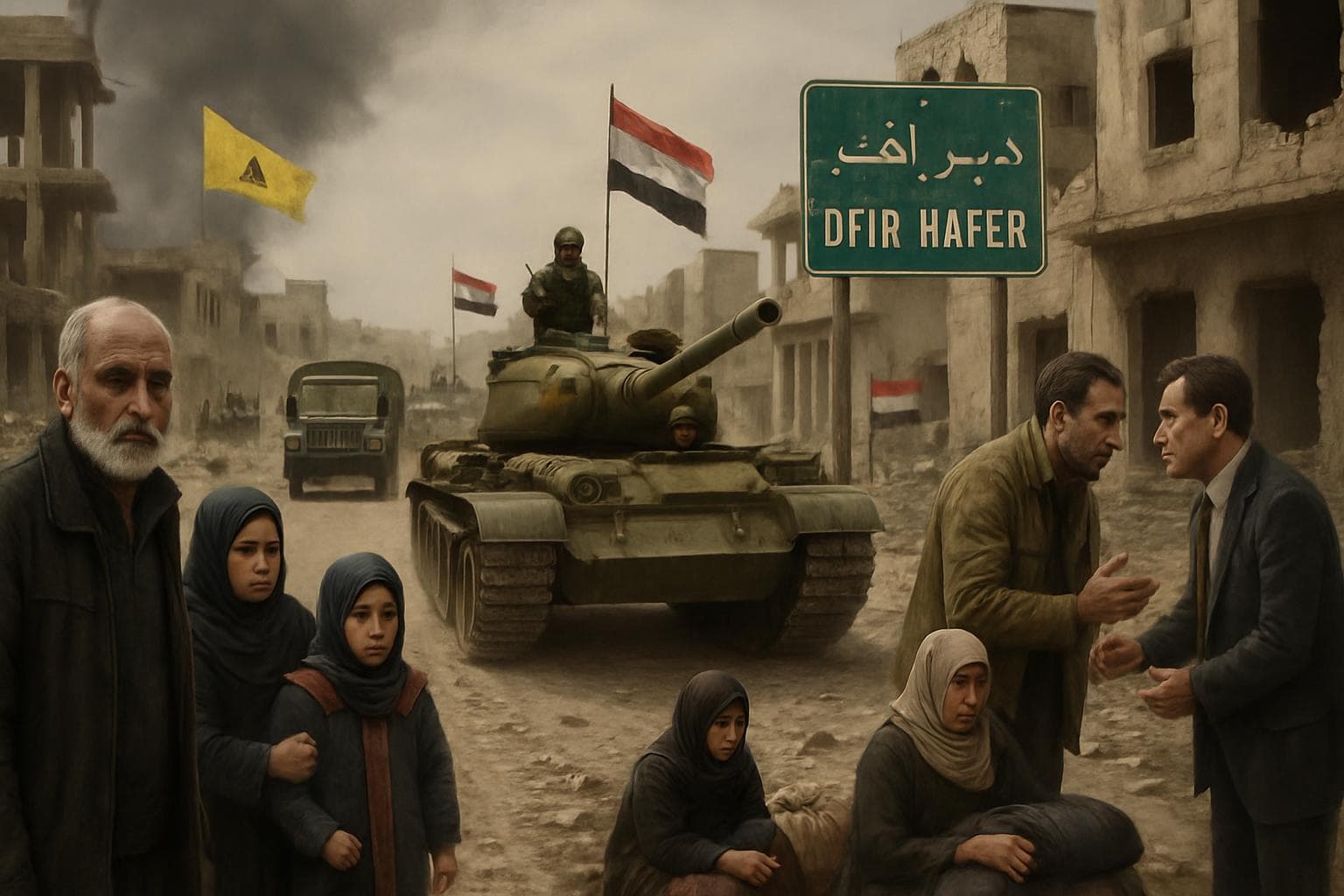
Syrian troops have successfully entered Deir Hafer, a town approximately 50 kilometers from Aleppo, and have established control over the area. The military's advance was marked by the capture of the northern city of Tabqa and its adjacent dam, as well as the Freedom Dam near Raqqa. These developments follow a decree by President Ahmed al-Sharaa, who declared Kurdish a national language, granting the minority group official recognition for the first time since Syria's independence in 1946.
Tensions and Accusations
Despite these advancements, tensions between the Syrian government and Kurdish forces persist. Both sides have accused each other of breaching the terms of their agreement. The SDF claims that Syrian troops have violated the accord by pushing further east into towns and oilfields not included in the deal. In response, the Syrian army has urged the SDF to fully withdraw east of the Euphrates River.
International Reactions and Calls for Peace
The situation has drawn international attention, with US special envoy Tom Barrack and Kurdish leader Mazloum Abdi scheduled to meet in Erbil, the capital of Iraqi Kurdistan, to discuss the developments. Meanwhile, US Central Command head Brad Cooper has called for Syrian troops to cease offensive actions in the contested areas. French President Emmanuel Macron and Iraqi Kurdistan leader Nechirvan Barzani have also urged for de-escalation and a ceasefire.
Local Impact and Human Stories
The military movements have prompted significant civilian displacement, with at least 4,000 people fleeing the Deir Hafer area. Residents like Hussein al-Khalaf have expressed relief at the relative calm following the Syrian army's arrival, emphasizing the exhaustion and loss experienced by the local population after years of conflict.
WHAT THIS MIGHT MEAN
The recent developments in Syria highlight the fragile nature of the country's political landscape. The Syrian government's recognition of Kurdish rights could pave the way for further integration of Kurdish forces into national institutions, potentially stabilizing the region. However, the ongoing accusations and clashes suggest that achieving lasting peace will require sustained diplomatic efforts and adherence to agreements by all parties involved.
International mediation, particularly by the US and European allies, will be crucial in maintaining dialogue and preventing further escalation. The situation remains fluid, and the actions of regional powers, including Turkey and Iran, could significantly influence the outcome. As Syria continues to navigate its post-conflict reality, the international community's role in supporting reconciliation and reconstruction will be vital.
Related Articles
US and Israel Intensify Military Campaign as Iran's Capabilities Dwindle

Middle East Conflict Drives UK Energy Prices to New Highs

UK Faces Dilemmas Amid Iran Conflict and China Spying Allegations
UK Reinforces Military Presence in Cyprus Amid Middle East Tensions
Iran Postpones Khamenei Funeral Amid Escalating US-Israeli Strikes
Canada Calls for De-escalation Amid US-Israel Strikes on Iran
Syrian Army Advances East of Aleppo Amid Kurdish Withdrawal
In This Article
 James Okoro| Published
 HIGHLIGHTS
- The Syrian army has moved into areas east of Aleppo, taking control of Deir Hafer and other strategic locations following Kurdish withdrawal.
- Kurdish forces, under the Syrian Democratic Forces (SDF), have agreed to redeploy east of the Euphrates River after talks with US officials.
- President Ahmed al-Sharaa declared Kurdish a national language, marking the first formal recognition of Kurdish rights in Syria.
- Tensions remain as both sides accuse each other of violating agreements, with clashes reported in several areas.
- International calls for de-escalation have been made by the US, France, and Iraqi Kurdistan leaders.
The Syrian army has made significant advances into areas east of Aleppo, following the withdrawal of Kurdish forces from key territories. This strategic move comes after the Kurdish-led Syrian Democratic Forces (SDF) agreed to redeploy east of the Euphrates River, a decision reached after discussions with US officials.
Military Movements and Strategic Gains
Syrian troops have successfully entered Deir Hafer, a town approximately 50 kilometers from Aleppo, and have established control over the area. The military's advance was marked by the capture of the northern city of Tabqa and its adjacent dam, as well as the Freedom Dam near Raqqa. These developments follow a decree by President Ahmed al-Sharaa, who declared Kurdish a national language, granting the minority group official recognition for the first time since Syria's independence in 1946.
Tensions and Accusations
Despite these advancements, tensions between the Syrian government and Kurdish forces persist. Both sides have accused each other of breaching the terms of their agreement. The SDF claims that Syrian troops have violated the accord by pushing further east into towns and oilfields not included in the deal. In response, the Syrian army has urged the SDF to fully withdraw east of the Euphrates River.
International Reactions and Calls for Peace
The situation has drawn international attention, with US special envoy Tom Barrack and Kurdish leader Mazloum Abdi scheduled to meet in Erbil, the capital of Iraqi Kurdistan, to discuss the developments. Meanwhile, US Central Command head Brad Cooper has called for Syrian troops to cease offensive actions in the contested areas. French President Emmanuel Macron and Iraqi Kurdistan leader Nechirvan Barzani have also urged for de-escalation and a ceasefire.
Local Impact and Human Stories
The military movements have prompted significant civilian displacement, with at least 4,000 people fleeing the Deir Hafer area. Residents like Hussein al-Khalaf have expressed relief at the relative calm following the Syrian army's arrival, emphasizing the exhaustion and loss experienced by the local population after years of conflict.
WHAT THIS MIGHT MEAN
The recent developments in Syria highlight the fragile nature of the country's political landscape. The Syrian government's recognition of Kurdish rights could pave the way for further integration of Kurdish forces into national institutions, potentially stabilizing the region. However, the ongoing accusations and clashes suggest that achieving lasting peace will require sustained diplomatic efforts and adherence to agreements by all parties involved.
International mediation, particularly by the US and European allies, will be crucial in maintaining dialogue and preventing further escalation. The situation remains fluid, and the actions of regional powers, including Turkey and Iran, could significantly influence the outcome. As Syria continues to navigate its post-conflict reality, the international community's role in supporting reconciliation and reconstruction will be vital.
Related Articles
US and Israel Intensify Military Campaign as Iran's Capabilities Dwindle
Middle East Conflict Drives UK Energy Prices to New Highs
UK Faces Dilemmas Amid Iran Conflict and China Spying Allegations
UK Reinforces Military Presence in Cyprus Amid Middle East Tensions
Iran Postpones Khamenei Funeral Amid Escalating US-Israeli Strikes
Canada Calls for De-escalation Amid US-Israel Strikes on Iran