
Thames Water Imposes Hosepipe Ban Amidst Severe Drought Conditions
In This Article
HIGHLIGHTS
- Thames Water announced a hosepipe ban starting 22 July, affecting 1.1 million people in Gloucestershire, Oxfordshire, Berkshire, and Wiltshire.
- The ban is due to prolonged dry weather and increased water demand, with customers using up to 30% more water during heatwaves.
- Critics highlight Thames Water's significant water leakage, with 200 billion litres lost last year, and call for infrastructure investment.
- The GMB Union criticized the ban as "disgraceful," citing ongoing leaks and lack of investment in water infrastructure.
- Other regions, including Kent and Sussex, are also facing hosepipe bans due to similar drought conditions.
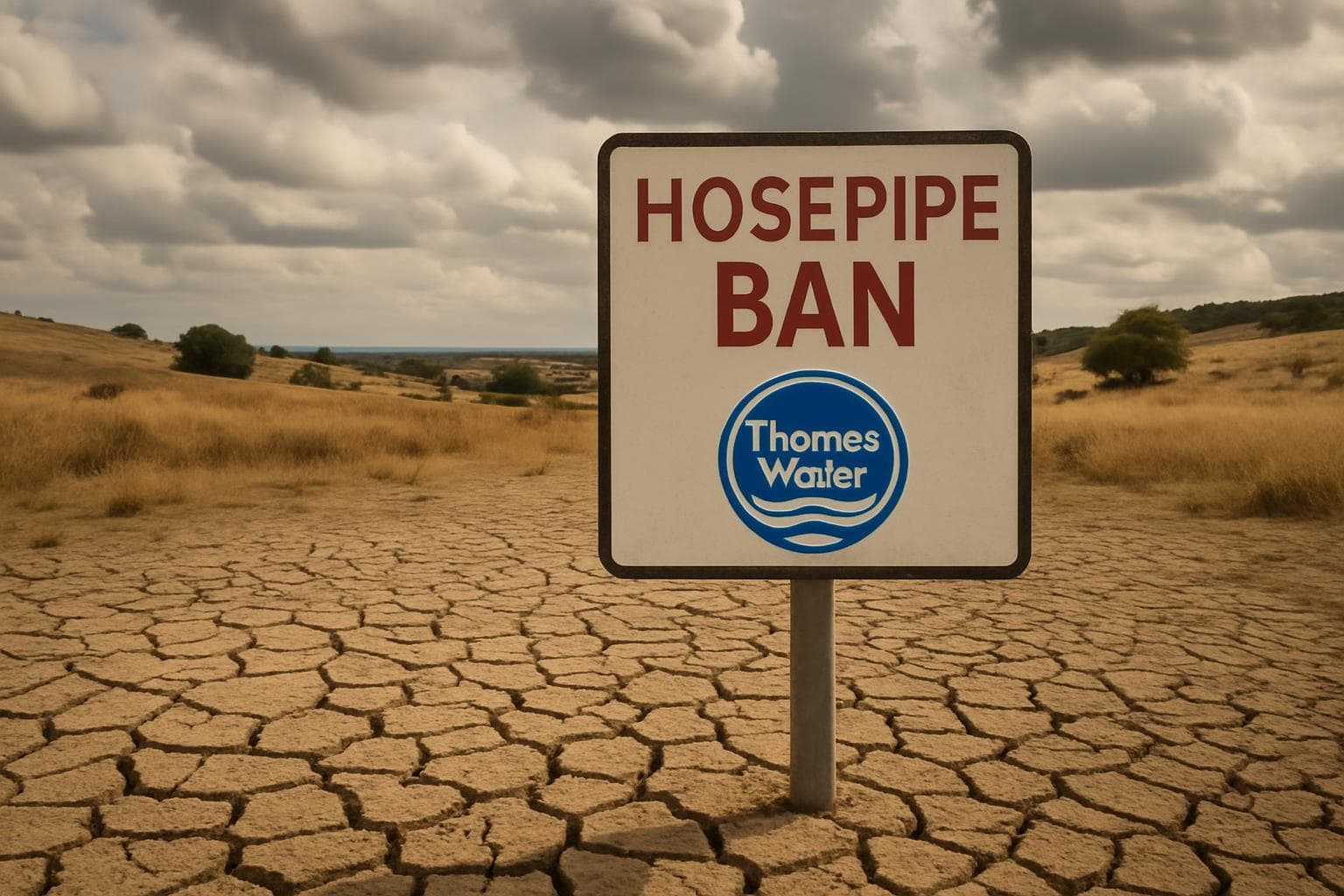
Thames Water has announced a hosepipe ban affecting 1.1 million residents across Gloucestershire, Oxfordshire, Berkshire, and Wiltshire, effective from 22 July. This decision comes as the UK grapples with a record dry spring and summer, leading to depleted water supplies and increased demand.
Rising Demand and Diminishing Supplies
The ban, which restricts the use of hosepipes for activities such as watering gardens and washing cars, is a response to the prolonged dry weather and soaring temperatures. Nevil Muncaster, strategic water resources director at Thames Water, stated, "We have to take action now," emphasizing the urgent need to conserve water as customer usage spikes by up to 30% during heatwaves.
Criticism Over Water Management
The announcement has sparked criticism, particularly from the GMB Union, which labeled the ban "disgraceful" given Thames Water's significant water leakage issues. Last year, the company lost 200 billion litres of water due to leaks, equating to 570 million litres wasted daily. Gary Carter, a national officer at GMB, criticized the lack of investment in infrastructure, stating that workers' efforts are hampered by "crumbling infrastructure and non-existent investment."
Broader Implications and Public Reaction
The hosepipe ban is part of a broader trend, with similar restrictions already in place in regions served by Yorkshire and South East Water. Residents have expressed mixed reactions, with some acknowledging the necessity of the ban, while others criticize Thames Water for not addressing leaks sooner. The company has been under scrutiny for its handling of water resources, including fines for sewage spills and shareholder payouts.
Efforts to Mitigate the Crisis
Thames Water is actively working to address the leakage issue, employing technology like acoustic loggers and smart meters to expedite repairs. The company reports fixing 650 leaks weekly, focusing on those with the greatest impact on local water supplies. Despite these efforts, the hosepipe ban is expected to remain in place until water demand returns to manageable levels.
WHAT THIS MIGHT MEAN
As the hosepipe ban takes effect, Thames Water faces mounting pressure to improve its infrastructure and reduce water leakage. The ongoing drought highlights the urgent need for investment in water management systems, with potential long-term implications for water supply in the UK. Experts suggest that without significant improvements, similar restrictions could become more frequent, especially as climate change continues to impact weather patterns. The situation also raises questions about the sustainability of current water management practices and the need for strategic planning to ensure future water security.
Images from the Web
Related Articles

UK Reinforces Military Presence in Cyprus Amid Middle East Tensions

UK Government to Reform Asylum Seeker Support and Employment Policies

UK Faces Dilemmas Amid Iran Conflict and China Spying Allegations

UK-Iran Tensions: Starmer Defends Cautious Approach Amid Trump Criticism

Persistent Safety Concerns in Nottingham Maternity Services Amidst Calls for Systemic Reform

Diplomatic Tensions Rise as Trump Criticizes Starmer's Iran Policy
Thames Water Imposes Hosepipe Ban Amidst Severe Drought Conditions
In This Article
 Ethan Brooks| Published
 HIGHLIGHTS
- Thames Water announced a hosepipe ban starting 22 July, affecting 1.1 million people in Gloucestershire, Oxfordshire, Berkshire, and Wiltshire.
- The ban is due to prolonged dry weather and increased water demand, with customers using up to 30% more water during heatwaves.
- Critics highlight Thames Water's significant water leakage, with 200 billion litres lost last year, and call for infrastructure investment.
- The GMB Union criticized the ban as "disgraceful," citing ongoing leaks and lack of investment in water infrastructure.
- Other regions, including Kent and Sussex, are also facing hosepipe bans due to similar drought conditions.
Thames Water has announced a hosepipe ban affecting 1.1 million residents across Gloucestershire, Oxfordshire, Berkshire, and Wiltshire, effective from 22 July. This decision comes as the UK grapples with a record dry spring and summer, leading to depleted water supplies and increased demand.
Rising Demand and Diminishing Supplies
The ban, which restricts the use of hosepipes for activities such as watering gardens and washing cars, is a response to the prolonged dry weather and soaring temperatures. Nevil Muncaster, strategic water resources director at Thames Water, stated, "We have to take action now," emphasizing the urgent need to conserve water as customer usage spikes by up to 30% during heatwaves.
Criticism Over Water Management
The announcement has sparked criticism, particularly from the GMB Union, which labeled the ban "disgraceful" given Thames Water's significant water leakage issues. Last year, the company lost 200 billion litres of water due to leaks, equating to 570 million litres wasted daily. Gary Carter, a national officer at GMB, criticized the lack of investment in infrastructure, stating that workers' efforts are hampered by "crumbling infrastructure and non-existent investment."
Broader Implications and Public Reaction
The hosepipe ban is part of a broader trend, with similar restrictions already in place in regions served by Yorkshire and South East Water. Residents have expressed mixed reactions, with some acknowledging the necessity of the ban, while others criticize Thames Water for not addressing leaks sooner. The company has been under scrutiny for its handling of water resources, including fines for sewage spills and shareholder payouts.
Efforts to Mitigate the Crisis
Thames Water is actively working to address the leakage issue, employing technology like acoustic loggers and smart meters to expedite repairs. The company reports fixing 650 leaks weekly, focusing on those with the greatest impact on local water supplies. Despite these efforts, the hosepipe ban is expected to remain in place until water demand returns to manageable levels.
WHAT THIS MIGHT MEAN
As the hosepipe ban takes effect, Thames Water faces mounting pressure to improve its infrastructure and reduce water leakage. The ongoing drought highlights the urgent need for investment in water management systems, with potential long-term implications for water supply in the UK. Experts suggest that without significant improvements, similar restrictions could become more frequent, especially as climate change continues to impact weather patterns. The situation also raises questions about the sustainability of current water management practices and the need for strategic planning to ensure future water security.
Images from the Web
Related Articles
UK Reinforces Military Presence in Cyprus Amid Middle East Tensions
UK Government to Reform Asylum Seeker Support and Employment Policies
UK Faces Dilemmas Amid Iran Conflict and China Spying Allegations
UK-Iran Tensions: Starmer Defends Cautious Approach Amid Trump Criticism
Persistent Safety Concerns in Nottingham Maternity Services Amidst Calls for Systemic Reform
Diplomatic Tensions Rise as Trump Criticizes Starmer's Iran Policy