
Tribunal Ruling on Transgender Rights Sparks Debate Over Same-Sex Facilities
In This Article
HIGHLIGHTS
- An employment tribunal ruled in favor of nurse Sandie Peggie, finding NHS Fife guilty of harassment, but dismissed other discrimination claims.
- The tribunal's decision did not establish a legal precedent for excluding transgender individuals from same-sex facilities, despite a Supreme Court ruling on biological sex.
- Baroness Falkner criticized the tribunal's judgment as "unusual and surprising," suggesting it may be appealed for further clarification.
- Trans advocacy groups view the ruling as a hopeful sign against exclusion, while gender-critical groups argue it misinterprets the law.
- The case highlights ongoing legal debates over transgender rights and the interpretation of equalities law in the UK.
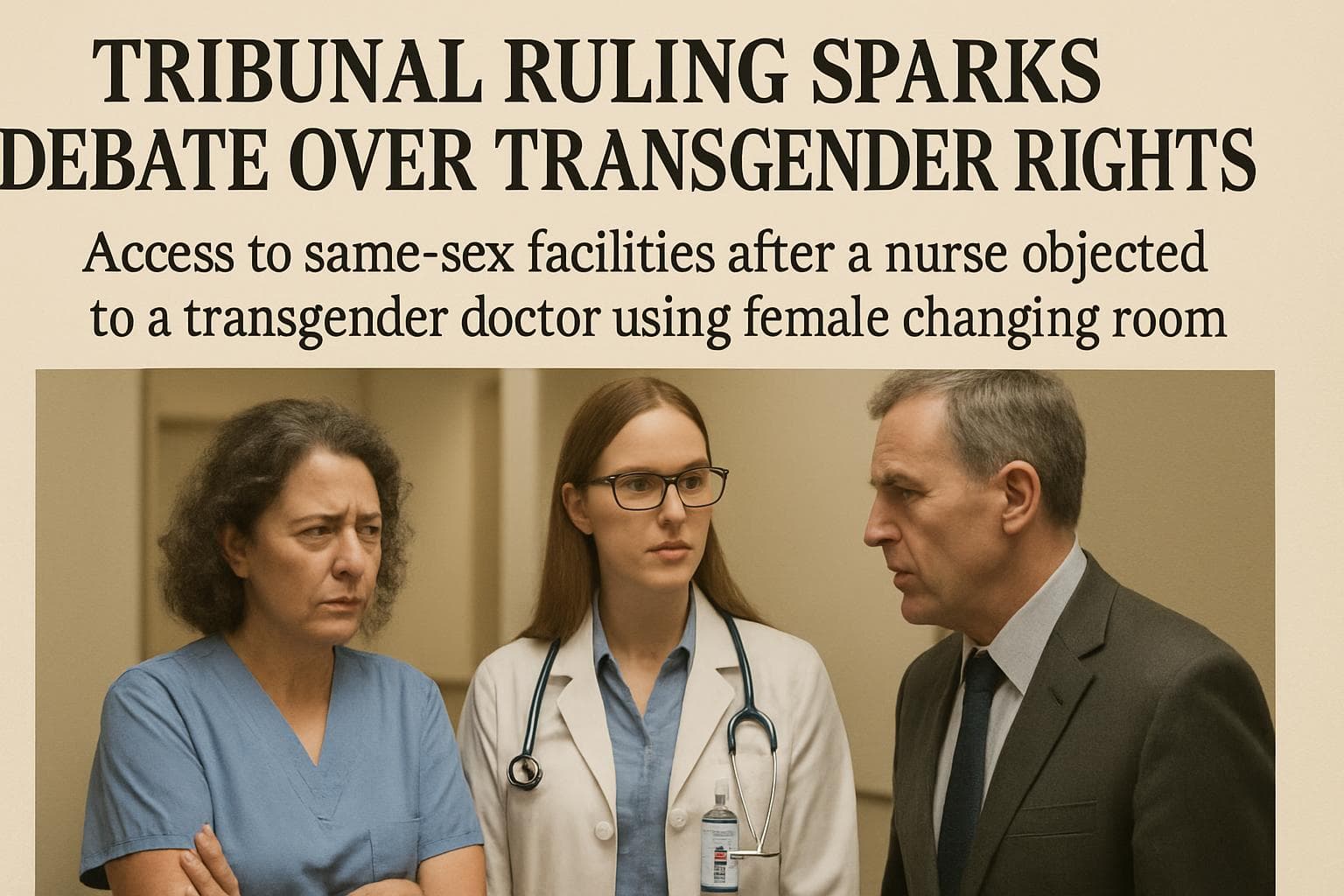
A recent employment tribunal ruling in Scotland has reignited the contentious debate over transgender rights and access to same-sex facilities. The tribunal found that NHS Fife harassed nurse Sandie Peggie after she objected to a transgender doctor using a female changing room. However, it dismissed other allegations of discrimination and victimization against the health board.
Background and Legal Context
The case centers around Sandie Peggie, a nurse at Victoria Hospital in Kirkcaldy, who was suspended after raising concerns about Dr. Beth Upton, a transgender woman, using a female changing room. The tribunal ruled that while NHS Fife harassed Peggie, it did not find Dr. Upton's actions unlawful under the current legal framework. This decision follows a Supreme Court ruling that defines a woman by biological sex under equalities law, yet the tribunal clarified that this does not inherently ban transgender individuals from using facilities aligned with their gender identity.
Divergent Reactions and Potential Appeals
The ruling has drawn mixed reactions. Baroness Falkner, former chair of the UK's equality watchdog, described the judgment as "unusual and surprising," suggesting it may not align with the Supreme Court's decision. She indicated that an appeal could provide necessary clarification. Meanwhile, Robin Moira White, a lawyer with the trans advocacy group Translucent, praised the tribunal's "careful analysis."
Implications for Transgender Rights
The decision has been welcomed by trans support groups as a potential shift against exclusionary practices, while gender-critical campaigners argue it misinterprets the law. The case underscores the ongoing legal and societal debates surrounding transgender rights in the UK, particularly in the context of equalities law and access to same-sex facilities.
WHAT THIS MIGHT MEAN
The tribunal's ruling, while not setting a legal precedent, could influence future cases involving transgender rights and access to same-sex facilities. If appealed, higher courts may provide more definitive guidance on the interpretation of equalities law, potentially impacting policies across various sectors. Legal experts suggest that ongoing litigation will continue to shape the landscape of transgender rights in the UK, as stakeholders seek clarity on the balance between gender identity and biological sex in legal contexts. As these debates unfold, the case highlights the need for nuanced discussions and policies that respect the rights of all individuals involved.
Related Articles

UK Government to Reform Asylum Seeker Support and Employment Policies

UK Faces Dilemmas Amid Iran Conflict and China Spying Allegations

UK Reinforces Military Presence in Cyprus Amid Middle East Tensions

UK-Iran Tensions: Starmer Defends Cautious Approach Amid Trump Criticism
Persistent Safety Concerns in Nottingham Maternity Services Amidst Calls for Systemic Reform

Diplomatic Tensions Rise as Trump Criticizes Starmer's Iran Policy
Tribunal Ruling on Transgender Rights Sparks Debate Over Same-Sex Facilities
In This Article
 Ethan Brooks| Published
 HIGHLIGHTS
- An employment tribunal ruled in favor of nurse Sandie Peggie, finding NHS Fife guilty of harassment, but dismissed other discrimination claims.
- The tribunal's decision did not establish a legal precedent for excluding transgender individuals from same-sex facilities, despite a Supreme Court ruling on biological sex.
- Baroness Falkner criticized the tribunal's judgment as "unusual and surprising," suggesting it may be appealed for further clarification.
- Trans advocacy groups view the ruling as a hopeful sign against exclusion, while gender-critical groups argue it misinterprets the law.
- The case highlights ongoing legal debates over transgender rights and the interpretation of equalities law in the UK.
A recent employment tribunal ruling in Scotland has reignited the contentious debate over transgender rights and access to same-sex facilities. The tribunal found that NHS Fife harassed nurse Sandie Peggie after she objected to a transgender doctor using a female changing room. However, it dismissed other allegations of discrimination and victimization against the health board.
Background and Legal Context
The case centers around Sandie Peggie, a nurse at Victoria Hospital in Kirkcaldy, who was suspended after raising concerns about Dr. Beth Upton, a transgender woman, using a female changing room. The tribunal ruled that while NHS Fife harassed Peggie, it did not find Dr. Upton's actions unlawful under the current legal framework. This decision follows a Supreme Court ruling that defines a woman by biological sex under equalities law, yet the tribunal clarified that this does not inherently ban transgender individuals from using facilities aligned with their gender identity.
Divergent Reactions and Potential Appeals
The ruling has drawn mixed reactions. Baroness Falkner, former chair of the UK's equality watchdog, described the judgment as "unusual and surprising," suggesting it may not align with the Supreme Court's decision. She indicated that an appeal could provide necessary clarification. Meanwhile, Robin Moira White, a lawyer with the trans advocacy group Translucent, praised the tribunal's "careful analysis."
Implications for Transgender Rights
The decision has been welcomed by trans support groups as a potential shift against exclusionary practices, while gender-critical campaigners argue it misinterprets the law. The case underscores the ongoing legal and societal debates surrounding transgender rights in the UK, particularly in the context of equalities law and access to same-sex facilities.
WHAT THIS MIGHT MEAN
The tribunal's ruling, while not setting a legal precedent, could influence future cases involving transgender rights and access to same-sex facilities. If appealed, higher courts may provide more definitive guidance on the interpretation of equalities law, potentially impacting policies across various sectors. Legal experts suggest that ongoing litigation will continue to shape the landscape of transgender rights in the UK, as stakeholders seek clarity on the balance between gender identity and biological sex in legal contexts. As these debates unfold, the case highlights the need for nuanced discussions and policies that respect the rights of all individuals involved.
Related Articles
UK Government to Reform Asylum Seeker Support and Employment Policies
UK Faces Dilemmas Amid Iran Conflict and China Spying Allegations
UK Reinforces Military Presence in Cyprus Amid Middle East Tensions
UK-Iran Tensions: Starmer Defends Cautious Approach Amid Trump Criticism
Persistent Safety Concerns in Nottingham Maternity Services Amidst Calls for Systemic Reform
Diplomatic Tensions Rise as Trump Criticizes Starmer's Iran Policy