
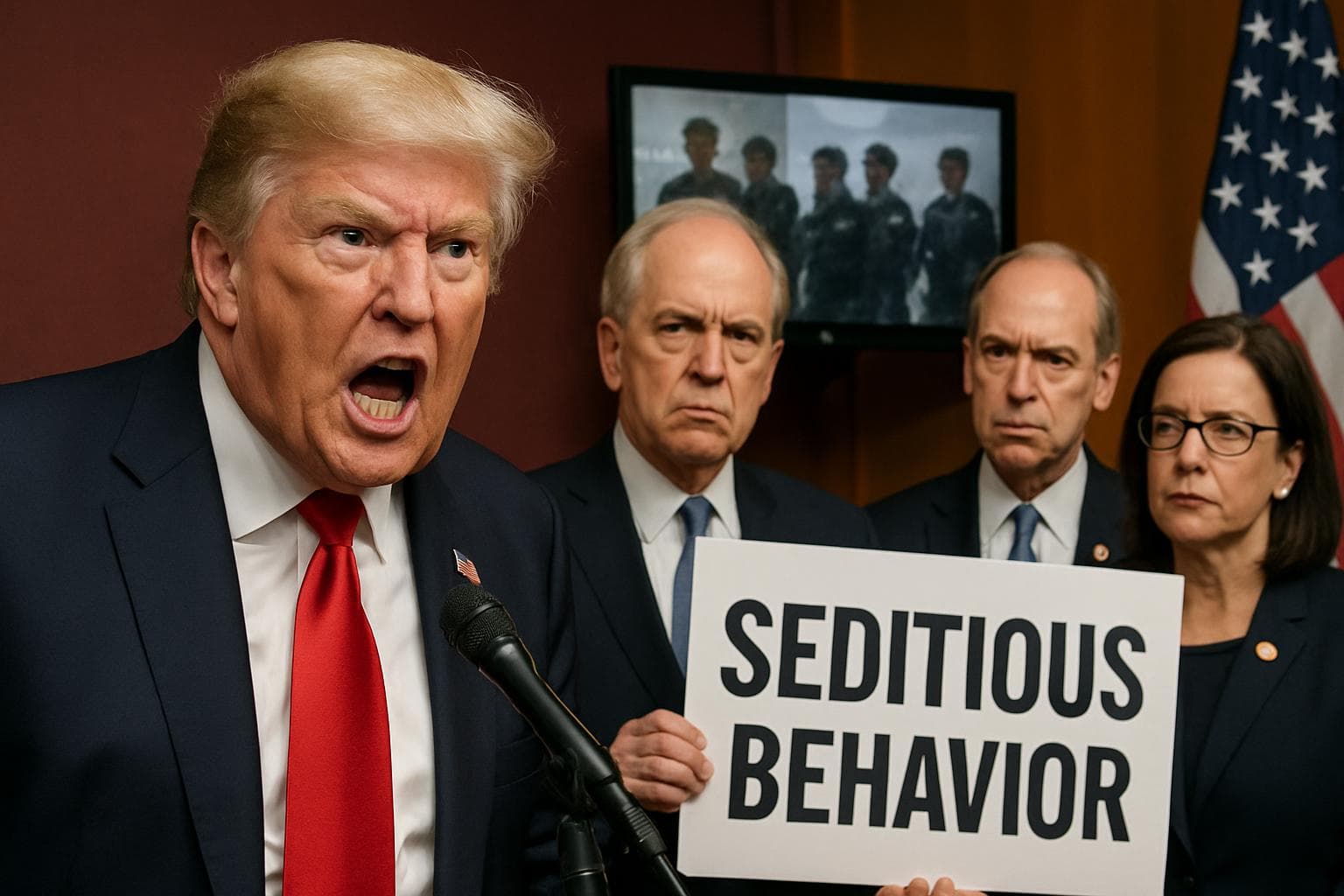
Trump's Accusations of 'Seditious Behavior' Against Democrats Ignite Political Firestorm
In This Article
HIGHLIGHTS
- Donald Trump accused six Democratic lawmakers of "seditious behavior" after they released a video urging military personnel to refuse illegal orders.
- The lawmakers, all with military or intelligence backgrounds, emphasized their oath to protect the US Constitution.
- Trump's statements on Truth Social included calls for arrest and trial, sparking outrage and condemnation from Democratic leaders.
- White House officials clarified that Trump was not advocating for the execution of Congress members.
- Democratic leaders have coordinated with Capitol Police to ensure the safety of the lawmakers involved.
In a dramatic escalation of political rhetoric, former President Donald Trump has accused a group of Democratic lawmakers of "seditious behavior, punishable by death" following their release of a video urging military personnel to refuse illegal orders. The video, shared by Michigan Senator Elissa Slotkin and featuring other prominent figures such as Arizona Senator Mark Kelly, emphasizes the lawmakers' commitment to upholding the US Constitution.
Video Sparks Controversy
The video, which includes statements from six lawmakers with military or intelligence backgrounds, asserts that service members have the right to refuse orders that violate the law. "Our laws are clear," said Senator Kelly, a former Navy officer and astronaut. "You can refuse illegal orders." The lawmakers stressed that threats to the Constitution are not only external but also domestic, urging military personnel to adhere to their constitutional oaths.
Trump's Fiery Response
Trump's reaction, delivered via a series of posts on his Truth Social platform, accused the lawmakers of high-level sedition. "Each one of these traitors to our Country should be ARRESTED AND PUT ON TRIAL," he wrote, adding that their actions were dangerous to the nation. His posts, which included a repost suggesting execution, drew immediate backlash from Democratic leaders.
Democratic Leaders Condemn Remarks
In response, House Democratic leader Hakeem Jeffries and others issued a statement condemning Trump's rhetoric as "disgusting and dangerous." They emphasized the patriotic service of the lawmakers involved and called on Republicans to denounce the former president's remarks. The Democratic leadership has also engaged with Capitol Police to ensure the safety of the lawmakers and their families.
White House Clarification
White House press secretary Karoline Leavitt clarified that Trump was not advocating for the execution of Congress members, instead focusing on the lawmakers' encouragement of military personnel to defy lawful orders. "It perhaps is punishable by law," Leavitt noted, underscoring the administration's stance on the issue.
WHAT THIS MIGHT MEAN
The fallout from Trump's accusations could further polarize the political landscape, potentially impacting upcoming elections. If the rhetoric escalates, it may lead to increased security measures for lawmakers and heightened tensions between political parties. Legal experts suggest that the situation underscores the need for clear guidelines on the limits of political speech, particularly when it involves calls to action against elected officials. As the debate continues, the focus will likely remain on the balance between free speech and the potential for inciting violence.
Related Articles

Armed Intruder Fatally Shot at Mar-a-Lago by Secret Service

Tech Giants Pledge to Cover AI Data Center Energy Costs Amid Rising Electricity Concerns
Senate Blocks Resolution to Limit Trump's Military Actions in Iran
Spain's Sánchez Stands Firm Against Trump's Trade Threat Over Iran Stance

Greenland Politely Declines Trump's Hospital Ship Offer Amid Healthcare Debate
Congress Subpoenas Attorney General Bondi in Epstein Investigation
Trump's Accusations of 'Seditious Behavior' Against Democrats Ignite Political Firestorm
In This Article
 Sofia Romano| Published
 HIGHLIGHTS
- Donald Trump accused six Democratic lawmakers of "seditious behavior" after they released a video urging military personnel to refuse illegal orders.
- The lawmakers, all with military or intelligence backgrounds, emphasized their oath to protect the US Constitution.
- Trump's statements on Truth Social included calls for arrest and trial, sparking outrage and condemnation from Democratic leaders.
- White House officials clarified that Trump was not advocating for the execution of Congress members.
- Democratic leaders have coordinated with Capitol Police to ensure the safety of the lawmakers involved.
In a dramatic escalation of political rhetoric, former President Donald Trump has accused a group of Democratic lawmakers of "seditious behavior, punishable by death" following their release of a video urging military personnel to refuse illegal orders. The video, shared by Michigan Senator Elissa Slotkin and featuring other prominent figures such as Arizona Senator Mark Kelly, emphasizes the lawmakers' commitment to upholding the US Constitution.
Video Sparks Controversy
The video, which includes statements from six lawmakers with military or intelligence backgrounds, asserts that service members have the right to refuse orders that violate the law. "Our laws are clear," said Senator Kelly, a former Navy officer and astronaut. "You can refuse illegal orders." The lawmakers stressed that threats to the Constitution are not only external but also domestic, urging military personnel to adhere to their constitutional oaths.
Trump's Fiery Response
Trump's reaction, delivered via a series of posts on his Truth Social platform, accused the lawmakers of high-level sedition. "Each one of these traitors to our Country should be ARRESTED AND PUT ON TRIAL," he wrote, adding that their actions were dangerous to the nation. His posts, which included a repost suggesting execution, drew immediate backlash from Democratic leaders.
Democratic Leaders Condemn Remarks
In response, House Democratic leader Hakeem Jeffries and others issued a statement condemning Trump's rhetoric as "disgusting and dangerous." They emphasized the patriotic service of the lawmakers involved and called on Republicans to denounce the former president's remarks. The Democratic leadership has also engaged with Capitol Police to ensure the safety of the lawmakers and their families.
White House Clarification
White House press secretary Karoline Leavitt clarified that Trump was not advocating for the execution of Congress members, instead focusing on the lawmakers' encouragement of military personnel to defy lawful orders. "It perhaps is punishable by law," Leavitt noted, underscoring the administration's stance on the issue.
WHAT THIS MIGHT MEAN
The fallout from Trump's accusations could further polarize the political landscape, potentially impacting upcoming elections. If the rhetoric escalates, it may lead to increased security measures for lawmakers and heightened tensions between political parties. Legal experts suggest that the situation underscores the need for clear guidelines on the limits of political speech, particularly when it involves calls to action against elected officials. As the debate continues, the focus will likely remain on the balance between free speech and the potential for inciting violence.
Related Articles
Armed Intruder Fatally Shot at Mar-a-Lago by Secret Service
Tech Giants Pledge to Cover AI Data Center Energy Costs Amid Rising Electricity Concerns
Senate Blocks Resolution to Limit Trump's Military Actions in Iran
Spain's Sánchez Stands Firm Against Trump's Trade Threat Over Iran Stance
Greenland Politely Declines Trump's Hospital Ship Offer Amid Healthcare Debate
Congress Subpoenas Attorney General Bondi in Epstein Investigation