
Trump Halts US-Canada Trade Talks Over Digital Services Tax Dispute
In This Article
HIGHLIGHTS
- President Trump announced the termination of trade talks with Canada due to a digital services tax targeting US tech companies.
- The tax, set at 3%, is expected to cost companies like Amazon, Alphabet, and Meta approximately $3 billion annually.
- Trump has threatened to impose new tariffs on Canadian goods within a week, escalating the trade dispute.
- Canadian Prime Minister Mark Carney remains optimistic about continuing negotiations despite the setback.
- The US-Canada trade relationship has been strained by tariffs and the digital services tax, mirroring tensions with the European Union.
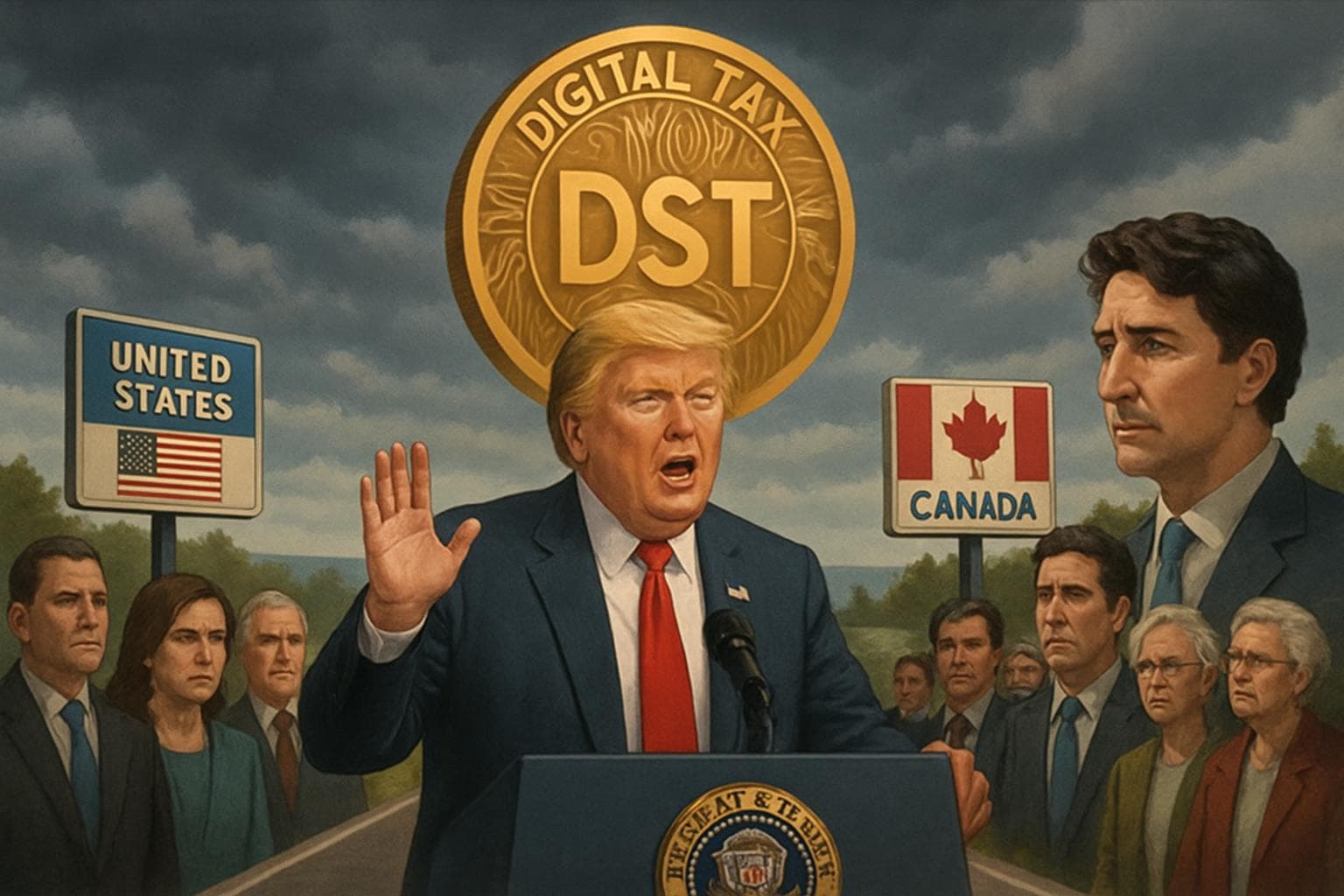
In a dramatic escalation of trade tensions, President Donald Trump announced the immediate cessation of trade negotiations with Canada, citing the imposition of a digital services tax as a "direct and blatant attack" on American technology companies. The announcement, made via social media, marks a significant setback in the relationship between the two North American neighbors.
Digital Services Tax Sparks Controversy
The contentious 3% digital services tax, enacted by Canada last year, targets major US tech firms such as Amazon, Alphabet, and Meta. With the first payments due imminently, the tax is projected to cost these companies around $3 billion annually. The move has been a sticking point in trade discussions, with Trump labeling it an "egregious tax" and threatening retaliatory tariffs on Canadian goods within the next week.
Trade Talks in Jeopardy
Despite the abrupt halt in negotiations, Canadian Prime Minister Mark Carney expressed a commitment to continue discussions, emphasizing the importance of a trade deal for both nations. "We will continue to conduct these complex negotiations in the best interest of Canadians," Carney stated, underscoring the potential for future dialogue.
Historical Context and Future Implications
The US and Canada, two of the world's largest trading partners, have faced ongoing trade tensions, exacerbated by tariffs and the digital services tax. Trump's decision to terminate talks comes amid broader global trade disputes, including recent breakthroughs in US-China negotiations over rare-earth shipments.
Inu Malak, a fellow for trade policy at the Council on Foreign Relations, noted that Trump's approach aligns with his typical negotiating strategy, using threats to gain leverage. "It does provide a bit of an opening - maybe not the one that Prime Minister Carney wanted," Malak commented, suggesting that the move could eventually lead to renewed discussions.
WHAT THIS MIGHT MEAN
The abrupt termination of trade talks between the US and Canada could have significant economic and political repercussions. If Trump follows through on his threat to impose new tariffs, it could further strain the bilateral relationship and impact industries reliant on cross-border trade.
Experts suggest that the digital services tax dispute may prompt Canada to seek alternative trade partners or adjust its tax policies to mitigate tensions. Meanwhile, US tech companies could face increased operational costs, potentially influencing their global strategies.
As both nations navigate this complex landscape, the potential for renewed negotiations remains. The evolving dynamics of US-Canada trade relations will likely continue to be a focal point for policymakers and businesses alike.
Related Articles

Canada Calls for De-escalation Amid US-Israel Strikes on Iran
Canada and Australia Forge Strategic Partnership Amid Global Uncertainty

Tech Giants Pledge to Cover AI Data Center Energy Costs Amid Rising Electricity Concerns

UK Faces Dilemmas Amid Iran Conflict and China Spying Allegations
China Sets Lowest GDP Growth Target in Decades Amid Economic Challenges

Cuba Faces Widespread Blackout Amid Deepening Fuel Crisis
Trump Halts US-Canada Trade Talks Over Digital Services Tax Dispute
In This Article
HIGHLIGHTS
- President Trump announced the termination of trade talks with Canada due to a digital services tax targeting US tech companies.
- The tax, set at 3%, is expected to cost companies like Amazon, Alphabet, and Meta approximately $3 billion annually.
- Trump has threatened to impose new tariffs on Canadian goods within a week, escalating the trade dispute.
- Canadian Prime Minister Mark Carney remains optimistic about continuing negotiations despite the setback.
- The US-Canada trade relationship has been strained by tariffs and the digital services tax, mirroring tensions with the European Union.
In a dramatic escalation of trade tensions, President Donald Trump announced the immediate cessation of trade negotiations with Canada, citing the imposition of a digital services tax as a "direct and blatant attack" on American technology companies. The announcement, made via social media, marks a significant setback in the relationship between the two North American neighbors.
Digital Services Tax Sparks Controversy
The contentious 3% digital services tax, enacted by Canada last year, targets major US tech firms such as Amazon, Alphabet, and Meta. With the first payments due imminently, the tax is projected to cost these companies around $3 billion annually. The move has been a sticking point in trade discussions, with Trump labeling it an "egregious tax" and threatening retaliatory tariffs on Canadian goods within the next week.
Trade Talks in Jeopardy
Despite the abrupt halt in negotiations, Canadian Prime Minister Mark Carney expressed a commitment to continue discussions, emphasizing the importance of a trade deal for both nations. "We will continue to conduct these complex negotiations in the best interest of Canadians," Carney stated, underscoring the potential for future dialogue.
Historical Context and Future Implications
The US and Canada, two of the world's largest trading partners, have faced ongoing trade tensions, exacerbated by tariffs and the digital services tax. Trump's decision to terminate talks comes amid broader global trade disputes, including recent breakthroughs in US-China negotiations over rare-earth shipments.
Inu Malak, a fellow for trade policy at the Council on Foreign Relations, noted that Trump's approach aligns with his typical negotiating strategy, using threats to gain leverage. "It does provide a bit of an opening - maybe not the one that Prime Minister Carney wanted," Malak commented, suggesting that the move could eventually lead to renewed discussions.
WHAT THIS MIGHT MEAN
The abrupt termination of trade talks between the US and Canada could have significant economic and political repercussions. If Trump follows through on his threat to impose new tariffs, it could further strain the bilateral relationship and impact industries reliant on cross-border trade.
Experts suggest that the digital services tax dispute may prompt Canada to seek alternative trade partners or adjust its tax policies to mitigate tensions. Meanwhile, US tech companies could face increased operational costs, potentially influencing their global strategies.
As both nations navigate this complex landscape, the potential for renewed negotiations remains. The evolving dynamics of US-Canada trade relations will likely continue to be a focal point for policymakers and businesses alike.
Related Articles
Canada Calls for De-escalation Amid US-Israel Strikes on Iran
Canada and Australia Forge Strategic Partnership Amid Global Uncertainty
Tech Giants Pledge to Cover AI Data Center Energy Costs Amid Rising Electricity Concerns
UK Faces Dilemmas Amid Iran Conflict and China Spying Allegations
China Sets Lowest GDP Growth Target in Decades Amid Economic Challenges
Cuba Faces Widespread Blackout Amid Deepening Fuel Crisis