
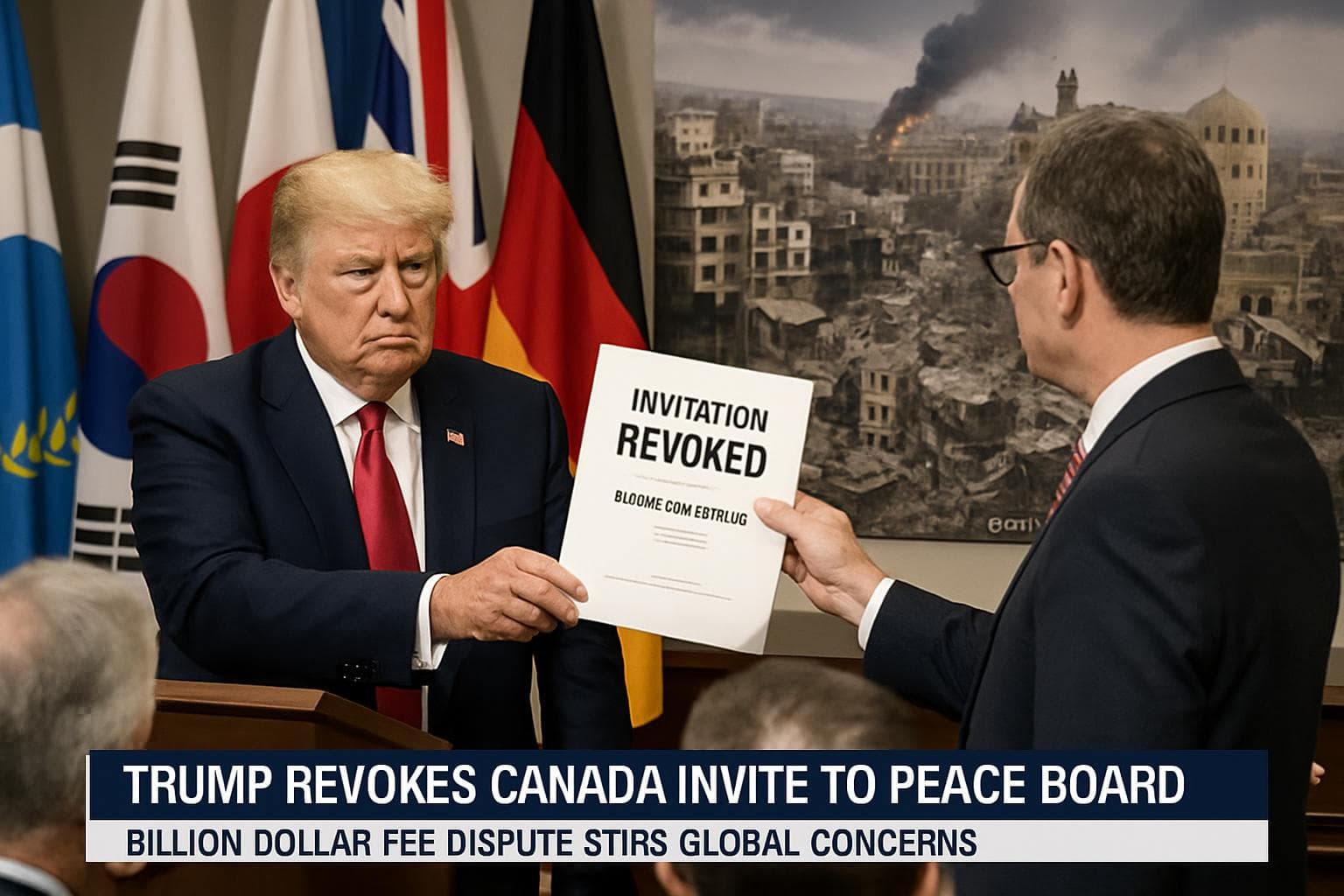
Trump Revokes Canada's Invitation to 'Board of Peace' Amid Financial Dispute
In This Article
HIGHLIGHTS
- Donald Trump withdrew Canada's invitation to join his 'Board of Peace', citing no specific reason for the decision.
- The 'Board of Peace' aims to resolve global conflicts, with Trump as its chairman, and requires a $1 billion membership fee.
- Canada, led by Prime Minister Mark Carney, declined to pay the fee, expressing concerns over the board's structure and financing.
- The board has received mixed reactions, with some countries joining, while others, including key UN Security Council members, remain skeptical.
- European leaders have expressed doubts about the board's scope and governance but are open to collaboration on Gaza's peace plan.
In a surprising diplomatic move, former U.S. President Donald Trump has rescinded Canada's invitation to join his newly established 'Board of Peace', a global initiative aimed at resolving international conflicts. The announcement was made via Trump's Truth Social platform, directed at Canadian Prime Minister Mark Carney, who had recently criticized the U.S.-led global order.
Board's Ambitious Goals and Financial Controversy
Launched at the World Economic Forum in Davos, the 'Board of Peace' is envisioned as a significant international body with Trump at the helm. It was initially proposed to oversee the governance and reconstruction of Gaza, though its charter does not explicitly mention the Palestinian territory. Membership comes with a hefty price tag of $1 billion, a fee Canada has refused to pay, citing concerns over the board's structure and financial transparency.
Mixed International Reception
The board has garnered a mixed response globally. While countries like Argentina, Morocco, and Turkey have joined, major UN Security Council members, including the UK, France, and China, have refrained from participating. The UK has raised concerns about the inclusion of Russian President Vladimir Putin, while France has criticized the board's charter as incompatible with its international commitments.
European Leaders' Skepticism
European Council President Antonio Costa has voiced doubts about the board's scope and governance. Despite these reservations, Costa indicated the EU's willingness to collaborate with the U.S. on implementing a comprehensive peace plan for Gaza, with the board acting as a transitional administration.
Canada's Firm Stance
Prime Minister Carney, who initially accepted the invitation in principle, has been vocal about the need for financial prudence. "Canada wants money to have maximum impact," Carney stated, emphasizing the importance of understanding the board's operational details before committing funds.
WHAT THIS MIGHT MEAN
The withdrawal of Canada's invitation could signal potential challenges for Trump's 'Board of Peace' in gaining widespread international support. The financial demands and governance structure may deter other nations from joining, particularly those wary of Trump's leadership style. If key players like the UK and France continue to abstain, the board's legitimacy and effectiveness could be questioned.
Moving forward, the board's success may hinge on its ability to address these concerns and demonstrate tangible results, particularly in conflict zones like Gaza. The involvement of the UN, albeit limited, could provide a framework for cooperation, but only if the board aligns more closely with established international norms and practices.
Related Articles
Canada and Australia Forge Strategic Partnership Amid Global Uncertainty

UK Faces Dilemmas Amid Iran Conflict and China Spying Allegations

UK-Iran Tensions: Starmer Defends Cautious Approach Amid Trump Criticism
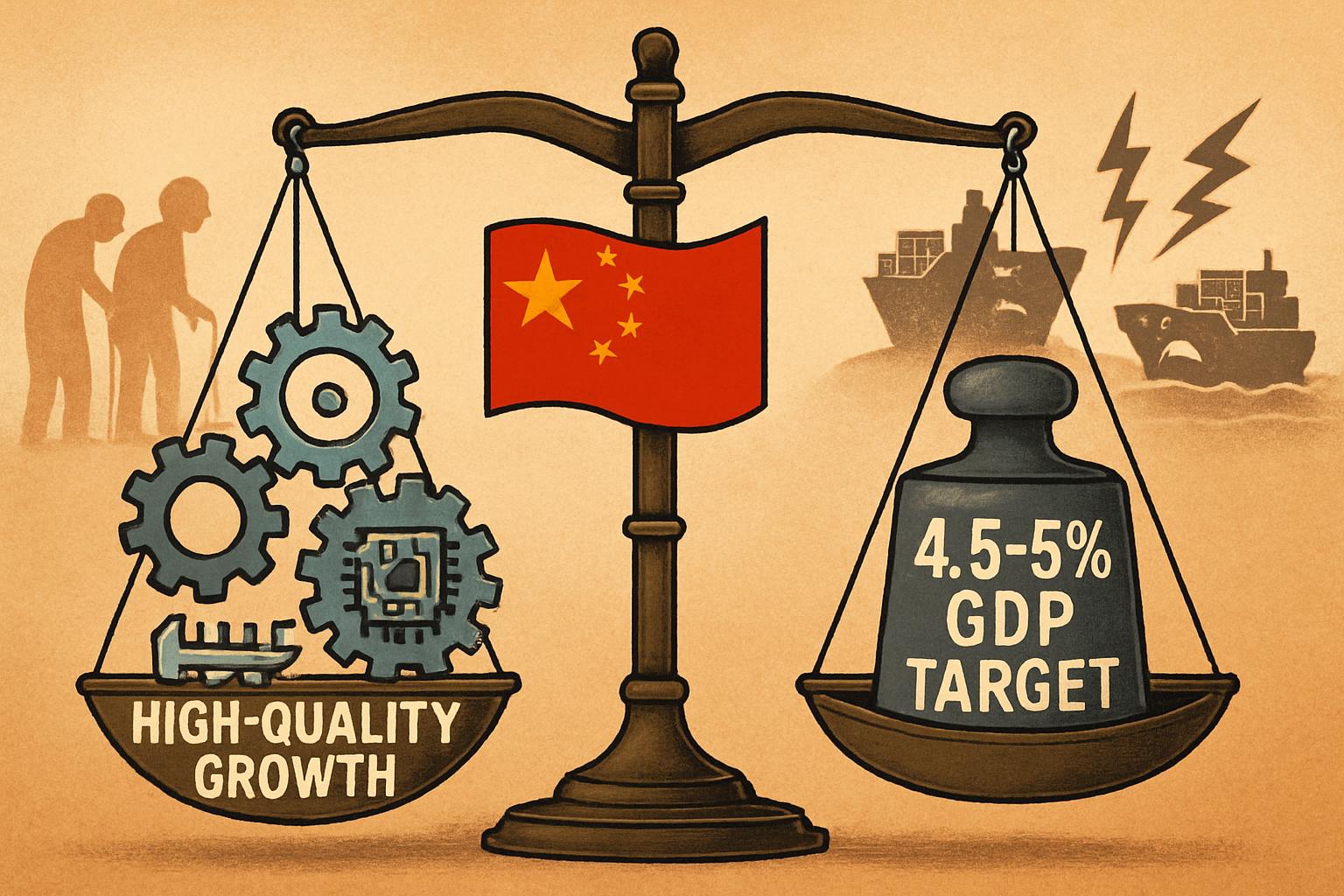
China Sets Lowest GDP Growth Target in Decades Amid Economic Challenges

Tech Giants Pledge to Cover AI Data Center Energy Costs Amid Rising Electricity Concerns
UK Government to Reform Asylum Seeker Support and Employment Policies
Trump Revokes Canada's Invitation to 'Board of Peace' Amid Financial Dispute
In This Article
HIGHLIGHTS
- Donald Trump withdrew Canada's invitation to join his 'Board of Peace', citing no specific reason for the decision.
- The 'Board of Peace' aims to resolve global conflicts, with Trump as its chairman, and requires a $1 billion membership fee.
- Canada, led by Prime Minister Mark Carney, declined to pay the fee, expressing concerns over the board's structure and financing.
- The board has received mixed reactions, with some countries joining, while others, including key UN Security Council members, remain skeptical.
- European leaders have expressed doubts about the board's scope and governance but are open to collaboration on Gaza's peace plan.
In a surprising diplomatic move, former U.S. President Donald Trump has rescinded Canada's invitation to join his newly established 'Board of Peace', a global initiative aimed at resolving international conflicts. The announcement was made via Trump's Truth Social platform, directed at Canadian Prime Minister Mark Carney, who had recently criticized the U.S.-led global order.
Board's Ambitious Goals and Financial Controversy
Launched at the World Economic Forum in Davos, the 'Board of Peace' is envisioned as a significant international body with Trump at the helm. It was initially proposed to oversee the governance and reconstruction of Gaza, though its charter does not explicitly mention the Palestinian territory. Membership comes with a hefty price tag of $1 billion, a fee Canada has refused to pay, citing concerns over the board's structure and financial transparency.
Mixed International Reception
The board has garnered a mixed response globally. While countries like Argentina, Morocco, and Turkey have joined, major UN Security Council members, including the UK, France, and China, have refrained from participating. The UK has raised concerns about the inclusion of Russian President Vladimir Putin, while France has criticized the board's charter as incompatible with its international commitments.
European Leaders' Skepticism
European Council President Antonio Costa has voiced doubts about the board's scope and governance. Despite these reservations, Costa indicated the EU's willingness to collaborate with the U.S. on implementing a comprehensive peace plan for Gaza, with the board acting as a transitional administration.
Canada's Firm Stance
Prime Minister Carney, who initially accepted the invitation in principle, has been vocal about the need for financial prudence. "Canada wants money to have maximum impact," Carney stated, emphasizing the importance of understanding the board's operational details before committing funds.
WHAT THIS MIGHT MEAN
The withdrawal of Canada's invitation could signal potential challenges for Trump's 'Board of Peace' in gaining widespread international support. The financial demands and governance structure may deter other nations from joining, particularly those wary of Trump's leadership style. If key players like the UK and France continue to abstain, the board's legitimacy and effectiveness could be questioned.
Moving forward, the board's success may hinge on its ability to address these concerns and demonstrate tangible results, particularly in conflict zones like Gaza. The involvement of the UN, albeit limited, could provide a framework for cooperation, but only if the board aligns more closely with established international norms and practices.
Related Articles
Canada and Australia Forge Strategic Partnership Amid Global Uncertainty
UK Faces Dilemmas Amid Iran Conflict and China Spying Allegations
UK-Iran Tensions: Starmer Defends Cautious Approach Amid Trump Criticism
China Sets Lowest GDP Growth Target in Decades Amid Economic Challenges
Tech Giants Pledge to Cover AI Data Center Energy Costs Amid Rising Electricity Concerns
UK Government to Reform Asylum Seeker Support and Employment Policies