
Trump Signs Landmark Tax and Spending Bill Amidst Controversy
In This Article
HIGHLIGHTS
- President Donald Trump signed a major tax and spending bill into law, marking a significant legislative victory for his administration.
- The bill includes tax cuts, increased defense spending, and aggressive immigration enforcement funding, while cutting Medicaid and SNAP benefits.
- Critics argue the bill disproportionately benefits the wealthy and harms low-income Americans, with millions potentially losing healthcare and food assistance.
- The legislation passed narrowly in Congress, with Vice-President JD Vance casting a tiebreaking vote in the Senate.
- Trump celebrated the bill as a catalyst for economic growth, despite opposition from Democrats and some Republicans concerned about rising US debt.
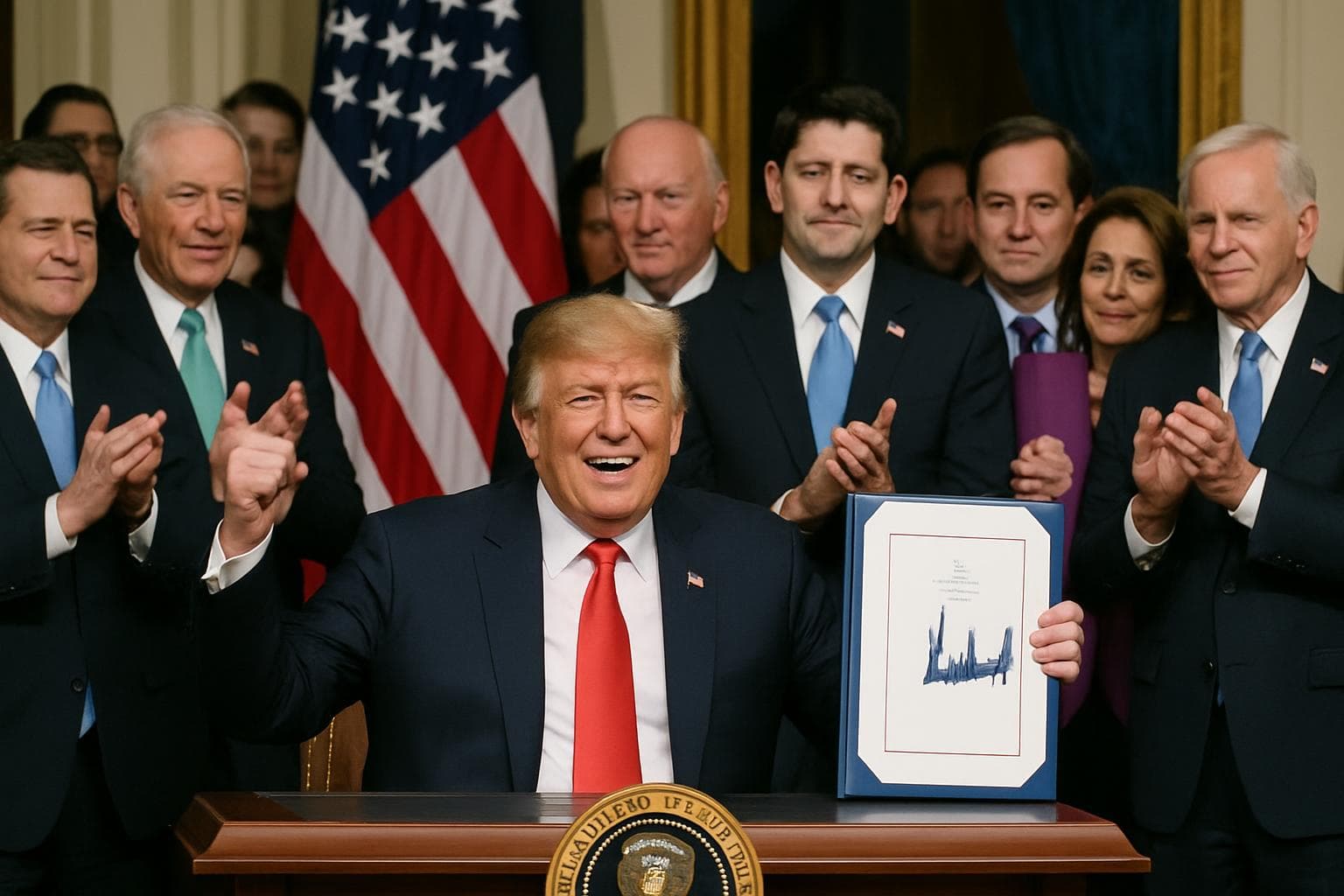
In a significant legislative win for the Trump administration, President Donald Trump signed a sweeping tax and spending bill into law during a celebratory event at the White House. The bill, which narrowly passed Congress, introduces substantial changes to the US fiscal landscape, including tax cuts, increased defense spending, and enhanced immigration enforcement funding.
Key Provisions and Impact
The 870-page legislation extends tax cuts from Trump's first term and introduces new deductions aimed at working-class voters. However, it also imposes cuts to Medicaid and the Supplemental Nutrition Assistance Program (SNAP), potentially leaving millions without healthcare and food assistance. Critics, including Democratic leaders, have condemned the bill as favoring the wealthy while punishing low-income Americans.
"This is highway robbery," remarked Democratic Senator Raphael Warnock, highlighting concerns that the bill's benefits are skewed towards the rich. Research from the Center on Budget and Policy Priorities supports this view, indicating that the wealthiest Americans stand to gain the most from the tax relief.
Political Reactions and Legislative Journey
The bill's passage was marked by intense negotiations and a narrow vote margin. In the Senate, Vice-President JD Vance cast a tiebreaking vote, while in the House, the bill passed by a slim margin of 218 to 214. Despite opposition from all Democrats and two Republicans, Trump hailed the legislation as a "big, beautiful bill" that would spur economic growth.
During a Fourth of July picnic at the White House, Trump celebrated the bill's signing, asserting, "After this kicks in, our country is going to be a rocket ship, economically." However, Democrats have vowed to use the bill's passage as a rallying point in upcoming elections, criticizing its impact on social safety nets.
Broader Implications
The bill also allocates significant funds for immigration enforcement, supporting the administration's push for mass deportations. This aspect has drawn criticism from immigrant rights organizations, with Nicole Melaku of the National Partnership for New Americans calling it a "disgraceful, anti-immigrant budget."
As the nation grapples with the bill's implications, experts warn of its potential ripple effects. Lelaine Bigelow from the Georgetown Center on Poverty and Inequality emphasized the widespread impact, stating, "This is going to have a massive effect on a lot of people around this country."
WHAT THIS MIGHT MEAN
The passage of this tax and spending bill sets the stage for significant political and social ramifications. As the 2024 elections approach, Democrats are likely to leverage the bill's controversial elements to galvanize voter support, particularly among those affected by cuts to Medicaid and SNAP benefits.
Economically, while proponents argue the bill will stimulate growth, the long-term effects on income inequality and public health remain uncertain. Should the anticipated economic benefits fail to materialize, the administration may face increased scrutiny and political backlash.
Additionally, the enhanced funding for immigration enforcement could lead to heightened tensions and legal challenges, particularly as the administration seeks to implement its aggressive deportation agenda. As these developments unfold, the bill's impact on American society will continue to be a focal point of national debate.
Related Articles
Congress Subpoenas Attorney General Bondi in Epstein Investigation

Senate Blocks Resolution to Limit Trump's Military Actions in Iran

James Talarico Secures Democratic Nomination in Texas Senate Race Amidst Republican Runoff

Tech Giants Pledge to Cover AI Data Center Energy Costs Amid Rising Electricity Concerns

Spain's Sánchez Stands Firm Against Trump's Trade Threat Over Iran Stance
Trump's New Tariff Strategy Sparks Global Trade Uncertainty
Trump Signs Landmark Tax and Spending Bill Amidst Controversy
In This Article
 Alex Carter| Published
 HIGHLIGHTS
- President Donald Trump signed a major tax and spending bill into law, marking a significant legislative victory for his administration.
- The bill includes tax cuts, increased defense spending, and aggressive immigration enforcement funding, while cutting Medicaid and SNAP benefits.
- Critics argue the bill disproportionately benefits the wealthy and harms low-income Americans, with millions potentially losing healthcare and food assistance.
- The legislation passed narrowly in Congress, with Vice-President JD Vance casting a tiebreaking vote in the Senate.
- Trump celebrated the bill as a catalyst for economic growth, despite opposition from Democrats and some Republicans concerned about rising US debt.
In a significant legislative win for the Trump administration, President Donald Trump signed a sweeping tax and spending bill into law during a celebratory event at the White House. The bill, which narrowly passed Congress, introduces substantial changes to the US fiscal landscape, including tax cuts, increased defense spending, and enhanced immigration enforcement funding.
Key Provisions and Impact
The 870-page legislation extends tax cuts from Trump's first term and introduces new deductions aimed at working-class voters. However, it also imposes cuts to Medicaid and the Supplemental Nutrition Assistance Program (SNAP), potentially leaving millions without healthcare and food assistance. Critics, including Democratic leaders, have condemned the bill as favoring the wealthy while punishing low-income Americans.
"This is highway robbery," remarked Democratic Senator Raphael Warnock, highlighting concerns that the bill's benefits are skewed towards the rich. Research from the Center on Budget and Policy Priorities supports this view, indicating that the wealthiest Americans stand to gain the most from the tax relief.
Political Reactions and Legislative Journey
The bill's passage was marked by intense negotiations and a narrow vote margin. In the Senate, Vice-President JD Vance cast a tiebreaking vote, while in the House, the bill passed by a slim margin of 218 to 214. Despite opposition from all Democrats and two Republicans, Trump hailed the legislation as a "big, beautiful bill" that would spur economic growth.
During a Fourth of July picnic at the White House, Trump celebrated the bill's signing, asserting, "After this kicks in, our country is going to be a rocket ship, economically." However, Democrats have vowed to use the bill's passage as a rallying point in upcoming elections, criticizing its impact on social safety nets.
Broader Implications
The bill also allocates significant funds for immigration enforcement, supporting the administration's push for mass deportations. This aspect has drawn criticism from immigrant rights organizations, with Nicole Melaku of the National Partnership for New Americans calling it a "disgraceful, anti-immigrant budget."
As the nation grapples with the bill's implications, experts warn of its potential ripple effects. Lelaine Bigelow from the Georgetown Center on Poverty and Inequality emphasized the widespread impact, stating, "This is going to have a massive effect on a lot of people around this country."
WHAT THIS MIGHT MEAN
The passage of this tax and spending bill sets the stage for significant political and social ramifications. As the 2024 elections approach, Democrats are likely to leverage the bill's controversial elements to galvanize voter support, particularly among those affected by cuts to Medicaid and SNAP benefits.
Economically, while proponents argue the bill will stimulate growth, the long-term effects on income inequality and public health remain uncertain. Should the anticipated economic benefits fail to materialize, the administration may face increased scrutiny and political backlash.
Additionally, the enhanced funding for immigration enforcement could lead to heightened tensions and legal challenges, particularly as the administration seeks to implement its aggressive deportation agenda. As these developments unfold, the bill's impact on American society will continue to be a focal point of national debate.
Related Articles
Congress Subpoenas Attorney General Bondi in Epstein Investigation
Senate Blocks Resolution to Limit Trump's Military Actions in Iran
James Talarico Secures Democratic Nomination in Texas Senate Race Amidst Republican Runoff
Tech Giants Pledge to Cover AI Data Center Energy Costs Amid Rising Electricity Concerns
Spain's Sánchez Stands Firm Against Trump's Trade Threat Over Iran Stance
Trump's New Tariff Strategy Sparks Global Trade Uncertainty