
Trump Unveils Ambitious Plans for 'Trump-Class' Naval Fleet
In This Article
HIGHLIGHTS
- President Trump announced the construction of a new "Trump-class" naval fleet, starting with two battleships, aiming for up to 25 vessels.
- The USS Defiant, part of this fleet, is designed to be the largest and most powerful warship, equipped with hypersonic weapons.
- The initiative is part of a broader effort to revitalize the US shipbuilding industry, which lags behind China in capacity.
- The new fleet will be built domestically, creating thousands of jobs, with the first ships expected to be operational in two-and-a-half years.
- Critics view the naming of the fleet after Trump as a continuation of his self-promotional tactics.
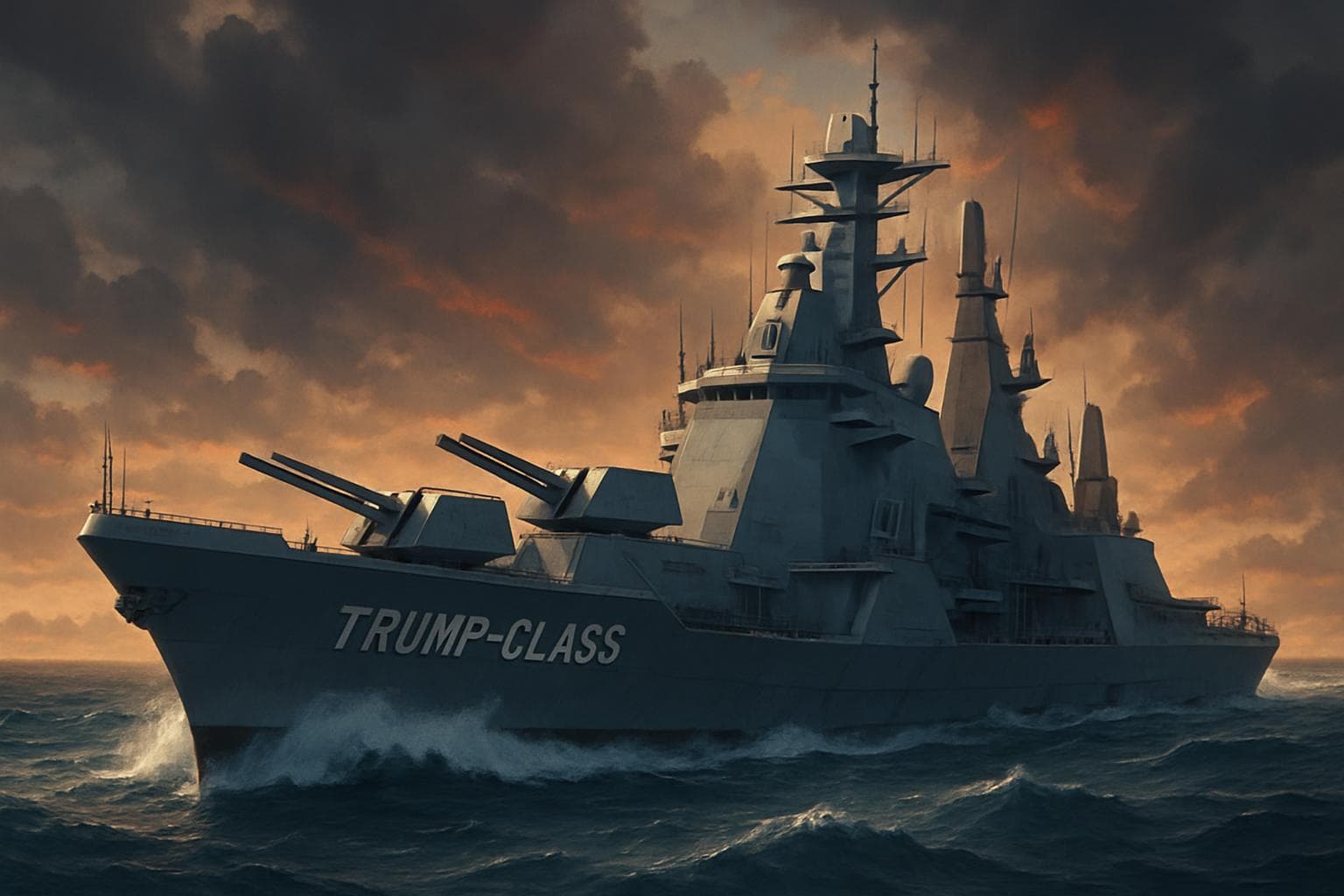
President Donald Trump has unveiled plans for a new generation of US Navy battleships, dubbed the "Trump-class," marking a significant expansion of the country's naval capabilities. Announced at his Mar-a-Lago residence in Florida, the initiative aims to construct up to 25 new vessels, beginning with two battleships, including the USS Defiant.
Revitalizing the US Navy
The Trump administration's announcement comes amid concerns over the US's declining shipbuilding capacity compared to China, which currently leads in global ship production. The new fleet is part of a broader strategy to bolster the US Navy with both manned and unmanned vessels, including larger missile-armed warships. "They'll be the fastest, the biggest, and by far, 100 times more powerful than any battleship ever built," Trump declared, emphasizing the fleet's advanced capabilities.
Domestic Construction and Job Creation
The construction of the Trump-class ships will take place domestically, promising to create thousands of jobs and stimulate the US shipbuilding industry. The first vessels are expected to be operational within two-and-a-half years. Navy Secretary John Phelan highlighted the strategic importance of the USS Defiant, stating, "Our adversaries will know, when the Trump-class USS Defiant appears on the horizon, American victory at sea is inevitable."
Historical Context and Criticism
Historically, US battleships have been named after states, but Trump's decision to name the fleet after himself has drawn criticism as a self-promotional move. This follows other recent renaming efforts, such as the US Institute of Peace and the Kennedy Center, which have been met with similar scrutiny. Despite the controversy, Trump remains committed to his vision of a revitalized naval force.
WHAT THIS MIGHT MEAN
The introduction of the Trump-class battleships could significantly alter the balance of naval power, particularly in the context of US-China relations. As the US seeks to close the gap in shipbuilding capacity, this initiative may prompt China to further accelerate its own naval expansion. Experts suggest that the success of this program will depend on overcoming past challenges, such as cost overruns and delays, which plagued previous naval projects. Additionally, the domestic economic impact could be substantial, with job creation and industrial growth potentially bolstering Trump's political standing. However, the naming controversy may continue to fuel debates over the intersection of politics and military tradition.
Related Articles

Armed Intruder Fatally Shot at Mar-a-Lago by Secret Service
Senate Blocks Resolution to Limit Trump's Military Actions in Iran

Spain's Sánchez Stands Firm Against Trump's Trade Threat Over Iran Stance

US Supreme Court Ruling Sparks Trade Uncertainty in Asia and Beyond

Trump's New Tariff Strategy Sparks Global Trade Uncertainty

US-Iran Tensions Escalate Amid Renewed Nuclear Talks and Protests
Trump Unveils Ambitious Plans for 'Trump-Class' Naval Fleet
In This Article
 Ethan Brooks| Published
 HIGHLIGHTS
- President Trump announced the construction of a new "Trump-class" naval fleet, starting with two battleships, aiming for up to 25 vessels.
- The USS Defiant, part of this fleet, is designed to be the largest and most powerful warship, equipped with hypersonic weapons.
- The initiative is part of a broader effort to revitalize the US shipbuilding industry, which lags behind China in capacity.
- The new fleet will be built domestically, creating thousands of jobs, with the first ships expected to be operational in two-and-a-half years.
- Critics view the naming of the fleet after Trump as a continuation of his self-promotional tactics.
President Donald Trump has unveiled plans for a new generation of US Navy battleships, dubbed the "Trump-class," marking a significant expansion of the country's naval capabilities. Announced at his Mar-a-Lago residence in Florida, the initiative aims to construct up to 25 new vessels, beginning with two battleships, including the USS Defiant.
Revitalizing the US Navy
The Trump administration's announcement comes amid concerns over the US's declining shipbuilding capacity compared to China, which currently leads in global ship production. The new fleet is part of a broader strategy to bolster the US Navy with both manned and unmanned vessels, including larger missile-armed warships. "They'll be the fastest, the biggest, and by far, 100 times more powerful than any battleship ever built," Trump declared, emphasizing the fleet's advanced capabilities.
Domestic Construction and Job Creation
The construction of the Trump-class ships will take place domestically, promising to create thousands of jobs and stimulate the US shipbuilding industry. The first vessels are expected to be operational within two-and-a-half years. Navy Secretary John Phelan highlighted the strategic importance of the USS Defiant, stating, "Our adversaries will know, when the Trump-class USS Defiant appears on the horizon, American victory at sea is inevitable."
Historical Context and Criticism
Historically, US battleships have been named after states, but Trump's decision to name the fleet after himself has drawn criticism as a self-promotional move. This follows other recent renaming efforts, such as the US Institute of Peace and the Kennedy Center, which have been met with similar scrutiny. Despite the controversy, Trump remains committed to his vision of a revitalized naval force.
WHAT THIS MIGHT MEAN
The introduction of the Trump-class battleships could significantly alter the balance of naval power, particularly in the context of US-China relations. As the US seeks to close the gap in shipbuilding capacity, this initiative may prompt China to further accelerate its own naval expansion. Experts suggest that the success of this program will depend on overcoming past challenges, such as cost overruns and delays, which plagued previous naval projects. Additionally, the domestic economic impact could be substantial, with job creation and industrial growth potentially bolstering Trump's political standing. However, the naming controversy may continue to fuel debates over the intersection of politics and military tradition.
Related Articles
Armed Intruder Fatally Shot at Mar-a-Lago by Secret Service
Senate Blocks Resolution to Limit Trump's Military Actions in Iran
Spain's Sánchez Stands Firm Against Trump's Trade Threat Over Iran Stance
US Supreme Court Ruling Sparks Trade Uncertainty in Asia and Beyond
Trump's New Tariff Strategy Sparks Global Trade Uncertainty
US-Iran Tensions Escalate Amid Renewed Nuclear Talks and Protests