
Trump's 30% Tariff Threat Sparks Global Trade Tensions
In This Article
HIGHLIGHTS
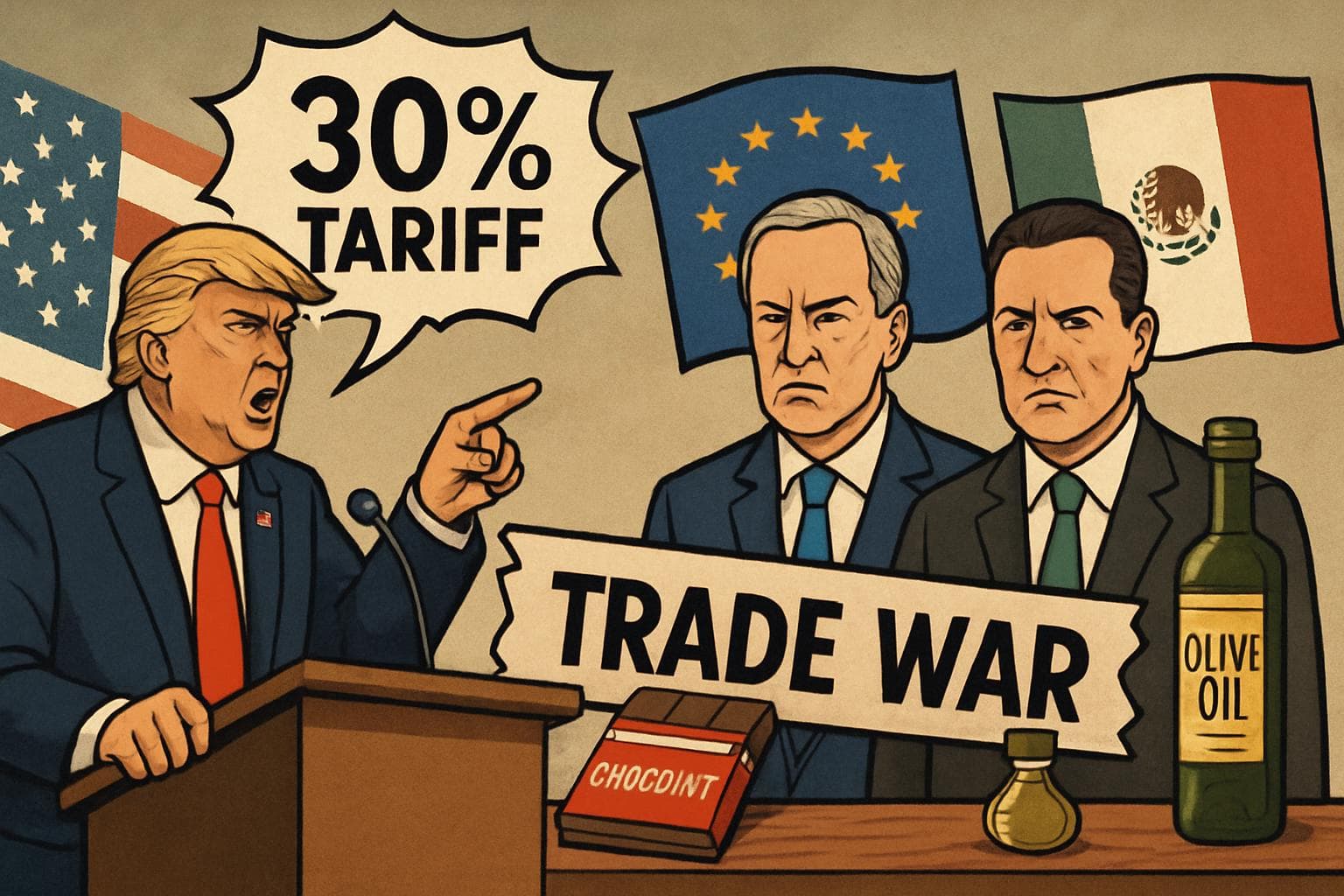
- President Donald Trump announced a 30% tariff on imports from the EU and Mexico starting 1 August, escalating trade tensions.
- The EU and Mexico criticized the tariffs, with EU President Ursula von der Leyen threatening proportional countermeasures.
- Trump warned that any retaliatory tariffs would result in further increases beyond the initial 30%.
- EU trade ministers are considering €21bn in retaliatory measures, with discussions set for an upcoming summit.
- The tariffs have sparked fears of a trade war, potentially impacting goods like Belgian chocolate and Italian olive oil.
President Donald Trump's announcement of a 30% tariff on imports from the European Union and Mexico, set to take effect on 1 August, has sent shockwaves through international trade circles. The move has been met with strong criticism from both the EU and Mexico, who have vowed to respond if necessary.
Escalating Trade Tensions
The tariffs, announced via Trump's social media platform, Truth Social, have been described as a significant blow to ongoing trade negotiations. The European Commission, led by Ursula von der Leyen, expressed disappointment, warning of "proportionate countermeasures" if the tariffs are implemented. Von der Leyen emphasized the EU's commitment to fair trading practices and its readiness to continue negotiations to avoid a trade war.
Mexico's Response
Mexico, facing similar tariff threats, has criticized the move as an "unfair deal." Mexican officials have underscored their commitment to sovereignty, with President Claudia Sheinbaum expressing confidence in reaching an agreement before the tariffs take effect. Trump's letter to Mexico highlighted concerns over drug trafficking, suggesting the country had not done enough to curb the issue.
Potential Economic Impact
The tariffs have raised concerns about a potential trade war, with EU trade ministers set to meet for a pre-arranged summit to discuss possible €21bn in retaliatory measures. Goods such as Belgian chocolate, Irish butter, and Italian olive oil could be affected, disrupting transatlantic supply chains and impacting businesses and consumers on both sides of the Atlantic.
International Reactions
French President Emmanuel Macron and other European leaders have expressed strong disapproval of the tariffs, urging a firm response to defend the bloc's interests. The EU's previous negotiations with the US aimed at reducing tariffs to 10% have now been overshadowed by Trump's unexpected escalation.
WHAT THIS MIGHT MEAN
The imposition of these tariffs could lead to a significant escalation in trade tensions, potentially sparking a full-blown trade war. If the EU and Mexico retaliate, it could result in further economic strain on global markets, affecting industries reliant on transatlantic trade. Experts suggest that continued negotiations are crucial to de-escalate the situation and prevent long-term damage to international trade relations. The upcoming EU summit will be pivotal in determining the bloc's response and the future of its trade relationship with the US.
Related Articles
Trump's New Tariff Strategy Sparks Global Trade Uncertainty

Tech Giants Pledge to Cover AI Data Center Energy Costs Amid Rising Electricity Concerns
Spain's Sánchez Stands Firm Against Trump's Trade Threat Over Iran Stance
Congress Subpoenas Attorney General Bondi in Epstein Investigation
Cuba Faces Widespread Blackout Amid Deepening Fuel Crisis
Russian LNG Tanker Sinks in Mediterranean Amid Accusations of Ukrainian Drone Attack
Trump's 30% Tariff Threat Sparks Global Trade Tensions
In This Article
 Daniel Rivera| Published
 HIGHLIGHTS
- President Donald Trump announced a 30% tariff on imports from the EU and Mexico starting 1 August, escalating trade tensions.
- The EU and Mexico criticized the tariffs, with EU President Ursula von der Leyen threatening proportional countermeasures.
- Trump warned that any retaliatory tariffs would result in further increases beyond the initial 30%.
- EU trade ministers are considering €21bn in retaliatory measures, with discussions set for an upcoming summit.
- The tariffs have sparked fears of a trade war, potentially impacting goods like Belgian chocolate and Italian olive oil.
President Donald Trump's announcement of a 30% tariff on imports from the European Union and Mexico, set to take effect on 1 August, has sent shockwaves through international trade circles. The move has been met with strong criticism from both the EU and Mexico, who have vowed to respond if necessary.
Escalating Trade Tensions
The tariffs, announced via Trump's social media platform, Truth Social, have been described as a significant blow to ongoing trade negotiations. The European Commission, led by Ursula von der Leyen, expressed disappointment, warning of "proportionate countermeasures" if the tariffs are implemented. Von der Leyen emphasized the EU's commitment to fair trading practices and its readiness to continue negotiations to avoid a trade war.
Mexico's Response
Mexico, facing similar tariff threats, has criticized the move as an "unfair deal." Mexican officials have underscored their commitment to sovereignty, with President Claudia Sheinbaum expressing confidence in reaching an agreement before the tariffs take effect. Trump's letter to Mexico highlighted concerns over drug trafficking, suggesting the country had not done enough to curb the issue.
Potential Economic Impact
The tariffs have raised concerns about a potential trade war, with EU trade ministers set to meet for a pre-arranged summit to discuss possible €21bn in retaliatory measures. Goods such as Belgian chocolate, Irish butter, and Italian olive oil could be affected, disrupting transatlantic supply chains and impacting businesses and consumers on both sides of the Atlantic.
International Reactions
French President Emmanuel Macron and other European leaders have expressed strong disapproval of the tariffs, urging a firm response to defend the bloc's interests. The EU's previous negotiations with the US aimed at reducing tariffs to 10% have now been overshadowed by Trump's unexpected escalation.
WHAT THIS MIGHT MEAN
The imposition of these tariffs could lead to a significant escalation in trade tensions, potentially sparking a full-blown trade war. If the EU and Mexico retaliate, it could result in further economic strain on global markets, affecting industries reliant on transatlantic trade. Experts suggest that continued negotiations are crucial to de-escalate the situation and prevent long-term damage to international trade relations. The upcoming EU summit will be pivotal in determining the bloc's response and the future of its trade relationship with the US.
Related Articles
Trump's New Tariff Strategy Sparks Global Trade Uncertainty
Tech Giants Pledge to Cover AI Data Center Energy Costs Amid Rising Electricity Concerns
Spain's Sánchez Stands Firm Against Trump's Trade Threat Over Iran Stance
Congress Subpoenas Attorney General Bondi in Epstein Investigation
Cuba Faces Widespread Blackout Amid Deepening Fuel Crisis
Russian LNG Tanker Sinks in Mediterranean Amid Accusations of Ukrainian Drone Attack