
Trump's Attempt to Remove Fed Governor Lisa Cook Sparks Legal and Political Controversy
In This Article
HIGHLIGHTS
- President Donald Trump has moved to remove Federal Reserve Governor Lisa Cook over mortgage fraud allegations, sparking a legal battle.
- Lisa Cook, appointed by President Joe Biden in 2022, is the first Black woman to serve on the Fed's board.
- Trump claims Cook falsified mortgage documents, but she has not been charged with any crime.
- Cook plans to sue, arguing Trump lacks legal authority to dismiss her without cause.
- The controversy raises concerns about the independence of the Federal Reserve and potential political interference.
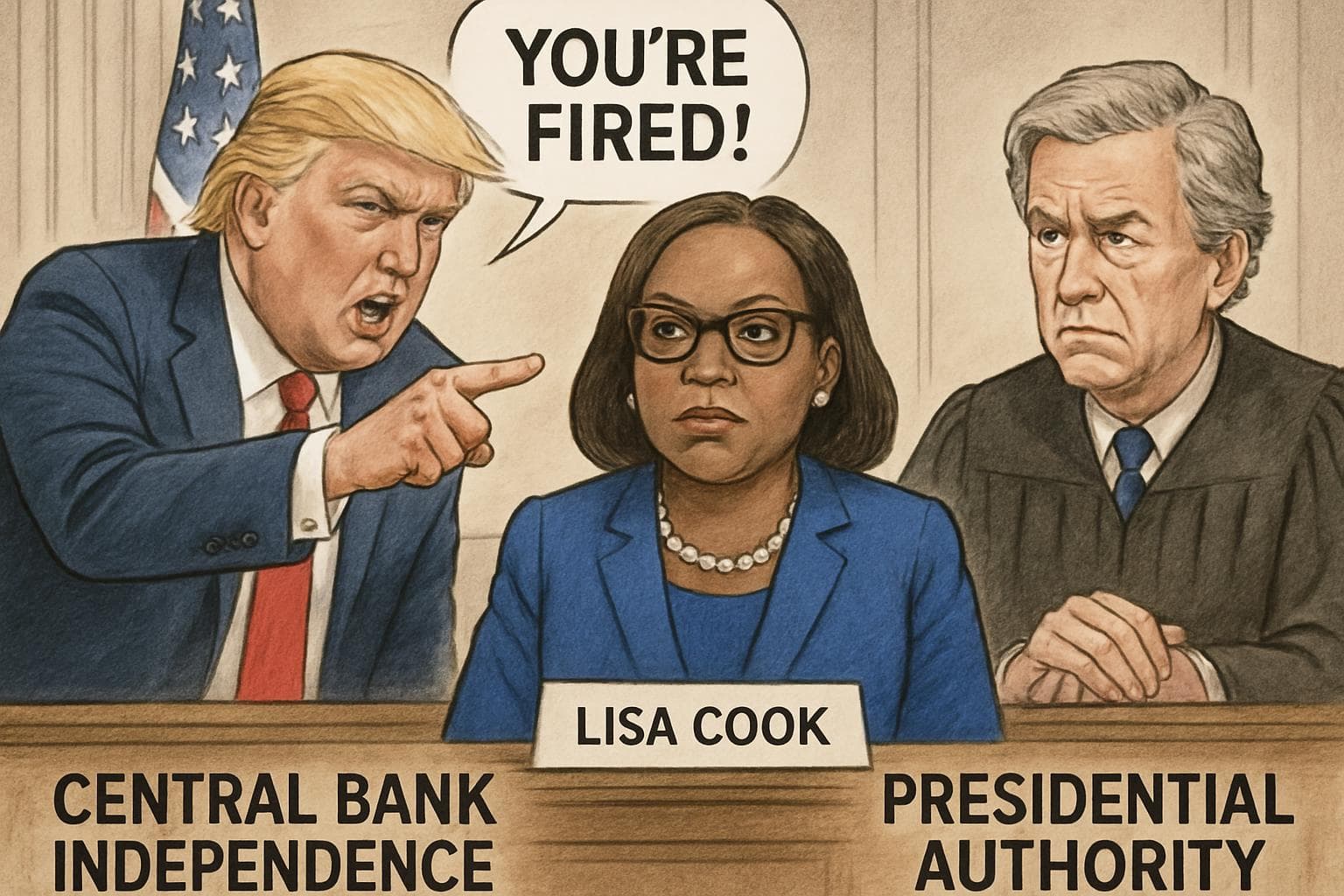
President Donald Trump's decision to remove Lisa Cook from her position as a governor on the Federal Reserve Board has ignited a heated debate over the independence of the central bank and the legal grounds for such a dismissal. The move, announced via Trump's Truth Social account, cites allegations of mortgage fraud against Cook, who was appointed by President Joe Biden in 2022 as the first Black woman to hold the position.
Allegations and Legal Context
Trump alleges that Cook falsified mortgage documents by claiming two primary residences, a charge she denies. Despite these claims, Cook has not been formally charged with any wrongdoing. In response, Cook has vowed to fight her dismissal, stating that Trump lacks the legal authority to remove her without cause, as outlined in the Federal Reserve Act. Her attorney, Abbe Lowell, has labeled the move "illegal" and plans to challenge it in court.
Background and Implications
Lisa Cook's appointment was a historic milestone, achieved after a contentious confirmation process that required Vice President Kamala Harris to break a Senate deadlock. Cook's career spans academia and government, with significant contributions to economic scholarship, particularly in areas intersecting with race and discrimination. Her removal could allow Trump to appoint a successor more aligned with his economic policies, potentially influencing the Fed's stance on interest rates.
Political Reactions and Future Prospects
The attempt to oust Cook has drawn sharp criticism from Democrats, who view it as an unprecedented encroachment on the Fed's independence. Trump's actions have raised concerns about political interference in monetary policy, a domain traditionally insulated from executive influence. As the legal battle unfolds, the outcome could set a significant precedent for the limits of presidential power over the Federal Reserve.
WHAT THIS MIGHT MEAN
The legal challenge mounted by Lisa Cook could lead to a landmark court decision clarifying the extent of presidential authority over Federal Reserve appointments. If Cook prevails, it may reinforce the Fed's independence, deterring future attempts at political interference. Conversely, if Trump succeeds, it could embolden future administrations to exert greater control over the central bank. Experts suggest that the case could also influence the broader discourse on the separation of powers and the role of independent agencies in the U.S. government.
Related Articles

Greenland Politely Declines Trump's Hospital Ship Offer Amid Healthcare Debate

Tech Giants Pledge to Cover AI Data Center Energy Costs Amid Rising Electricity Concerns
Congress Subpoenas Attorney General Bondi in Epstein Investigation

Cuba Faces Widespread Blackout Amid Deepening Fuel Crisis

UK Faces Dilemmas Amid Iran Conflict and China Spying Allegations
Senate Blocks Resolution to Limit Trump's Military Actions in Iran
Trump's Attempt to Remove Fed Governor Lisa Cook Sparks Legal and Political Controversy
In This Article
 Daniel Rivera| Published
 HIGHLIGHTS
- President Donald Trump has moved to remove Federal Reserve Governor Lisa Cook over mortgage fraud allegations, sparking a legal battle.
- Lisa Cook, appointed by President Joe Biden in 2022, is the first Black woman to serve on the Fed's board.
- Trump claims Cook falsified mortgage documents, but she has not been charged with any crime.
- Cook plans to sue, arguing Trump lacks legal authority to dismiss her without cause.
- The controversy raises concerns about the independence of the Federal Reserve and potential political interference.
President Donald Trump's decision to remove Lisa Cook from her position as a governor on the Federal Reserve Board has ignited a heated debate over the independence of the central bank and the legal grounds for such a dismissal. The move, announced via Trump's Truth Social account, cites allegations of mortgage fraud against Cook, who was appointed by President Joe Biden in 2022 as the first Black woman to hold the position.
Allegations and Legal Context
Trump alleges that Cook falsified mortgage documents by claiming two primary residences, a charge she denies. Despite these claims, Cook has not been formally charged with any wrongdoing. In response, Cook has vowed to fight her dismissal, stating that Trump lacks the legal authority to remove her without cause, as outlined in the Federal Reserve Act. Her attorney, Abbe Lowell, has labeled the move "illegal" and plans to challenge it in court.
Background and Implications
Lisa Cook's appointment was a historic milestone, achieved after a contentious confirmation process that required Vice President Kamala Harris to break a Senate deadlock. Cook's career spans academia and government, with significant contributions to economic scholarship, particularly in areas intersecting with race and discrimination. Her removal could allow Trump to appoint a successor more aligned with his economic policies, potentially influencing the Fed's stance on interest rates.
Political Reactions and Future Prospects
The attempt to oust Cook has drawn sharp criticism from Democrats, who view it as an unprecedented encroachment on the Fed's independence. Trump's actions have raised concerns about political interference in monetary policy, a domain traditionally insulated from executive influence. As the legal battle unfolds, the outcome could set a significant precedent for the limits of presidential power over the Federal Reserve.
WHAT THIS MIGHT MEAN
The legal challenge mounted by Lisa Cook could lead to a landmark court decision clarifying the extent of presidential authority over Federal Reserve appointments. If Cook prevails, it may reinforce the Fed's independence, deterring future attempts at political interference. Conversely, if Trump succeeds, it could embolden future administrations to exert greater control over the central bank. Experts suggest that the case could also influence the broader discourse on the separation of powers and the role of independent agencies in the U.S. government.
Related Articles
Greenland Politely Declines Trump's Hospital Ship Offer Amid Healthcare Debate
Tech Giants Pledge to Cover AI Data Center Energy Costs Amid Rising Electricity Concerns
Congress Subpoenas Attorney General Bondi in Epstein Investigation
Cuba Faces Widespread Blackout Amid Deepening Fuel Crisis
UK Faces Dilemmas Amid Iran Conflict and China Spying Allegations
Senate Blocks Resolution to Limit Trump's Military Actions in Iran