
Israel and Global Leaders React to Trump's Controversial Gaza 'Board of Peace' Initiative
In This Article
HIGHLIGHTS
- Israel's Prime Minister Netanyahu expressed concerns over the US-led "Gaza Board of Peace," citing lack of coordination with Israel.
- The board, part of Trump's 20-point plan, aims to oversee Gaza's reconstruction and includes figures like Tony Blair and Jared Kushner.
- Far-right Israeli ministers criticized the plan, advocating for Israeli control over Gaza instead.
- Trump's initiative has drawn mixed reactions globally, with countries like Australia considering participation amid concerns about undermining the UN.
- The board's structure remains unclear, with financial contributions from countries being a point of contention.
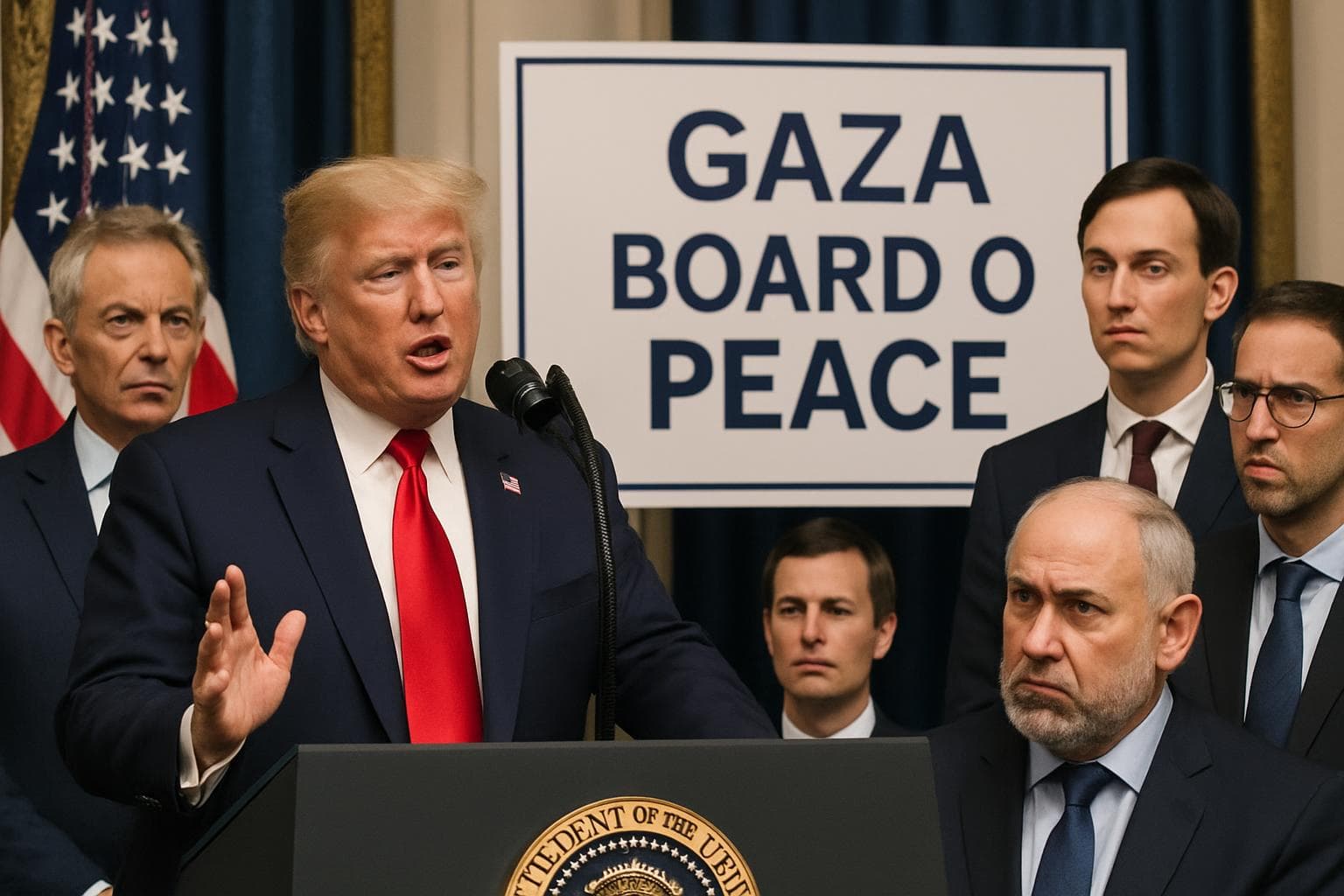
In a move that has sparked international debate, US President Donald Trump has announced the formation of a "Gaza Board of Peace" as part of his ambitious 20-point plan to end the ongoing Israel-Hamas conflict. The board, which aims to oversee the reconstruction and governance of Gaza, has been met with skepticism and outright rejection from various quarters, including Israeli Prime Minister Benjamin Netanyahu.
Israel's Concerns and Internal Dissent
Prime Minister Netanyahu convened a meeting with top advisers following the announcement, expressing that the board's formation was not coordinated with Israel and contradicted its policies. The board includes high-profile figures such as former UK Prime Minister Tony Blair and Trump's son-in-law, Jared Kushner, but notably lacks significant Israeli and Palestinian representation. Far-right Israeli ministers, including Finance Minister Bezalel Smotrich, have criticized the plan, arguing for Israeli annexation and settlement in Gaza instead. Smotrich stated, "The countries that inspired Hamas cannot be the ones that replace it."
International Reactions and Diplomatic Implications
The board's creation has elicited mixed reactions globally. While Hungarian Prime Minister Viktor Orban has accepted an invitation to join, other nations, including Australia, are weighing their options. Australian Prime Minister Anthony Albanese confirmed receipt of an invitation but expressed concerns about the board potentially undermining existing organizations like the UN. The White House has reportedly asked countries to contribute $1 billion for permanent membership, though a three-year term without payment is also an option.
Uncertain Structure and Financial Considerations
The exact structure of the "Gaza Board of Peace" remains unclear, with the board expected to operate under a broader framework chaired by Trump. The initiative includes a "Gaza Executive Board" and a "founding Executive Board," focusing on investment and diplomacy. Countries are still being invited, and financial contributions are a significant aspect of the membership discussions. Canada's Mark Carney has voiced support for the plan in principle but highlighted unresolved financial details.
WHAT THIS MIGHT MEAN
The formation of the "Gaza Board of Peace" could significantly impact the geopolitical landscape in the Middle East. If successful, it may pave the way for new diplomatic relations and economic opportunities in Gaza. However, the exclusion of key regional stakeholders like Israel and Palestine could hinder its effectiveness and legitimacy. Additionally, the board's potential to undermine the UN's role in international peacekeeping raises questions about the future of multilateral diplomacy. As countries deliberate their involvement, the board's success will largely depend on its ability to foster genuine collaboration and address the complex realities of the Israel-Hamas conflict.
Related Articles
Canada Calls for De-escalation Amid US-Israel Strikes on Iran
Canada and Australia Forge Strategic Partnership Amid Global Uncertainty
Senate Blocks Resolution to Limit Trump's Military Actions in Iran

US and Israel Intensify Military Campaign as Iran's Capabilities Dwindle
Intensified US-Israel Strikes on Iran Spark Global Outcry
Spain's Sánchez Stands Firm Against Trump's Trade Threat Over Iran Stance
Israel and Global Leaders React to Trump's Controversial Gaza 'Board of Peace' Initiative
In This Article
 Ethan Brooks| Published
 HIGHLIGHTS
- Israel's Prime Minister Netanyahu expressed concerns over the US-led "Gaza Board of Peace," citing lack of coordination with Israel.
- The board, part of Trump's 20-point plan, aims to oversee Gaza's reconstruction and includes figures like Tony Blair and Jared Kushner.
- Far-right Israeli ministers criticized the plan, advocating for Israeli control over Gaza instead.
- Trump's initiative has drawn mixed reactions globally, with countries like Australia considering participation amid concerns about undermining the UN.
- The board's structure remains unclear, with financial contributions from countries being a point of contention.
In a move that has sparked international debate, US President Donald Trump has announced the formation of a "Gaza Board of Peace" as part of his ambitious 20-point plan to end the ongoing Israel-Hamas conflict. The board, which aims to oversee the reconstruction and governance of Gaza, has been met with skepticism and outright rejection from various quarters, including Israeli Prime Minister Benjamin Netanyahu.
Israel's Concerns and Internal Dissent
Prime Minister Netanyahu convened a meeting with top advisers following the announcement, expressing that the board's formation was not coordinated with Israel and contradicted its policies. The board includes high-profile figures such as former UK Prime Minister Tony Blair and Trump's son-in-law, Jared Kushner, but notably lacks significant Israeli and Palestinian representation. Far-right Israeli ministers, including Finance Minister Bezalel Smotrich, have criticized the plan, arguing for Israeli annexation and settlement in Gaza instead. Smotrich stated, "The countries that inspired Hamas cannot be the ones that replace it."
International Reactions and Diplomatic Implications
The board's creation has elicited mixed reactions globally. While Hungarian Prime Minister Viktor Orban has accepted an invitation to join, other nations, including Australia, are weighing their options. Australian Prime Minister Anthony Albanese confirmed receipt of an invitation but expressed concerns about the board potentially undermining existing organizations like the UN. The White House has reportedly asked countries to contribute $1 billion for permanent membership, though a three-year term without payment is also an option.
Uncertain Structure and Financial Considerations
The exact structure of the "Gaza Board of Peace" remains unclear, with the board expected to operate under a broader framework chaired by Trump. The initiative includes a "Gaza Executive Board" and a "founding Executive Board," focusing on investment and diplomacy. Countries are still being invited, and financial contributions are a significant aspect of the membership discussions. Canada's Mark Carney has voiced support for the plan in principle but highlighted unresolved financial details.
WHAT THIS MIGHT MEAN
The formation of the "Gaza Board of Peace" could significantly impact the geopolitical landscape in the Middle East. If successful, it may pave the way for new diplomatic relations and economic opportunities in Gaza. However, the exclusion of key regional stakeholders like Israel and Palestine could hinder its effectiveness and legitimacy. Additionally, the board's potential to undermine the UN's role in international peacekeeping raises questions about the future of multilateral diplomacy. As countries deliberate their involvement, the board's success will largely depend on its ability to foster genuine collaboration and address the complex realities of the Israel-Hamas conflict.
Related Articles
Canada Calls for De-escalation Amid US-Israel Strikes on Iran
Canada and Australia Forge Strategic Partnership Amid Global Uncertainty
Senate Blocks Resolution to Limit Trump's Military Actions in Iran
US and Israel Intensify Military Campaign as Iran's Capabilities Dwindle
Intensified US-Israel Strikes on Iran Spark Global Outcry
Spain's Sánchez Stands Firm Against Trump's Trade Threat Over Iran Stance