
Trump's Immigration Pause Sparks Debate Amid National Security Concerns
In This Article
HIGHLIGHTS
- Donald Trump announced plans to "permanently pause migration" from "third world countries" following a National Guard shooting incident.
- The suspect, Rahmanullah Lakanwal, an Afghan national, entered the US under a special immigration program after the US withdrawal from Afghanistan.
- Trump's administration plans to end federal benefits for noncitizens and re-examine green cards issued to immigrants from 19 countries.
- The US Citizenship and Immigration Services suspended processing Afghan immigration requests pending a review of security protocols.
- The announcements have sparked concerns over the potential legal challenges and implications for US immigration policy.
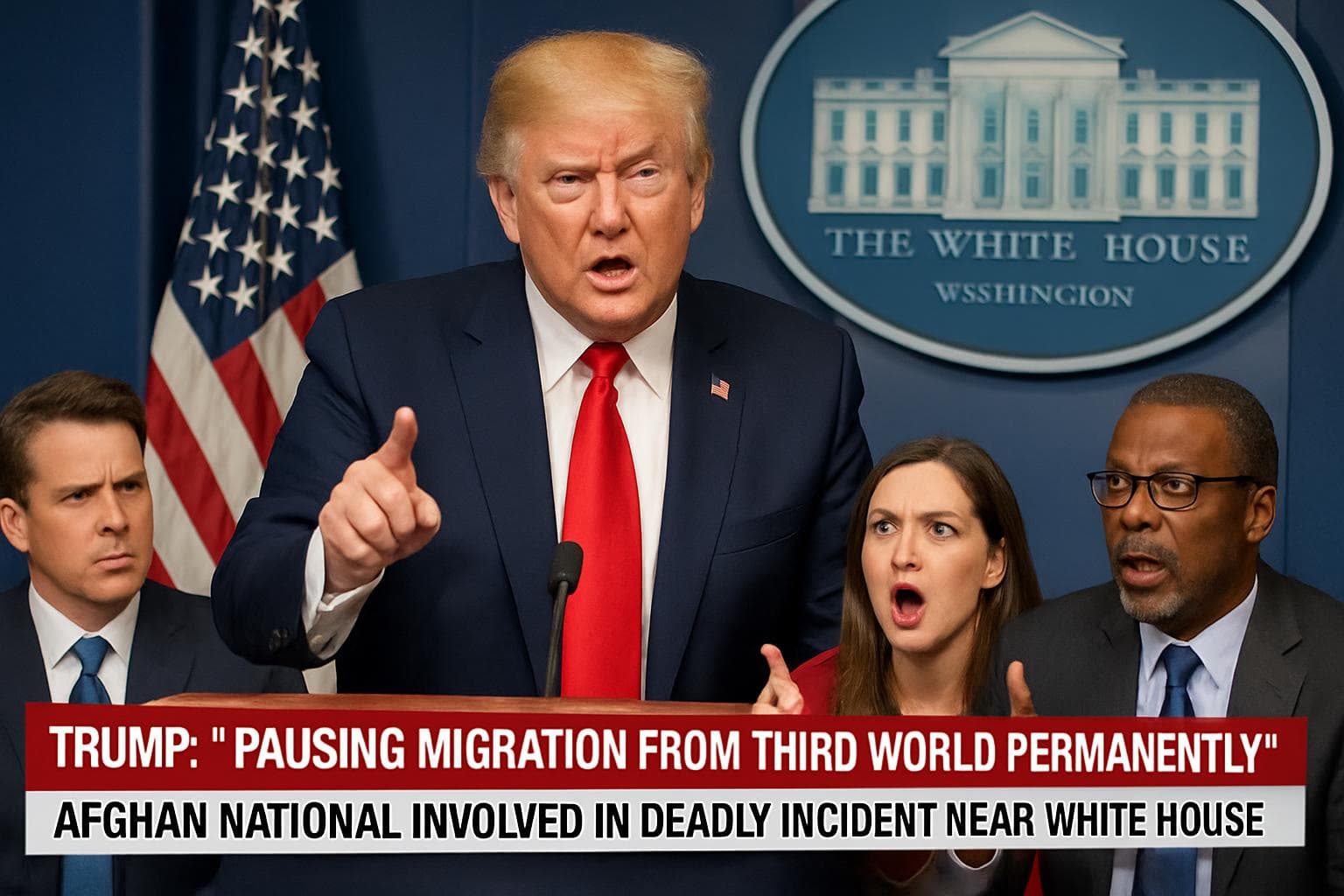
In a move that has reignited the immigration debate, former President Donald Trump announced plans to "permanently pause migration" from what he termed "third world countries." This declaration follows a tragic incident in Washington DC, where two National Guard members were shot, one fatally, by an Afghan national. The suspect, Rahmanullah Lakanwal, entered the United States in 2021 under a program designed to protect Afghans who assisted US forces during the chaotic withdrawal from Afghanistan.
National Security and Immigration Policy
Trump's announcement, made via a late-night post on Truth Social, emphasized the need to "end all federal benefits and subsidies to noncitizens" and to remove individuals who are not considered "net assets" to the United States. The former president's rhetoric has drawn criticism for its lack of specificity and potential legal hurdles, as previous immigration bans have faced significant challenges in both Congress and the courts.
The US Citizenship and Immigration Services (USCIS) has responded by suspending the processing of immigration requests from Afghan nationals, citing a need to review security and vetting protocols. Additionally, the agency plans to re-examine green cards issued to immigrants from 19 countries, including Afghanistan, Cuba, Haiti, Iran, Somalia, and Venezuela, though details of this process remain unclear.
The Impact of the National Guard Shooting
The shooting incident, which occurred near the White House, has become a political flashpoint. Lakanwal, who was injured and is currently in custody, was granted asylum earlier this year. His case has intensified scrutiny on immigration policies, with Trump asserting that the incident underscores the need for stringent control over who enters and remains in the country.
The administration's swift response includes a broader review of asylum cases approved under the Biden administration, raising questions about the future of US immigration policy and the potential impact on communities across the nation.
WHAT THIS MIGHT MEAN
The proposed immigration pause and policy changes could face significant legal challenges, as similar measures have been contested in the past. Experts suggest that the administration will need to navigate complex legal and political landscapes to implement these changes effectively. The situation also highlights the ongoing tension between national security concerns and humanitarian obligations, particularly in the context of Afghan refugees who supported US efforts abroad. As the debate continues, the implications for US immigration policy and international relations remain uncertain, with potential ripple effects on global migration patterns and domestic social dynamics.
Related Articles
Spain's Sánchez Stands Firm Against Trump's Trade Threat Over Iran Stance
Senate Blocks Resolution to Limit Trump's Military Actions in Iran
Cuba Faces Widespread Blackout Amid Deepening Fuel Crisis

US and Israel Intensify Military Campaign as Iran's Capabilities Dwindle
Intensified US-Israel Strikes on Iran Spark Global Outcry
UK-Iran Tensions: Starmer Defends Cautious Approach Amid Trump Criticism
Trump's Immigration Pause Sparks Debate Amid National Security Concerns
In This Article
 Ethan Brooks| Published
 HIGHLIGHTS
- Donald Trump announced plans to "permanently pause migration" from "third world countries" following a National Guard shooting incident.
- The suspect, Rahmanullah Lakanwal, an Afghan national, entered the US under a special immigration program after the US withdrawal from Afghanistan.
- Trump's administration plans to end federal benefits for noncitizens and re-examine green cards issued to immigrants from 19 countries.
- The US Citizenship and Immigration Services suspended processing Afghan immigration requests pending a review of security protocols.
- The announcements have sparked concerns over the potential legal challenges and implications for US immigration policy.
In a move that has reignited the immigration debate, former President Donald Trump announced plans to "permanently pause migration" from what he termed "third world countries." This declaration follows a tragic incident in Washington DC, where two National Guard members were shot, one fatally, by an Afghan national. The suspect, Rahmanullah Lakanwal, entered the United States in 2021 under a program designed to protect Afghans who assisted US forces during the chaotic withdrawal from Afghanistan.
National Security and Immigration Policy
Trump's announcement, made via a late-night post on Truth Social, emphasized the need to "end all federal benefits and subsidies to noncitizens" and to remove individuals who are not considered "net assets" to the United States. The former president's rhetoric has drawn criticism for its lack of specificity and potential legal hurdles, as previous immigration bans have faced significant challenges in both Congress and the courts.
The US Citizenship and Immigration Services (USCIS) has responded by suspending the processing of immigration requests from Afghan nationals, citing a need to review security and vetting protocols. Additionally, the agency plans to re-examine green cards issued to immigrants from 19 countries, including Afghanistan, Cuba, Haiti, Iran, Somalia, and Venezuela, though details of this process remain unclear.
The Impact of the National Guard Shooting
The shooting incident, which occurred near the White House, has become a political flashpoint. Lakanwal, who was injured and is currently in custody, was granted asylum earlier this year. His case has intensified scrutiny on immigration policies, with Trump asserting that the incident underscores the need for stringent control over who enters and remains in the country.
The administration's swift response includes a broader review of asylum cases approved under the Biden administration, raising questions about the future of US immigration policy and the potential impact on communities across the nation.
WHAT THIS MIGHT MEAN
The proposed immigration pause and policy changes could face significant legal challenges, as similar measures have been contested in the past. Experts suggest that the administration will need to navigate complex legal and political landscapes to implement these changes effectively. The situation also highlights the ongoing tension between national security concerns and humanitarian obligations, particularly in the context of Afghan refugees who supported US efforts abroad. As the debate continues, the implications for US immigration policy and international relations remain uncertain, with potential ripple effects on global migration patterns and domestic social dynamics.
Related Articles
Spain's Sánchez Stands Firm Against Trump's Trade Threat Over Iran Stance
Senate Blocks Resolution to Limit Trump's Military Actions in Iran
Cuba Faces Widespread Blackout Amid Deepening Fuel Crisis
US and Israel Intensify Military Campaign as Iran's Capabilities Dwindle
Intensified US-Israel Strikes on Iran Spark Global Outcry
UK-Iran Tensions: Starmer Defends Cautious Approach Amid Trump Criticism