
UK Foreign Aid Cuts Threaten Education and Health in Africa
In This Article
HIGHLIGHTS
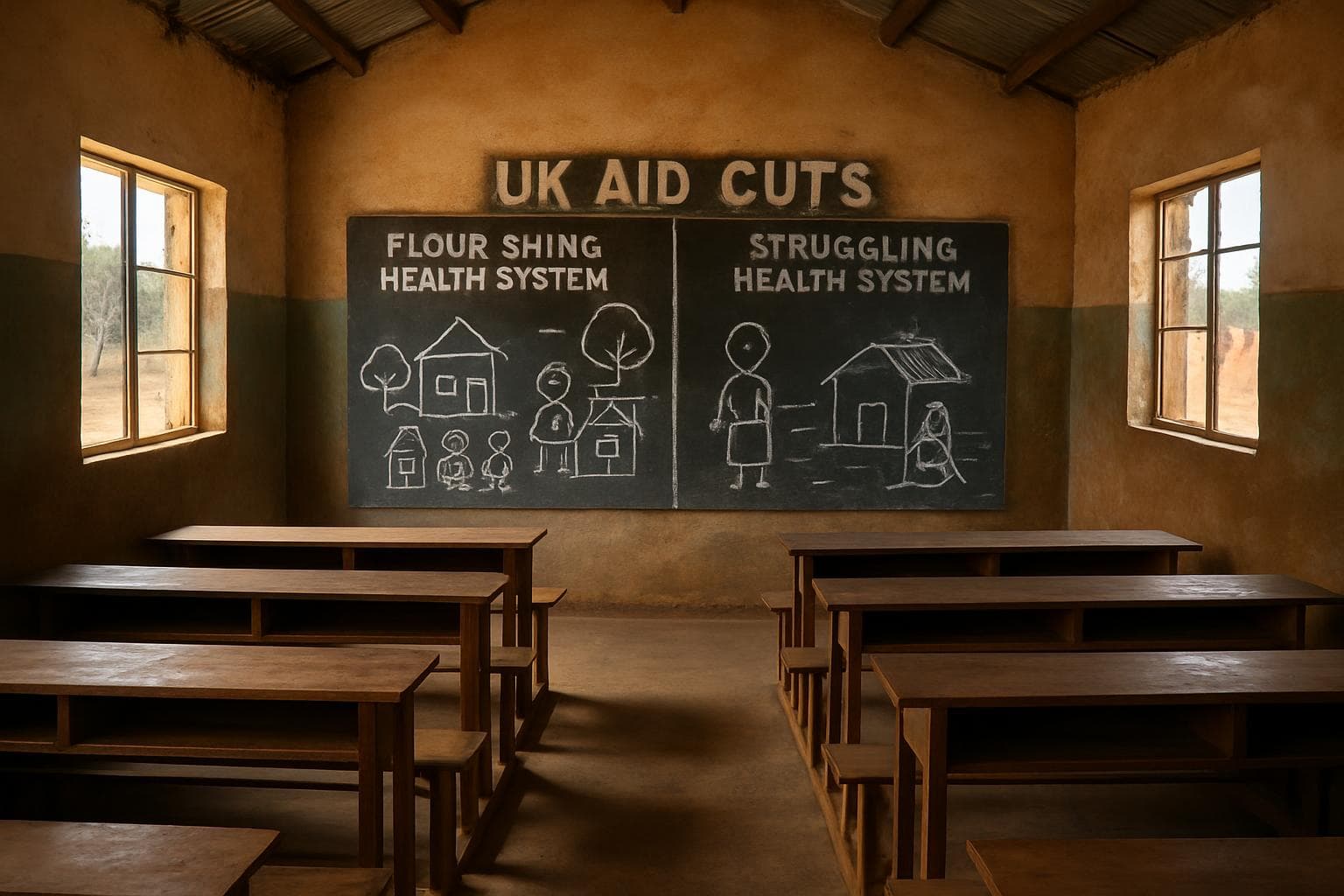
- The UK government plans to cut foreign aid from 0.5% to 0.3% of gross national income, impacting Africa's children's education and women's health.
- Aid reductions are part of a strategy to increase defense spending to 2.5%, following pressure from the US.
- Multilateral aid organizations like the World Bank and Gavi will continue to receive funding, while bilateral aid to specific countries will decrease.
- Critics argue the cuts will disproportionately affect vulnerable populations, especially in conflict zones and among women and children.
- The Foreign Office's impact assessment highlights potential increases in disease and death due to reduced health spending.
The UK government's decision to reduce its foreign aid budget has sparked widespread concern over the potential impact on vulnerable populations, particularly in Africa. The cuts, which will see aid spending drop from 0.5% to 0.3% of gross national income, are intended to redirect funds towards increasing defense expenditure to 2.5%, a move influenced by US pressure.
Impact on Africa's Health and Education
According to a Foreign Office report, the most significant reductions will affect children's education and women's health in Africa. The report warns that decreased funding for health systems and emergency responses could lead to higher disease rates and mortality, particularly in countries like the Democratic Republic of Congo, Mozambique, and Zimbabwe. Additionally, education programs in Ethiopia, Sierra Leone, Nigeria, and Zimbabwe face budget cuts, with a girls' education initiative in the DRC set to close early, affecting 170,000 children.
Continued Support for Multilateral Organizations
Despite these reductions, the UK government has pledged to maintain funding for multilateral aid bodies, including the World Bank and the Gavi vaccine alliance. This decision aims to mitigate some negative impacts by ensuring continued support for global vaccine initiatives and humanitarian efforts in regions like Gaza, Ukraine, and Sudan.
Criticism and Concerns
The aid cuts have drawn criticism from various quarters, including aid charities and political figures. Sarah Champion, chair of the International Development Committee, expressed concern that the cuts would harm the world's most vulnerable people. Monica Harding, Liberal Democrat international development spokesperson, warned of even deeper cuts in the future. Bond, a network of international development organizations, criticized the government's deprioritization of funding for education, gender, and crisis-affected countries.
Government's Justification
Baroness Chapman, minister for development, defended the cuts, stating that every pound must be used efficiently to benefit both UK taxpayers and global aid recipients. The government claims that the reductions follow a strategic review aimed at prioritizing essential humanitarian support while responsibly exiting certain programs.
WHAT THIS MIGHT MEAN
The reduction in UK foreign aid could have far-reaching consequences, particularly in Africa, where many communities rely heavily on international support for health and education. Experts warn that the cuts may exacerbate existing challenges, such as disease outbreaks and educational disparities, potentially leading to long-term socio-economic repercussions.
Politically, the decision may strain the UK's relationships with aid-dependent countries and international development organizations. As the government navigates these changes, it faces the challenge of balancing domestic fiscal priorities with its global humanitarian responsibilities.
Looking ahead, the UK may need to reassess its aid strategy to address criticism and ensure that its contributions continue to make a meaningful impact on the world's most vulnerable populations.
Related Articles

Middle East Conflict Drives UK Energy Prices to New Highs
Canada and Australia Forge Strategic Partnership Amid Global Uncertainty

Tech Giants Pledge to Cover AI Data Center Energy Costs Amid Rising Electricity Concerns
Russian LNG Tanker Sinks in Mediterranean Amid Accusations of Ukrainian Drone Attack

US and Israel Intensify Military Campaign as Iran's Capabilities Dwindle
Intensified US-Israel Strikes on Iran Spark Global Outcry
UK Foreign Aid Cuts Threaten Education and Health in Africa
In This Article
 James Okoro| Published
 HIGHLIGHTS
- The UK government plans to cut foreign aid from 0.5% to 0.3% of gross national income, impacting Africa's children's education and women's health.
- Aid reductions are part of a strategy to increase defense spending to 2.5%, following pressure from the US.
- Multilateral aid organizations like the World Bank and Gavi will continue to receive funding, while bilateral aid to specific countries will decrease.
- Critics argue the cuts will disproportionately affect vulnerable populations, especially in conflict zones and among women and children.
- The Foreign Office's impact assessment highlights potential increases in disease and death due to reduced health spending.
The UK government's decision to reduce its foreign aid budget has sparked widespread concern over the potential impact on vulnerable populations, particularly in Africa. The cuts, which will see aid spending drop from 0.5% to 0.3% of gross national income, are intended to redirect funds towards increasing defense expenditure to 2.5%, a move influenced by US pressure.
Impact on Africa's Health and Education
According to a Foreign Office report, the most significant reductions will affect children's education and women's health in Africa. The report warns that decreased funding for health systems and emergency responses could lead to higher disease rates and mortality, particularly in countries like the Democratic Republic of Congo, Mozambique, and Zimbabwe. Additionally, education programs in Ethiopia, Sierra Leone, Nigeria, and Zimbabwe face budget cuts, with a girls' education initiative in the DRC set to close early, affecting 170,000 children.
Continued Support for Multilateral Organizations
Despite these reductions, the UK government has pledged to maintain funding for multilateral aid bodies, including the World Bank and the Gavi vaccine alliance. This decision aims to mitigate some negative impacts by ensuring continued support for global vaccine initiatives and humanitarian efforts in regions like Gaza, Ukraine, and Sudan.
Criticism and Concerns
The aid cuts have drawn criticism from various quarters, including aid charities and political figures. Sarah Champion, chair of the International Development Committee, expressed concern that the cuts would harm the world's most vulnerable people. Monica Harding, Liberal Democrat international development spokesperson, warned of even deeper cuts in the future. Bond, a network of international development organizations, criticized the government's deprioritization of funding for education, gender, and crisis-affected countries.
Government's Justification
Baroness Chapman, minister for development, defended the cuts, stating that every pound must be used efficiently to benefit both UK taxpayers and global aid recipients. The government claims that the reductions follow a strategic review aimed at prioritizing essential humanitarian support while responsibly exiting certain programs.
WHAT THIS MIGHT MEAN
The reduction in UK foreign aid could have far-reaching consequences, particularly in Africa, where many communities rely heavily on international support for health and education. Experts warn that the cuts may exacerbate existing challenges, such as disease outbreaks and educational disparities, potentially leading to long-term socio-economic repercussions.
Politically, the decision may strain the UK's relationships with aid-dependent countries and international development organizations. As the government navigates these changes, it faces the challenge of balancing domestic fiscal priorities with its global humanitarian responsibilities.
Looking ahead, the UK may need to reassess its aid strategy to address criticism and ensure that its contributions continue to make a meaningful impact on the world's most vulnerable populations.
Related Articles
Middle East Conflict Drives UK Energy Prices to New Highs
Canada and Australia Forge Strategic Partnership Amid Global Uncertainty
Tech Giants Pledge to Cover AI Data Center Energy Costs Amid Rising Electricity Concerns
Russian LNG Tanker Sinks in Mediterranean Amid Accusations of Ukrainian Drone Attack
US and Israel Intensify Military Campaign as Iran's Capabilities Dwindle
Intensified US-Israel Strikes on Iran Spark Global Outcry