
UK Government Alters Unfair Dismissal Policy Amid Business Concerns
In This Article
HIGHLIGHTS
- The UK government has reversed its decision to offer unfair dismissal protection from day one, opting for a six-month threshold instead.
- The change follows concerns from business groups that immediate protection could deter hiring, leading to a compromise with trade unions.
- The Trades Union Congress (TUC) has accepted the compromise, prioritizing the enactment of other day-one rights like sick pay by April 2026.
- The House of Lords had previously delayed the legislation, voting in favor of a six-month period for unfair dismissal protection.
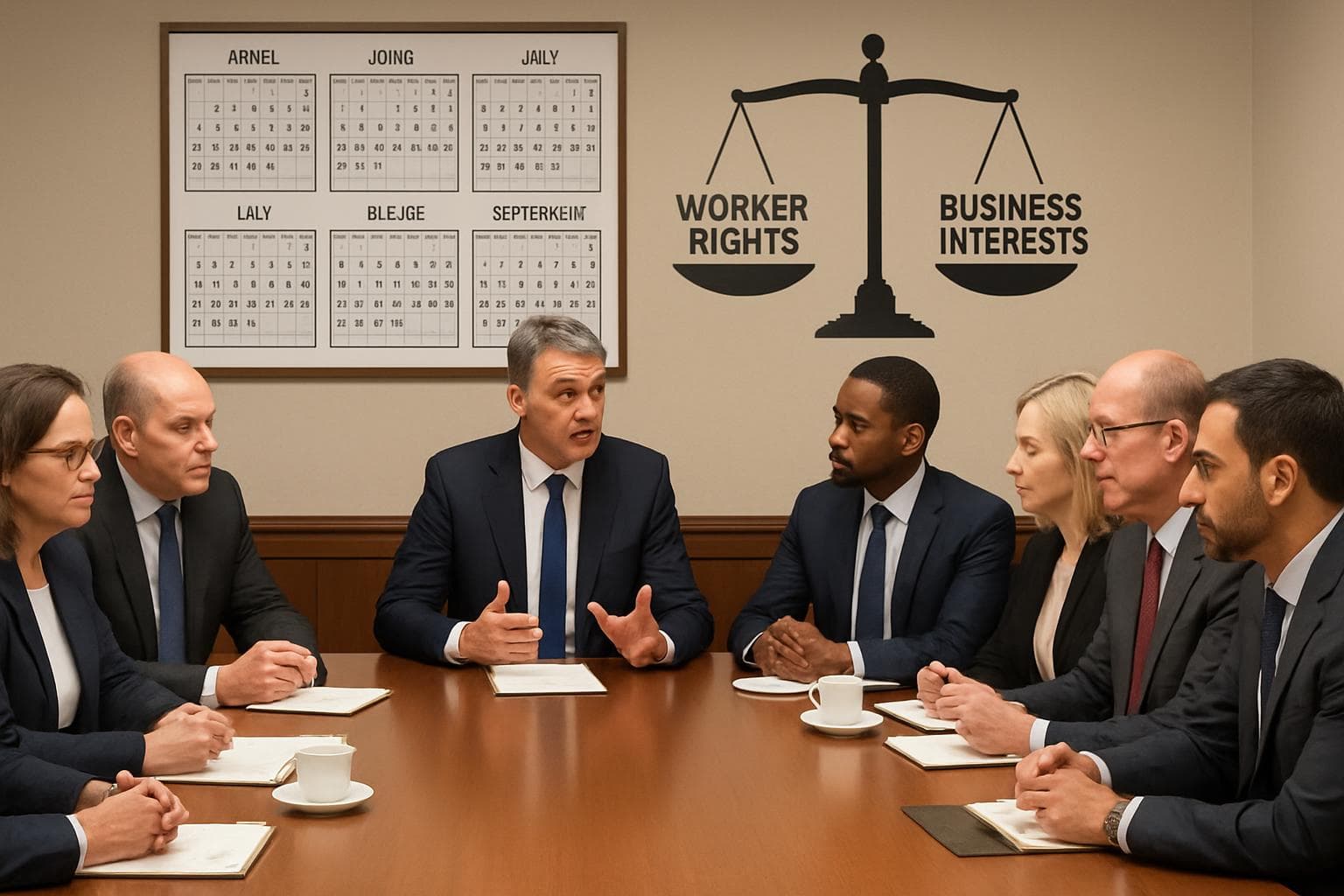
- Business Secretary Peter Kyle emphasized the need for a balanced approach that does not pit businesses against workers.
In a significant policy shift, the UK government has decided to implement unfair dismissal protection for workers after six months of employment, rather than from day one as initially promised. This decision marks a departure from Labour's manifesto commitment and comes after extensive discussions with business groups and trade unions.
Business Concerns and Legislative Delays
The original proposal, part of a broader Employment Rights Bill, faced opposition from business groups who argued that immediate protection could hinder hiring practices. The government, aiming to prevent further delays in the House of Lords, where the legislation had already encountered obstacles, opted for a compromise. Business Secretary Peter Kyle, addressing the Confederation of British Industry (CBI), assured that the changes would not disadvantage businesses, emphasizing a balanced approach.
Trade Union Reactions and Compromise
Despite the reversal, the Trades Union Congress (TUC) has accepted the six-month threshold, focusing on securing other day-one rights such as sick pay and paternity leave by April 2026. TUC General Secretary Paul Nowak highlighted the importance of enacting these rights promptly, stating, "The absolute priority now is to get these rights on the statute book."
Political Implications and Future Prospects
The decision has sparked debate within Labour ranks, with some MPs expressing concern over the breach of the party's manifesto. Former Deputy Prime Minister Angela Rayner, a staunch defender of day-one protections, is expected to respond after consulting with colleagues. Meanwhile, the government plans to establish the Fair Work Agency in 2026 to oversee the new employment rights framework.
WHAT THIS MIGHT MEAN
The government's decision to delay day-one unfair dismissal protection could have several implications. Politically, it may lead to further scrutiny of Labour's ability to fulfill its manifesto promises, potentially affecting voter confidence. Legally, the compromise could streamline the legislative process, allowing other employment rights to be implemented without further delay. Experts suggest that while the compromise may ease business concerns, it underscores the ongoing challenge of balancing worker protections with economic considerations. As the Employment Rights Bill progresses, the government will need to navigate these complexities to maintain support from both business and labor sectors.
Related Articles

UK Government Considers Removing Andrew Mountbatten-Windsor from Royal Succession Amid Arrest
Global Counsel Faces Collapse Amidst Epstein Scandal Fallout
UK Faces Rising Youth Unemployment Amid Minimum Wage and Interest Rate Debates
Government U-turn on Local Election Delays Sparks Political Fallout
US Congress Seeks Testimony from Peter Mandelson Over Epstein Ties
Jim Ratcliffe's Immigration Comments Spark Backlash Amid UK Political Shifts
UK Government Alters Unfair Dismissal Policy Amid Business Concerns
In This Article
 Ethan Brooks| Published
 HIGHLIGHTS
- The UK government has reversed its decision to offer unfair dismissal protection from day one, opting for a six-month threshold instead.
- The change follows concerns from business groups that immediate protection could deter hiring, leading to a compromise with trade unions.
- The Trades Union Congress (TUC) has accepted the compromise, prioritizing the enactment of other day-one rights like sick pay by April 2026.
- The House of Lords had previously delayed the legislation, voting in favor of a six-month period for unfair dismissal protection.
- Business Secretary Peter Kyle emphasized the need for a balanced approach that does not pit businesses against workers.
In a significant policy shift, the UK government has decided to implement unfair dismissal protection for workers after six months of employment, rather than from day one as initially promised. This decision marks a departure from Labour's manifesto commitment and comes after extensive discussions with business groups and trade unions.
Business Concerns and Legislative Delays
The original proposal, part of a broader Employment Rights Bill, faced opposition from business groups who argued that immediate protection could hinder hiring practices. The government, aiming to prevent further delays in the House of Lords, where the legislation had already encountered obstacles, opted for a compromise. Business Secretary Peter Kyle, addressing the Confederation of British Industry (CBI), assured that the changes would not disadvantage businesses, emphasizing a balanced approach.
Trade Union Reactions and Compromise
Despite the reversal, the Trades Union Congress (TUC) has accepted the six-month threshold, focusing on securing other day-one rights such as sick pay and paternity leave by April 2026. TUC General Secretary Paul Nowak highlighted the importance of enacting these rights promptly, stating, "The absolute priority now is to get these rights on the statute book."
Political Implications and Future Prospects
The decision has sparked debate within Labour ranks, with some MPs expressing concern over the breach of the party's manifesto. Former Deputy Prime Minister Angela Rayner, a staunch defender of day-one protections, is expected to respond after consulting with colleagues. Meanwhile, the government plans to establish the Fair Work Agency in 2026 to oversee the new employment rights framework.
WHAT THIS MIGHT MEAN
The government's decision to delay day-one unfair dismissal protection could have several implications. Politically, it may lead to further scrutiny of Labour's ability to fulfill its manifesto promises, potentially affecting voter confidence. Legally, the compromise could streamline the legislative process, allowing other employment rights to be implemented without further delay. Experts suggest that while the compromise may ease business concerns, it underscores the ongoing challenge of balancing worker protections with economic considerations. As the Employment Rights Bill progresses, the government will need to navigate these complexities to maintain support from both business and labor sectors.
Related Articles
UK Government Considers Removing Andrew Mountbatten-Windsor from Royal Succession Amid Arrest
Global Counsel Faces Collapse Amidst Epstein Scandal Fallout
UK Faces Rising Youth Unemployment Amid Minimum Wage and Interest Rate Debates
Government U-turn on Local Election Delays Sparks Political Fallout
US Congress Seeks Testimony from Peter Mandelson Over Epstein Ties
Jim Ratcliffe's Immigration Comments Spark Backlash Amid UK Political Shifts